

-

James Spigelman discusses his book "The Nuclear Barons"
Sep. 23, 1981 Discussing the book, "The Nuclear Barons," with the author James Spigelman.
-
James McPherson discusses his book "Battle Cry of Freedom: The Civil War Era" ; part 2
Jun. 6, 1989 Historian James McPherson discusses the his book, "Battle Cry of Freedom: The Civil War Era." McPerson explores the American Civil War and introduces some Civil War music. He talks about black soldiers, photography, and reconstruction. Content Warning: This conversation has the presence of outdated, biased, offensive language. Rather than remove this content, we present it in the context of twentieth-century social history to acknowledge and learn from its impact and to inspire awareness and discussion.
-
James McPherson discusses his book "Battle Cry of Freedom: The Civil War Era" ; part 1
Jun. 6, 1989 Historian James McPherson discusses the his book, "Battle Cry of Freedom: The Civil War Era." McPerson explores the American Civil War and talks about some Civil War music. He also discusses the reasoning behind the Civil War and some of the key figures during that time and how many songs came to be written about the battles and leaders.
-
James M. Cameron discusses his book "Here Is Your Enemy"
1966 James Cameron describes his experiences while in North Vietnam during the Vietnam War as the first Western correspondent admitted.
-
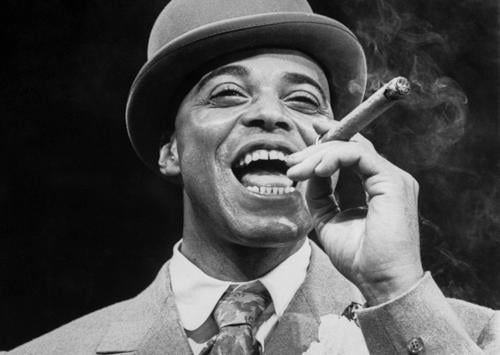
James Earl Jones discusses the play "Othello"
Feb. 1, 1968 Jones discusses the play "Othello" where he plays the lead character Othello.
-
James David Barber discusses his book, "The Pulse of Politics: Electing Presidents in the Media Age," with the author James David Barber
May. 30, 1980 James David Barber, author and political scientist, discusses his book, "The Pulse of Politics: Electing Presidents in the Media Age." He explains the premise of his beliefs that presidential elections run a cycle of "conflict, conscience, conciliation," and how media affects this. He uses examples of elections from Teddy Roosevelt to Jimmy Carter. Presidential campaign songs are played throughout the interview. A record is played to hear the voices of Teddy Roosevelt and Franklin D. Roosevelt.
-
James Cameron discusses journalist responsibility and expectations of political leaders with Studs in Ashburn Gardens, London ; part 2
1970 Studs Terkel interview with James Cameron, Brittish journalist. They discuss the objective truth and facts of journalism. Cameron shares his experience with a dying Winston Churchill and his views on science and human values. Politics, youth, and the atomic bomb are also topics in this interview. Studs quotes Albert Einstein and Sidney Burnstein, while Cameron quotes Oliver Cromwell. James Cameron's book, "Point of Departure" is also mentioned in the interview.
-
James Cameron discusses his experiences as a Brittish Journalist and his political and social beliefs ; part 4
Jun. 4, 1973 Studs Terkel interview with James Cameron, Brittish journalist. They discuss a variety of topics with politics and young people's attitudes the majority of the interview. This interview is done in Chicago, while the other three parts were done at Lewis and Clark College.
-
James Cameron discusses his experiences as a Brittish journalist and his book "Point of Departure" ; part 3
Jun. 4, 1973 Studs Terkel interviews James Cameron about his experiences as a journalist that includes thoughts about Cameron's book, "Point of Departure." They talk about his relationships with Winston Churchill, Lord Beaverbrook, Charlie Templeton, and Bertrand Russell. Cameron discusses his education, poverty, and the depression during his youth. They talk about Cameron's career with the "News Chronicle" and his home of Dundee, Scotland. This is part 3 of a total of 4 parts. The interview takes place at Lewis and Clark Community College.
-
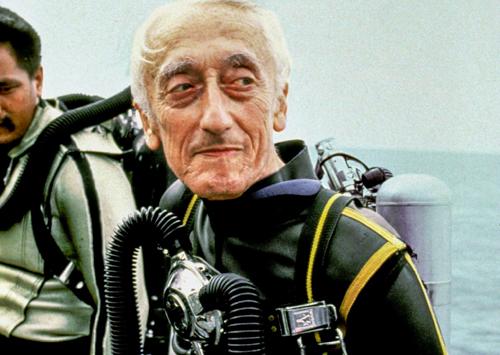
Jacques Cousteau discusses his book "The Cousteau Almanac: An Inventory of Life on Our Water Planet"
Sep. 16, 1981 Captain Cousteau talks about his book and the environmental movement in the United States and elsewhere.
-
Jack Newfield discusses his book "Robert Kennedy: A Memoir"
Oct. 31, 1978 According to Jack Newfield's book, "Robert Kennedy: A Memoir," Robert Kennedy spent a good part of his first 38 years of life in service to his brother. Robert was JFK's campaign manager, advisor, and Attorney General. Objectivity and seeking the truth as a journalist is also discussed in the interview.
-

Jack Anderson discusses his book "Confessions of a Muckraker: The Inside Story of Life in Washington During the Truman, Eisenhower, Kennedy, and Johnson Years"
May. 23, 1979 Political commentator Jack Anderson talks about his career, from his beginnings as a war correspondent in WWII, to his time under his mentor Drew Pearson.
-
Irwin Silber discusses music from the Civil War and his book “Songs of the Civil War” ; part 2 ; followed by Abdullah Ariff discussing Malayan culture
Jul. 1, 1960 Studs Terkel and Irwin Silber, a writer and Civil War historian, talk about music from the Civil War and Silber’s book “Songs of the Civil War.” This is the final part of the interview with Silber. A brief interview with Malayan artist Abdullah Ariff follows the Silber interview. Ariff discuss Malayan culture and the artwork he has on display in the United States.
-
-
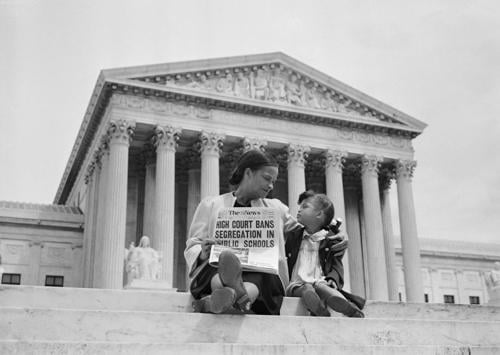
Ira B. Harkey discusses the south, civil rights, race relations, racism, his newspaper, and his career ; part 2
1966 Ira B. Harkey discusses the south, civil rights, race relations, racism, his newspaper, and his career. Includes Ira Harkey reading from his newspaper the Mississippi "Chronicle-Star".