Listen to New Voices on Studs Terkel our partnership with 826CHI-here! Read the Story


Showing 271 - 285 of 777 results
-

John Dinges discusses his book "Assassination on Embassy Row"
Sep. 6, 1980 Because there' s murder, torture, prison terms and terrorism involved, Studs Terkel, mentions that this book reads like a crime novel. "Assassination on Embassy Row," is John Dinges' account of what happened to Orlando Letelier in Washington, D.C. in 1976.
-
John D. Weaver discusses his book "The Brownsville Raid"
Apr. 6, 1971 Events not recorded in history books is what prompted John D. Weaver to write "The Brownsville Raid: The Story of America's Black Dreyfus Affair". Weaver had heard the story of Black Army soldiers causing a raucous, when they were actually set up. Without even being granted a trial, President Theodore Roosevelt, dismissed those soldiers from the United States Army, Weaver explained.
-
John Bernard discusses his life, politics and his work with the Farmer Labor Party
Aug. 1, 1977 Interviewing labor organizer, civil rights activist, and former Congressman John Bernard. Bernard was elected as a Farmer-Labor candidate to the U.S. House of Representatives and served from 1937-1939.
-
John Bailey, Robert Tucker, and Dick W. Simpson discuss housing and transportation ; part 4
Oct. 9, 1974 Dick Simpson's book, "Chicago's Future: An Agenda for Change," is discussed with the author, John Bailey and Robert Tucker, all employees of Chicago universities. The group discusses housing and transportation issues that many working class citizens face. The group discusses possible ways to fix the issues including government help and re-zoning.
-
John (Fire) Lame Deer and Richard Erdoes dicusss their book "Lame Deer, Seeker of Visions"
Sep. 15, 1972 *Please note: some sections have been edited out from the original recording due to copyright considerations
-
Joan Kufrin discusses her book "Uncommon Women"
Mar. 21, 1982 Discussing the book, 'Uncommon Women', published in 1981. The book chronicles the lives of Gwendolyn Brooks, Julie Harris, Sarah Caldwell, Maria Tallchief, Alice Neel, Mary McCarthy, Eugenia Zukerman, Roberta Peters, and Mary Lou Williams, discussing the impressive things they have accomplished in their respective professions ranging from poetry, to opera, to literature, and art and abstraction.
-
Jo Freeman, Mary Jean Collins-Robson, and Naomi Weisstein discuss women's rights and liberation ; part 1
Mar. 25, 1970 Jo Freeman, Mary Jean Collins-Robson, and Naomi Weisstein discuss women's rights and the struggle for equal rights and liberation, Title VII, their support for NOW, the National Organization of Women, as well as the upcoming Women's Strike for Equality.
-
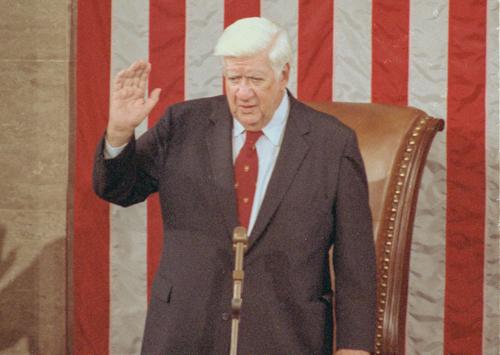
Jimmy Breslin, journalist and author discusses his book about the Watergate Affair
May. 22, 1975 Discussing "How the Good Guys Finally Won : Notes from an Impeachment Summer" and interviewing Jimmy Breslin.
-
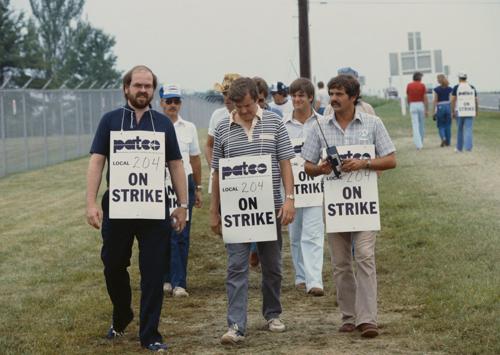
Jim Paulei of PATCO discusses the air traffic controller's strike and describes a day on the job
Oct. 5, 1981 Mr. Paulei talks with Studs about the air traffic controllers strike in 1980 and subsequent firing of over 1000 air traffic controllers. They discuss what a normal shift as an air traffic controller consists of, and the unions reasons for the strike in 1980.
-
Jim Balcer, Lawrence J. McKeon, Joey McDonald in conversation with Studs Terkel
Mar. 19, 1993 Discussing gays in the military with Director of Veterans Affairs for the City of Chicago Jim Balcer, Illinois State Representative Larry McKeon and Joey McDonald.
-
-
-
Janet Stevenson discusses her book "Sisters and Brothers"
Jul. 7, 1968 If her novel's any good, says Janet Stevenson, it's a place where the reader goes inside, living in the skins of both and black and white people, in another era, with their continuous problems. Sarah and Angelina Grimke faced a dilemma that their brother Henry had placed upon the family. If the sisters acknowledged their brother's family, then they would be acknowledging publicly that their brother had become a brut and a sinner by marrying a black woman.
-
Jane Kennedy talks with Studs Terkel
Oct. 14, 1971 Jane Kennedy talks about her political views and her view of society as a whole. She also discusses her experience in an all women's prison and how the prison system dehumanizes the inmates.
-
James Weinstein discusses the independent socialist magazine “In These Times”
Jul. 14, 1997 Weinstein states how at the time of creation for this magazine, most newspapers were bipartisan, intended to serve and satisfy as many people as possible, which allowed for less and less variation of opinion; Weinstein sought to combat this by producing a magazine that was very assured in its views. Studs plays "We Shall Not Be Moved" - Pete Seeger (1955).