Listen to New Voices on Studs Terkel our partnership with 826CHI-here! Read the Story


Showing 451 - 465 of 777 results
-
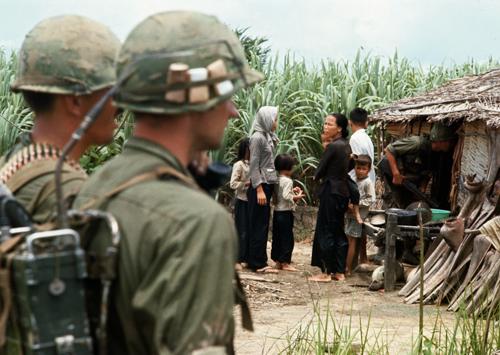
First Lieutenant Louis Font discusses how he became a conscientious objector as a West Point Military Academy graduate; part 1
1970 First Lieutenant Louis Font discusses the events and thought process that led to becoming conscientious objector to the Vietnam War as a recent West Point Military Academy graduate. He also talks about daily life at West Point; part 1.
-
Ferdinand Lundberg discusses his book "The rich and the super rich"
1967 Ferdinand Lundberg discusses his book "The rich and the super-rich" and the current state of wealth distribution and political, cultural, and social power in the United States. Topics of discussion include inherited wealth, the wealthy “Eastern Establishment” families compared to wealthy families in the American southwest, wealth and crime, and corporations. Studs reads an excerpt from F. Scott Fitzgerald’s short story “The Rich Boy” at the beginning of the program and an excerpt of an interview Studs conducted with a man who comments on his ability to get rich.
-

-
Father Roy Bourgeois discusses why the School of the Americas must be closed down
Mar. 24, 1994 Father Roy Bourgeois travels the country, talking to groups of people who aren't aware that their tax dollars go to fund the School of the Americas. Bourgeois discovered that money provided was for military weapons & for the training of soldiers to torture and to kill people of Latin American countries.
-
Father John McKenzie and Dr. Howard Schomer discuss personal responsibility, morality and hate, as it pertains to the Vietnam War ; part 2
1965 The interview continues with Father John McKenzie and Dr. Howard Schomer talking about fear and dissent. Schomer says Christians have the duty to dissent when they believe their beliefs are being contradicted by policy. He also talks about not understanding a dampening down of the human mind when it comes to human issues. Father McKenzie adds that society is made up of the best educated ignoramuses that ever existed.
-
Father John McKenzie and Dr. Howard Schomer discuss personal responsibility, morality and hate, as it pertains to the Vietnam War ; part 1
1965 Whether in the United States or Vietnam, Dr. Schomer asks what are our personal responsibilities for the atrocities? Father John McKenzie talks about a lowering of people's moral tone. People have put their morality in their pockets, so as to get cleared of something and not get involved, added Father McKenzie.
-
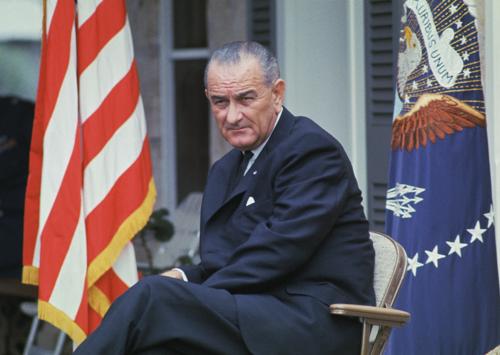
Eric Goldman discusses his experiences as special consultant to President Lyndon Johnson
1967 Historian Eric Goldman discusses his time as special consultant for President Lyndon B. Johnson and his book "The Tragedy of Lyndon Johnson."
-
Erhard Dabringhaus in conversation with Studs Terkel
Aug. 20, 1984 Discussing the book "Klaus Barbie: The Shocking Story of How the U.S. used this Nazi War Criminal as an Intelligence Agent: a First Hand Account" (published by Acropolis) with the author Erhard Dabringhaus.
-
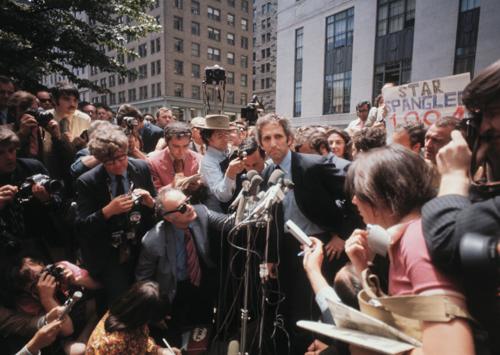
Eqbal Ahmad, Daniel Ellsberg, Anthony Lukas and Anthony Russo talk with Studs Terkel ; part 3
Jun. 9, 1972 Eqbal Ahmad, Daniel Ellsberg, Anthony Lukas and Anthony Russo discuss Anthony Russo's trial and treatment he endured during his time from conviction to release in federal prison compared to the treatment of prisoners tortured in Vietnam.
-
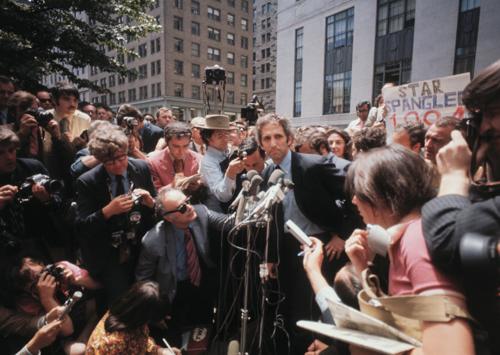
Eqbal Ahmad, Daniel Ellsberg, Anthony Lukas and Anthony Russo talk with Studs Terkel ; part 2
Jun. 9, 1972 Daniel Ellsburg, Eqbal Ahmad, Anthony Lukas, and Anthony Russo discuss Anthony Russo's time in jail, the leak of the Pentagon Papers, Vietnam War, torture of Vietnam prisoners being ignored, corruption in politics, and working for Rand.
-
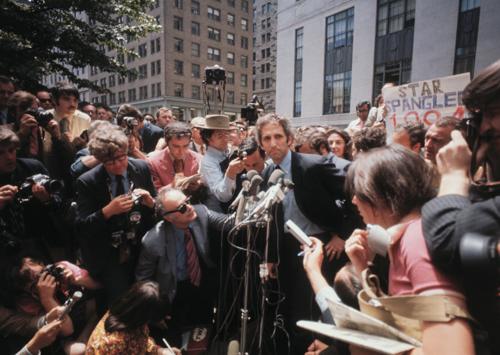
Eqbal Ahmad, Daniel Ellsberg, Anthony Lukas and Anthony Russo talk with Studs Terkel ; part 1
Jun. 9, 1972 Eqbal Ahmad, Daniel Ellsberg, Anthony Lukas and Anthony Russo discuss their introduction into becoming activitsts, leaking the Pentagon Papers, Nixon Administration, and their philosophy on working for men in power.
-

Eqbal Ahmad and Muhammad Yunus discuss Pakistan
1970 Eqbal Ahmad and Muhammad Yunus discuss the current state of East and West Pakistan with Studs Terkel. Topics of discussion include current food shortages, United States intervention in South and Southeast Asia, military rule in Pakistan, cultural differences between East and West Pakistan, and the human toll resulting from the military government, disease, and natural disasters. Includes an excerpt of a recording of Shanta Gandhi telling a story about an audience member’s response at the end of a play she performed during the Bengal Famine.(Wav ID: 1863201-3-1, 3-2, 3-3)
-
Ellen Chesler discusses her book "Woman of Valor: Margaret Sanger and the Birth Control Movement in America"
Jul. 8, 1992 Ellen Chesler discusses and reads from her book "Woman of Valor: Margaret Sanger and the Birth Control Movement in America." Throughout her interview, Chesler discusses additional prominent women in this movement such as Emma Goldman, Jane Addams, and Ethel Byrne. Studs plays "The Women's Marseillaise" - Mascottes Ladies Band (1908-1911) and "Bread and Roses" - Judy Collins (1976).
-
Ella Jenkins discusses her music and her influences
Dec. 7, 1963 Using a Trobriand drum and harmonica, Ella Jenkins plays examples of call and response music with Studs. A few of her popular songs play between their discussion. Ella explains how her music came to be from the Chicago neighborhood streets with influences from her Uncle and other blues and folk musicians. Songs played include "Tahboo," "Miss Mary Mack," "You'll Sing a Song and I'll Sing a Song," "Come Dance By the Ocean," and "Dulce." Songs have been removed due to copyright restrictions.
-
Ella Jenkins discusses call and response music
Jul. 17, 1993 Using past recordings, Ella discusses how she works with children to help them find their rhythms using call and response music and percussion. She explains the West African and Latin music influences within her own music. Music played includes Jenkins' own music such as "Miss Mary Mack," "Tahboo," and "Where Has My Little Dog Gone?" She also plays song written by Carl Orff and performed by the Chorus of the Children's Opera Group, such s "Pat-a-Cake," and "Name-Calling." Untitled West African music is also played. Music has been removed due to copyright restrictions.