Listen to New Voices on Studs Terkel our partnership with 826CHI-here! Read the Story


Showing 406 - 420 of 777 results
-
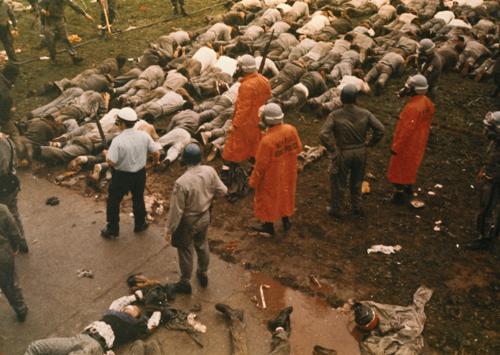
Herman Badillo discusses "A Bill of No Rights: Attica and the American Prison System"
Jun. 26, 1972 Congressman Herman Badillo discusses the prisoner uprising at Attica Correctional Facility in upstate New York, and how race played a role in the unwarranted killing of inmates and the subsequent government and administrative cover up of the incident. Badillo reads excerpts from his book, "A Bill of No Rights: Attica and the American Prison System," and discusses prisoner rights, rehabilitation, and the endemic injustice and racism in the American prison system.
-

Herbert Mitgang discusses his book "Mister Lincoln"
Feb. 11, 1982 Having been a Lincoln biographer for a quarter of a century, Herbert Mitgang felt the importance of writing the play "Mister Lincoln: A Drama in Two Acts". Lincoln's rich language can be heard through Mr. Mitgang''s dramatic interpretation of Lincoln's life.
-
Herbert Block, known as "Herblock," discusses his drawings as an editorial cartoonist and the new book "Straight Herblock"
Nov. 13, 1964 Herblock and Studs talk about his newest book "Straight Herblock." They talk about some of his most acclaimed drawings and the social/political questions they pose.
-
Henry Steele Commager discusses the history of American ideal
Jul. 4, 1974 Discussing American democracy and interviewing Henry Steele Commager. Commager is an eminent historian who published an annotated version of Alexis de Tocqueville's "Democracy in America".
-
Henry Steele Commager discusses America, American history, and American relations; part 1
May. 1, 1967 Henry Steele Commager discusses America, American history, and American relations. He also discusses television, historical figures, and wars. (Recorded at the Orrington Hotel in Evanston, Ill.).
-
Henry Louis Gates, Jr. discusses race and the magazine "Critical Inquiry"
Jan. 24, 1986 As the guest editor of “Critical Inquiry,” Henry Louis Gates, Jr. covered the importance of Black writers and their contributions. Because there is no color blindness is the western world, explained Gates, pointing out that one is a Black writer or a Black doctor is important to society. Gates also covers the issue of race not being solely about Black and white people but rather it has to do with multi-ethnic and multi-cultural people.
-
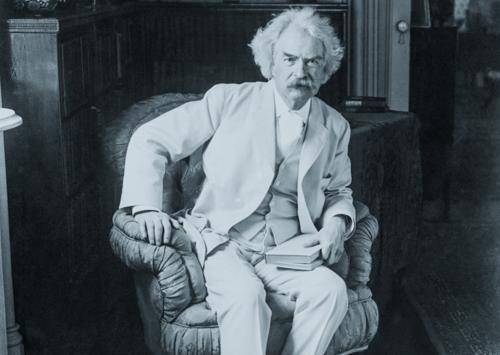
Harry Barnard discusses life as a teacher, writer and biographer
1967 Mr Barnard discusses being a writer and biographer. He strongly discusses the theory, What is literature? and states, "If the work(writing) enriches the person reading and causes deep thought it is literature." He is working, at the time of broadcast, on the papers, notes manuscripts of Upton Sinclair preparing to . He was also writer in residence at Roosevelt University at the time of broadcast.
-
Harrison Evans Salisbury discusses his book "A Time of Change"
Mar. 18, 1988 His experiences as a journalist are what's covered in Harrison Evans Salisbury's book, "A Time of Change: A Reporter's Tale of Our Time". Salisbury believed as a reporter, one truly needed to be at the event, in order to obtain the true story. Once Salisbury questioned if he was living in America because he was asked to switch rooms at a hotel in Birmingham, only to find out later that there were special, bugged rooms for reporters.
-
Hamilton Fish III discusses American history
Colonel Hamilton Fish III discusses American history. Major topics include The Great Depression, Franklin D. Roosevelt, World War II, and Communism. Fish also reads a personal letter sent to him from Martin Dies, Jr. Content Warning: This conversation has the presence of outdated, biased, offensive language. Rather than remove this content, we present it in the context of twentieth-century social history to acknowledge and learn from its impact and to inspire awareness and discussion.
-
H. Bruce (Howard Bruce) Franklin in conversation with Studs Terkel
Mar. 18, 1992 Discussing the book "M.I.A., or, Mythmaking in America" (published by L. Hill Books) with the author Professor H. Bruce Franklin.
-
Gwynee Dyer reads from and discusses his book "War"
Oct. 18, 1985 After having served in three Navies, Gwynee Dyer, wrote his book, "War." Dyer explains people are willing to kill foreigners to protect their own land, possessions, and rights, etc. Dyer also points out that the only reason for war is to obtain power and to determine, by mass destruction, who gets what.
-
Gregory Dell Discusses his visit to the American hostages in Iran
Mar. 11, 1980 Reverend Greg Dell talks about the Iran Hostage Crisis and his visit to Iran to meet with the hostages and the student captures. He gives an overview of the students' thoughts about America's involvement in Iran and ideas on how to fix the relations between the two countries.
-
-
Grace Halsell discusses her books "Soul Sister" and "Bessie Yellowhair"
Dec. 21, 1973 With both books "Soul Sister" and "Bessie Yellowhair" , Grace Halsell shares her experiences when she posed as both a Black woman and a Navajo Indian. According to Halsell, the only differences between white and Black people, were the color of people's skin. Halsell also explained that it was psychologically harder to be play the part of a Navajo Indian being a servant to a white family.
-
Gore Vidal on politics and literature
Nov. 1, 1974 The writer and public intellectual discusses his recent publications, Myron: A Novel, and, Burr, an historical novel about Founding Father, Aaron Burr.*Please note: some sections have been edited out from the original recording due to copyright considerations