Listen to New Voices on Studs Terkel our partnership with 826CHI-here! Read the Story


Showing 91 - 105 of 170 results
-
Interview with Father Blase Bonpane
Jun. 5, 1987 Discussing "Guerrillas of Peace: Liberation Theology and the Central American Revolution," (published by South End Press) with the author Father Blase Bonpane.
-
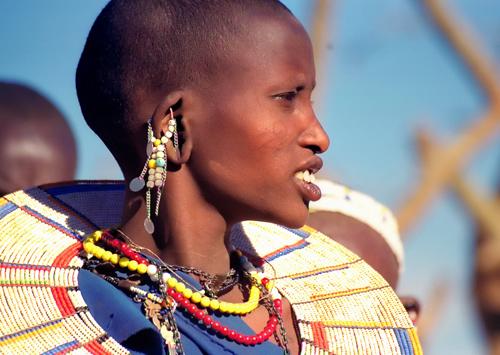
Interview with Carol Beckwith
Nov. 14, 1980 Discussing the Masai people of Africa with photographer Carol Beckwith.
-

Interview with British journalist and writer James Cameron
Aug. 1975 Discussing India and interviewing James Cameron while Studs was in London, England.
-
Interview with Basil Davidson ; part 2
1968 Discussing the book "Lost Cities of Africa" with author Basil Davidson while Studs was in London.
-
Hugh Tracey discusses world music and dance
Nov. 16, 1960 *Please note: some sections have been edited out from the original recording due to copyright considerations
-
Hope Cooke reads from and discusses her book, Time Change
Mar. 12, 1981 The American-born socialite experienced tragedy early in life after her mother was killed in a plane crash. She and her sister were then abandoned by their father and raised by aloof grandparents and a series of nannies. Later, she studied and traveled in Iran and India, married the last Chogyal (King) of Sikkim (northeast India), and wrote an autobiography.*Please note: some sections have been edited out from the original recording due to copyright considerations
-
Helene Kazantzakis talks with Studs Terkel; Part 2
May. 13, 1969 Helene Kazantzakis talks about “The Great Passion” which was written by her husband, Nikos Kazantzakis. She also talks about the book that she is writing about her husband’s life. Studs Terkel reads aloud from “The Great Passion” and Helene reads aloud some of letters featured in the biography titled “Nikos Kazantzakis.”
-
Helene Kazantzakis talks with Studs Terkel; Part 1
May. 13, 1969 Helene Kazantzakis talks about “The Great Passion” which was written by her husband, Nikos Kazantzakis. She also talks about the book that she is writing about her husband’s life. Studs Terkel reads aloud from “The Great Passion” and Helene reads aloud some of letters featured in the biography titled “Nikos Kazantzakis.” This interview opens with a song written by Nikos Kazantzakis called “The Dance” and closes with the song “Myrtia.”
-
Helen Vlachos discusses her career and her book "House Arrest"
1970 In 1967, because Helen Vlachos spoke freely and called someone in the junta a clown, she was placed under house arrest. Artists took part in a type of silent resistance, as there was no new music, no new paintings, no new poems or writings that were created. Freedom isn't allowed, explained Vlachos, as people aren't allowed to use their own minds.
-
Fred Morris discusses his time working in the rural churches in Brazil
Nov. 14, 1974 Content Warning: This conversation includes graphic descriptions of physical abuse. A Methodist minister, Fred Morris, talks about the 11 years he lived in Brazil. Morris found it difficult to preach to the poor people whose children were dying of starvation. Morris also talks about the time he was abducted and tortured.*Please note: some sections have been edited out from the original recording due to copyright considerations
-
Fred L. Gardaphe, Ben Morreale in conversation with Studs Terkel
Jun. 8, 1993 Discussing the book "La Storia: Five Centuries of the Italian American Experience" (published by HarperCollins) with the author Ben Morreale and author Fred Gardaphe.
-
Fred Gardaphe discusses his book "Italian Signs, American Streets"
Jan. 29, 1997 Discussing the book "Italian Signs, American Streets: The Evolution of Italian American Narrative" (published by Duke University Press) with author Fred Gardaphe.
-
Fred Gardaphe and Nat Scammacca discuss reverse migration
Apr. 3, 1989 Discussing reverse migration when native sons return to Italy with authors Fred Gardaphe and Nat Scammacca.
-
Father Bernard Serval discusses his background and his experiences in Nicaragua
Oct. 16, 1978 His belief of experiencing something for himself led Father Bernard Serval to live in the 3rd world country of Nicaragua. People there are so poor, they live on the side of the roads, explained Serval. People work long hours and only earn $2.00 a day. Contracting malaria is an issue because people can't afford the $5.00 it costs to buy a net for protection. Serval wants people to be aware all the poverty in Nicaragua but he knows it will never become of importance because the US will never benefit monetarily from that country.
-
Erik Hesselberg discusses his navigation on the Kon-Tiki expedition
Oct. 9, 1962 In a their man-made raft, Hesselberg and his crew travelled 4300 sea miles out in the open water. Erik Hesselberg talks about navigating the three-month long expedition on the Kon-Tiki from South America to French Polynesia. Hesselberg said everyone should have such an experience as he did, to be unencumbered while out at sea.