Listen to New Voices on Studs Terkel our partnership with 826CHI-here! Read the Story


Showing 31 - 45 of 182 results
-

R. Buckminster (Richard ) Fuller talks with Studs Terkel
Jan. 20, 1965 A sprawling conversation with R. Buckminster Fuller including his great aunt Margaret Fuller, future communication, the nature of work, human nature, and physics.
-

Priscilla McDougall and Teri Teper discuss names and the Center for Woman's Own Name.
Feb. 17, 1975 Reasons why a woman would want to change her last name are discussed with Priscilla McDougall and Teri Teper. Establising a professional identity and establishing one's own line of credit are among some reasons. The ladies also explain that a woman is not rejecting a name but rather choosing her own identity.*Please note: some sections have been edited out from the original recording due to copyright considerations
-
Peter Feibleman discusses his book “Lilly: Reminiscences of Lillian Hellman”
Feb. 26, 1990 American author and screenwriter Peter Feibleman discusses his friendship with Lillian Hellman and the memoir he wrote about her life called “Lilly: Reminiscences of Lillian Hellman.” Includes an interview with Lillian Hellman. Includes a 30 second test tone.
-
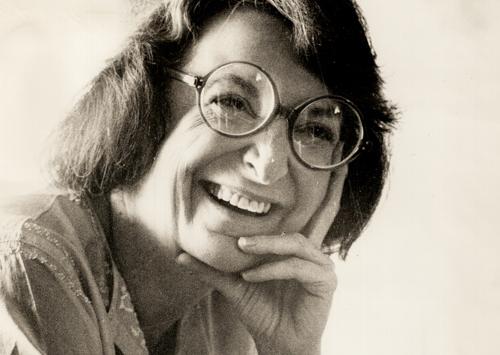
Pauline Kael discusses her book "Kiss Kiss Bang Bang" and her career, part 2
1966 Part 2 of celebrated fim critic Pauline Kael discussing her book "Kiss Kiss Bang Bang" as well as Laurence Olivier, Sidney Poitier, safe roles, older actors, distortion of women's contributions, and Lillian Hellman's frustrations.
-
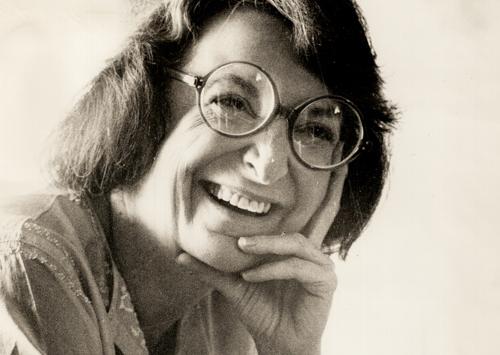
Pauline Kael discusses her book "Kiss Kiss Bang Bang" and her career, part 1
1966 Part 1 of celebrated fim critic Pauline Kael discussing her book "Kiss Kiss Bang Bang" as well as business versus creativity, struggles of young filmmakers, humiliations of older actors competing for limited roles, and limiting movies to fit on television screens.
-
Patricia O'Brien, Nieman Fellow, discusses her book, "The Woman Alone" and the women's movement strike
Jul. 6, 1973 Studs interview with Patricia O'Brien about her book, "The Woman Alone" and a large variety of issues of the women's movement. Studs includes parts of interviews he did with a middle-aged man and woman on the day of the women's strike. He also included an excerpt from his interview with Peggy Terry. O'Brien reads excerpts from her book including a poem by May Sarton. Studs quotes Jane Howard, Jane Kennedy, and the wife of Senator Birch Bayh.
-
Pat Thompson discusses her background and her TV reporting career
Jan. 14, 1975 A reporter for WMAQ-TV, an NBC affiliate, Pat Thompson talks about her background and her TV reporting career. Ms. Thompson loved to read books, to be in other locales. Going into TV was the result of realizing she received her news mostly from the television.
-
-
Ntozake Shange discusses her successful play and recent poetry
Oct. 26, 1978 Ntozake Shange discusses her play, "for colored girls who have considered suicide / when the rainbow is enuf." She goes on to discuss her advocacy for more Black authors and poets, especially in experimental artistic endeavors.*Please note: some sections have been edited out from the original recording due to copyright considerations
-
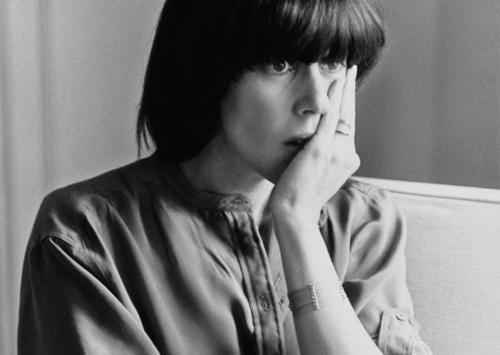
Nora Ephron discusses feminism and her book "Crazy Salad"
Jul. 28, 1975 Nora Ephron discusses the women’s movement and her book, “Crazy Salad: Some Things About Women.” Ephron discusses the influence of writer Dorothy Parker on her work, as well as topics including women’s rights; the exploitation of women in politics, war, and advertising; the many conflicts she faces in her role as a journalist; and traditional and non-traditional gender roles. Includes an excerpt from a previous interview with Dorothy Parker.
-
Nicola Geiger discusses her background and her time spent in the far east
Oct. 21, 1974 Born in Hamburg, Nicola Geiger, recalls her upbringing and her life under Nazi Germany. She lost two children in World War II. Later in life, she worked in both Japan and Korea. Geiger knew that she alone could not change the world but that she worked tirelessly to get other people to work on peace, too.
-
Meridel Le Sueur discusses her book "Ripening: Selected Work, 1927-1980," published in 1981
Mar. 30, 1982 Meridel Le Sueur discusses the publication of her selected works and her life as an activist, fighting for socialist ideals and women's rights. She goes on to discuss the time she spent with Native American Navajo tribes and their theory of nonlinear time.*Please note: some sections have been edited out from the original recording due to copyright considerations
-
Meg Christian discusses feminism and the women's music industry
Sep. 16, 1981 Meg Christian discusses songwriting and the music industry, especially her work in the feminist movement.
-
Maya Angelou and Tom Wicker discuss life and culture in the U.S. South
Jul. 1, 1979 Poet Maya Angelou and journalist Tom Wicker discuss life in the U.S. South and how the region’s history has shaped its culture. Topics of discussion include social dynamics and race in the South, the concept of “home” and what it means to return to one’s roots, and religion in the South. Angelou reads excerpts of her poetry, including “Still I Rise” and “Phenomenal Woman,” and shares spiritual songs from her childhood.
-
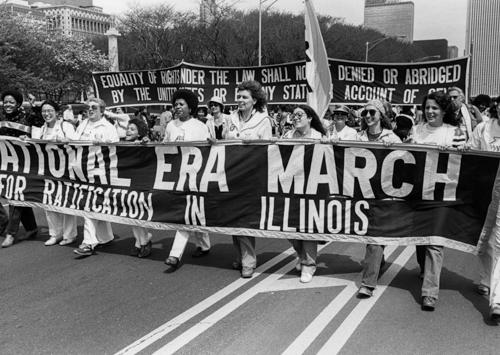
Marianne Bell, Shirley Wallace and Illinois Rep. Susan Catania discuss the Equal Rights Amendment
Jun. 2, 1982 Interviewing Equal Rights Amendment activists, Marianne Bell and Shirley Wallace, who were fasting as a political statement, and Illinois state representative and outspoken advocate of ERA, Susan Cantania.