Listen to New Voices on Studs Terkel our partnership with 826CHI-here! Read the Story


Showing 1 - 15 of 32 results
-

William Gibson discusses writing plays
1969 Now being a professional playwright, William Gibson talked about being able to write one of his plays in 8 days. A lot of the discussion is about his play, "The Miracle Worker". After reading one of Annie Sullivan's letters, and learning about a battle royale that Sullivan had with Helen Keller, Gibson envisioned what that battle royale would look like. It became a now famous part of the play.
-
Susan Brownmiller discusses her book “Waverly Place” and the Lisa Steinberg child abuse case of 1987
Mar. 1, 1989 Author Susan Brownmiller discusses and reads from her book “Waverly Place”, a fictional story heavily inspired by the Lisa Steinberg child abuse case of 1987. Brownmiller discusses the details of the case and how domestic abuse, law enforcement, and the judicial system affected the outcome of this case. Studs plays "She Sits on the Table" - Tom Paxton (1980).
-
Susan Brownmiller discusses her book "Against Our Will"
Oct. 23, 1975 In Susan Brownmiller's book, "Against Our Will: Men, Women and Rape," Brownmiller shows her audience how and why rape is a crime of one's mind and not one of passion. According to Brownmiller, rape is man's dominance over a woman.
-
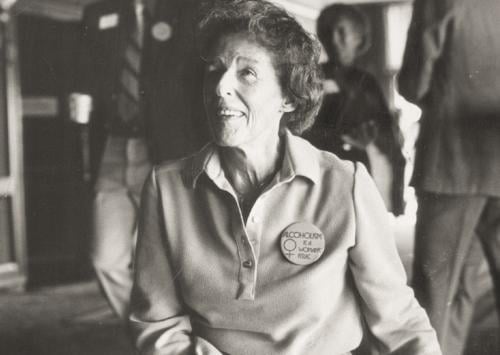
Susan Brownell Anthony discusses her book "The Ghost in My Life"
Oct. 29, 1971 Ms. Anthony, the grand-niece of Susan B. Anthony, comments on the women's liberation movement, her personal political life and her view of Christian life.
-
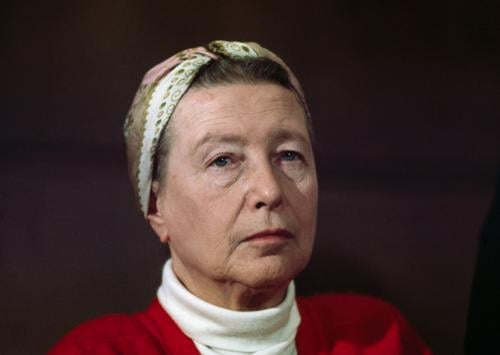
Simone de Beauvoir discusses the art of writing
May. 4, 1960 Studs Terkel interviews writer and artist Simone de Beauvoir at her home in Paris, France, where they discuss her family history, early writing career and artistic influences, individualism, and the creative commitment required to be a successful writer.
-
Roxana Robinson discusses her book “Georgia O’Keeffe: A Life”
Sep. 8, 1989 Art historian Roxana Robinson discusses and reads from her book “Georgia O'Keeffe: A Life.” Robinson discusses the different eras of painting O’Keeffe went through during her lifetime and the outside forces that inspired these changes in subject matter, such as her attending the Art Students League of New York, her moving to Santa Fe, and her relationship with Alfred Stieglitz. Studs plays “Tosca, Act II: Vissi d’arte, vissi d’amore” - Renata Tebaldi, George London, Francesco Molinari-Pradelli (1959).
-
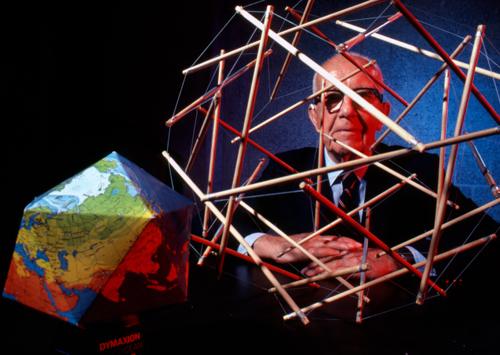
R. Buckminster (Richard ) Fuller talks with Studs Terkel
Jan. 20, 1965 A sprawling conversation with R. Buckminster Fuller including his great aunt Margaret Fuller, future communication, the nature of work, human nature, and physics.
-
Peter Feibleman discusses his book “Lilly: Reminiscences of Lillian Hellman”
Feb. 26, 1990 American author and screenwriter Peter Feibleman discusses his friendship with Lillian Hellman and the memoir he wrote about her life called “Lilly: Reminiscences of Lillian Hellman.” Includes an interview with Lillian Hellman. Includes a 30 second test tone.
-
-
Meridel Le Sueur discusses her book "Ripening: Selected Work, 1927-1980," published in 1981
Mar. 30, 1982 Meridel Le Sueur discusses the publication of her selected works and her life as an activist, fighting for socialist ideals and women's rights. She goes on to discuss the time she spent with Native American Navajo tribes and their theory of nonlinear time.*Please note: some sections have been edited out from the original recording due to copyright considerations
-
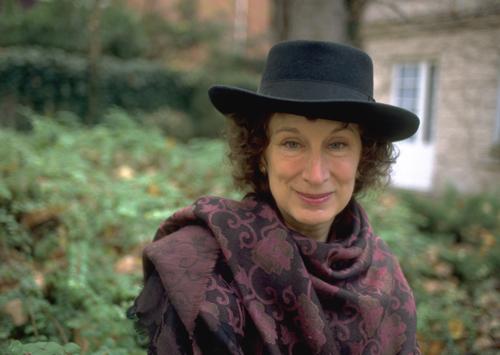
Margaret Atwood discussing "The Handmaid's Tale"
Mar. 13, 1986 Margaret Atwood discusses her book "The Handmaid's Tale" and the real life and biblical events that inspired it. The show also includes two interludes with Erich Fromme discussing "Escape from Freedom".
-
-
Lorell Wyatt, Glenda Starr-Kelly and Lynda Barry discuss "The Good Times are Killing Me"
Oct. 2, 1989 Best friends, white flight and racism are all apart of Lynda Barry's book, "The Good Times are Killing Me." Lorell Wyatt and Glenda Starr-Kelly reenact scenes from the play, which is playing at the Body Politic Theater. In the end, Barry's book showed power and privilege mattered more than friendship.
-
Judy Blume discusses her career as an author
Judy Blume, author, discusses her books and work in children literature. She talks about her books "Are You There God? It's Me, Margaret," "Forever..." "Iggie's House," "Deenie," "Tiger Eyes," and the censorship argument around her works. Blume also explains her beliefs on children's rights to choose what they want to read.
-
Joan Kufrin discusses her book "Uncommon Women"
Mar. 21, 1982 Discussing the book, 'Uncommon Women', published in 1981. The book chronicles the lives of Gwendolyn Brooks, Julie Harris, Sarah Caldwell, Maria Tallchief, Alice Neel, Mary McCarthy, Eugenia Zukerman, Roberta Peters, and Mary Lou Williams, discussing the impressive things they have accomplished in their respective professions ranging from poetry, to opera, to literature, and art and abstraction.