Listen to New Voices on Studs Terkel our partnership with 826CHI-here! Read the Story


Showing 91 - 105 of 271 results
-

Martina Arroyo discusses her opera career ; part 1
Aug. 1969 When the announcement was made, to let the audience know the opera singer they came to see would not be performing but that Martina Arroyo would be singing the part of Aida, Arroyo recalls that you could hear the crowd groan all the way in Chicago. Arroyo talks about singing in the operas. She also talks about even though she may have a starring role in the opera, the show is not hers, but rather everyone in the company works hard to put out a good production.
-
Martin Duberman discusses his book "Paul Robeson"
Feb. 28, 1989 Martin Duberman, historian and biographer, discusses his latest work which focuses on the singer, actor, and political activist Paul Robeson. Robeson was known for his performance in Showboat and Emperor Jones.
-
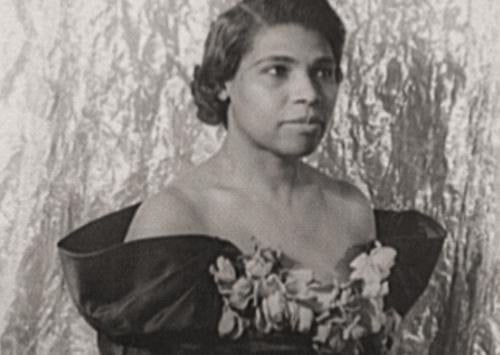
Marian Anderson discusses her career, and how she interprets songs
Feb. 20, 1960 Marian Anderson talks about her singing career, including her singing in Sunday School and her first singing experience in 4th grade. She shares how she interprets the songs she sings. Includes Studs reading the poem "Gertrude" by Gwendolyn Brooks. The interview takes place in Anderson's suite in the Sheraton Blackstone in Chicago.
-
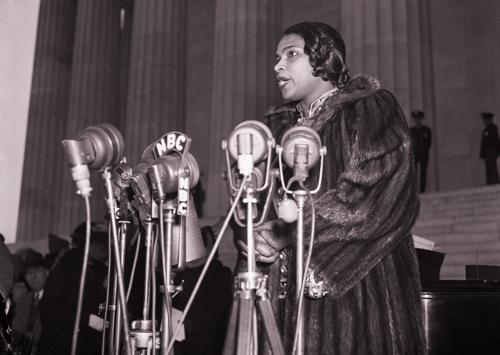
Marian Anderson and James DePreist discuss their experiences in music ; part 1
1966 Marian Anderson recalls singing on stage for the first time at the Metropolitan Opera House in 1957 and how it was the realization of a dream come true. Marion's nephew, James DePreist remembers being able to conduct a piece of music he had never conducted before because his aunt Marion had exposed him to it when he was a child. James said when his aunt Marion sung spirituals, he couldn't help but feel religious and he's an atheist.
-
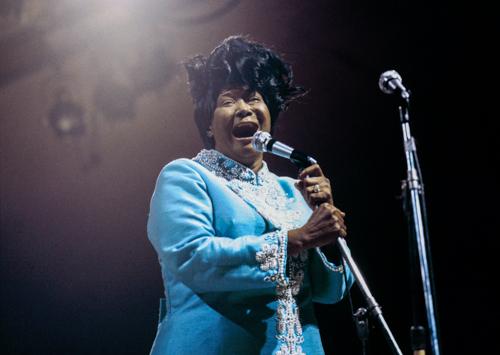
Mahalia Jackson discusses the civil rights movement and the upcoming freedom rally
May. 17, 1963 Studs Terkel interviews gospel vocalist Mahalia Jackson. Jackson discusses the freedom rally that will be taking place at McCormick's Place in Chicago, IL.
-
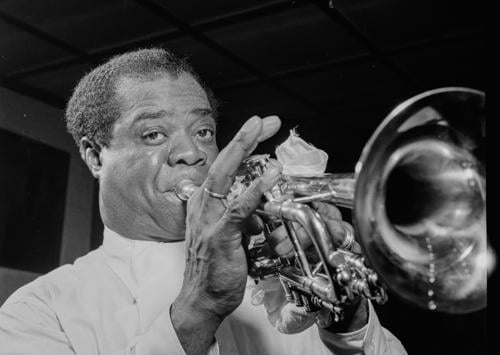
Louis Armstrong discusses music
Jun. 24, 1962 In a nightclub in Chicago, at two in the morning and after a performance, Louis Armstrong talks about his music stylings. Notes are good to learn the tune, says Armstrong, but it's all about the phrasing. Armstrong explained, it's up to you to express yourself. Armstrong shared the one piece of advice that had always stuck with him. King Oliver told Armstrong not to worry about the notes but rather to put some lead into the song.
-
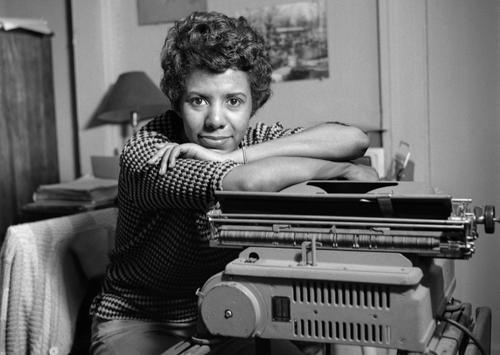
Lorraine Hansberry discusses her play "A Raisin in the Sun"
May. 12, 1959 Playwright Lorraine Hansberry discusses her play "A Raisin in the Sun" and theater in general; last 10 minutes is a reading of "Chicago: South Side Summers" from "To Be Young, Gifted, and Black." Orginal air date is 05/12/1959
-
Lillian Smith discusses reactions to her books and writings
Lillian Smith explores the responses she received from her books that address racial prejudice and discrimination, especially in the south.
-
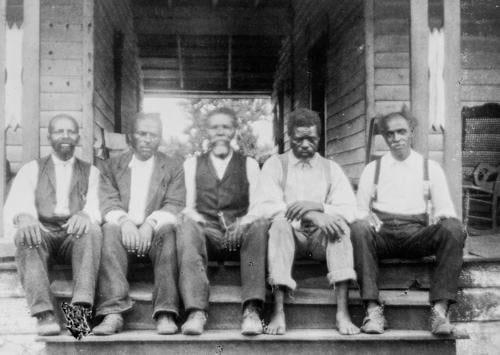
Lerone Bennett, Jr., John Hope Franklin and Hoyt Fuller discuss the book "Distortions of Negro History"
Jun. 3, 1965 Discussing "Distortions of Negro History" and interviewing Lerone Bennett, Jr., John Hope Franklin and Hoyt Fuller.
-
Leon Forrest in conversation with Studs Terkel
Jun. 23, 1977 Interviewing novelist and Northwestern University Professor Leon Forrest.
-
Leon Forrest in conversation with Studs Terkel
Sep. 15, 1992 Discussing the book "Divine Days" (published by Another Chicago Press) with author Leon Forrest.
-
Leon Forrest in conversation with Studs Terkel
Jan. 17, 1997 Discussing the book "The Furious Voice For Freedom: Essays" (published by Asphodel Press) with author Leon Forrest.
-
Leon Depres discusses discrimination, corruption, and segregation in Chicago
Feb. 3, 1975 Interviewing lawyer and alderman, Leon Despres. Depres discusses Richard Daley’s time as mayor of Chicago and political events during his terms. Content Warning: This conversation includes racially and/or culturally derogatory language and/or negative depictions of Black and Indigenous people of color, women, and LGBTQI+ individuals. Rather than remove this content, we present it in the context of twentieth-century social history to acknowledge and learn from its impact and to inspire awareness and discussion.
-
Lena Horne talks about her influences and her career
1984 Lena Horne talks about her memories of Paul Robeson and Billie Holiday, how her skin color affected her career, and her relationship with her audience.
-
Lani Guinier discusses her book "Tyranny of the Majority"
Apr. 7, 1994 *Please note: some sections have been edited out from the original recording due to copyright considerations