

-

-
Presenting a live musical performance of African American vaudeville sketches, songs and dances called "Rollin' with Stevens and Stewart," by Ronald "Smokey" Stewart and Jaye Stevens.
Jun. 13, 1991 Live musical performance by Smokey Stewart and Jaye Stevens
-
Phyl Garland discusses themes from her book "Sound of Soul" and the black influence on music ; part 1
Nov. 25, 1968 Studs interviews Phyl Garland about her book "Sound of Soul." They discuss the history of music and how black music influenced white music. Studs reads a quote from her book where she quoted Lerone Bennett. Garland also reads from her book a few times. They discuss how music changed over time for blacks from spirituals to slave songs to the blues because it was a reflection of their lives. Garland explains how blacks used music to help them through their trials and frustrations.
-
Phyl Garland discusses her book "Sound of Soul" and the history of black music in America ; part 2
Nov. 25, 1968 Studs interviews Phyl Garland about her book "Sound of Soul." They discuss various musicians that she mentions in her book and their influence on black music. Garland explains the music of young black artists and how commercialization of music gave blacks an opportunity that they would not have had otherwise. Garland talks about how Fannie Lou Hamer used music to express her message in the Civil Rights Movement and as a women's rights activist. Studs and Garland discuss various black female artists and their music.
-
Patrick Zimmerman discusses his teaching methods for childhood education in low-income neighborhoods ; part 2
Sep. 1, 1970 Former public school teacher Patrick Zimmerman continues discussing his alternative teaching methods for childhood education in low-income and underrepresented communities in Chicago. Zimmerman discusses how the scientific emphasis of schooling today is stifling a child’s success in the classroom and calls instead for a balance between a scientific approach and a free-school approach.
-
Panel of women recipients discuss being welfare recipients in Chicago
Jan. 1, 1969 A panel of women discuss raising their families while getting welfare assistance and living in poverty in Chicago.
-
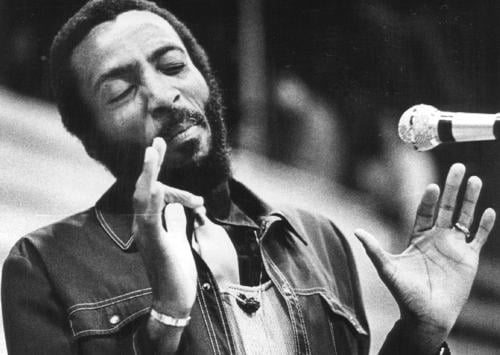
Panel at University of Chicago Law School discuss ending capital punishment, part 3
Feb. 19, 1965 Dick Gregory satirizes capital punishment in the United States, calls for the churches to take action, and talks about potential actions from "demonstrators." Other panel members answer audience questions (Father James Jones, Norval Morris, Hans W. Mattick, and Arthur Wineberg). Hosted by the University of Chicago. (Part 3 of 3)
-
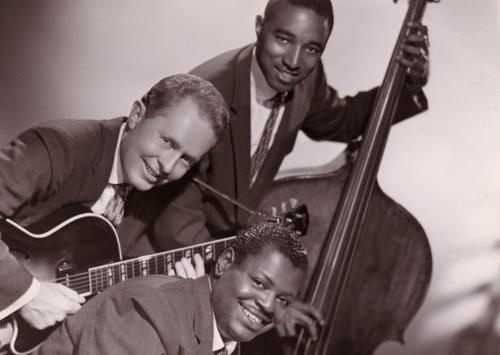
Oscar Peterson plays and discusses jazz
Sep. 8, 1961 Jazz pianist Oscar Peterson sits down with Studs Terkel to discuss historical developments in jazz piano, his own personal development as a pianist, and his experience directing a youth jazz piano school. Includes Peterson playing short excerpts from "Chicago (that toddlin' town)," "Soon," Chopin's Nocturne in E flat Major to demonstrate musical concepts.
-
-
-
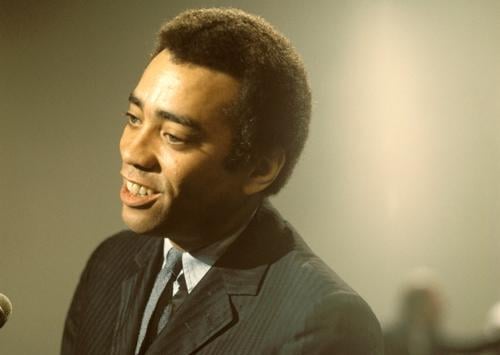
Odetta talks about her music career with Studs Terkel
1956 Odetta (often referred as "The Voice of the Civil Rights Movement") talks about her music career and sings to Studs Terkel. The interview segments are between songs. This record is part of the Studs Terkel Almanac.
-
Odetta discusses her music career
Mar. 12, 1970 Folk singer Odetta joins Studs to talk about her life and music, including her songs "Riding in My Car (Car Song)," "Gallows Pole," and "Sometimes I Feel Like a Motherless Child," among others.*Please note: some sections have been edited out from the original recording due to copyright considerations
-
Ntozake Shange discusses her successful play and recent poetry
Oct. 26, 1978 Ntozake Shange discusses her play, "for colored girls who have considered suicide / when the rainbow is enuf." She goes on to discuss her advocacy for more Black authors and poets, especially in experimental artistic endeavors.*Please note: some sections have been edited out from the original recording due to copyright considerations
-
-
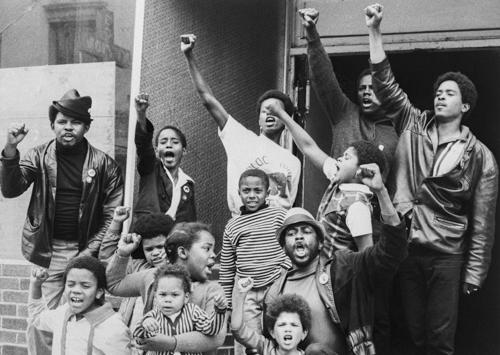
Nathan Wright discusses Black power ; part 2
1967 Discussing the book "Black Power and Urban Unrest" and interviewing the author Nathan Wright.