

-
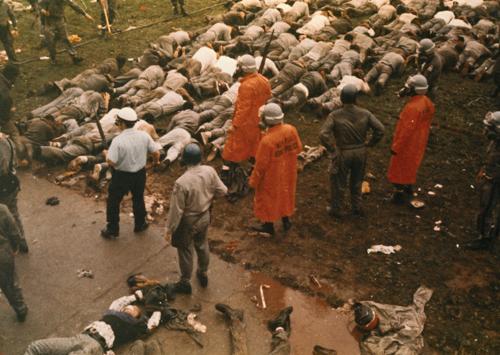
Tom Wicker discusses his book "A Time to Die: The Attica Prison Revolt"
Mar. 21, 1975 Wicker discusses the events at the center of his book, "A Time to Die: The Attica Prison Revolt." The discussion also covers Wicker's thoughts on his responsibility as a journalist to his fellow man. Both Wicker and Terkel read excerpts from the book. (includes excerpts from T2576, 1970 Nov. 20).
-

Tom Wicker discusses his book "A Time to Die: The Attica Prison Revolt"
Feb. 20, 1976 Tom Wicker discusses his book "A Time to Die: The Attica Prison Revolt", published in 1975. Wicker talks about his experience as one of those summoned as an unbiased observer.
-
Todd Gitlin discusses his book "The Sixties"
Mar. 29, 1988 Some people thought the 60's were glorious years and other people thought they were destructive years. "The Sixties: Years of Hope, Days of Rage," is Todd Gitlin's autobiography where he offers his perspective of those years.
-
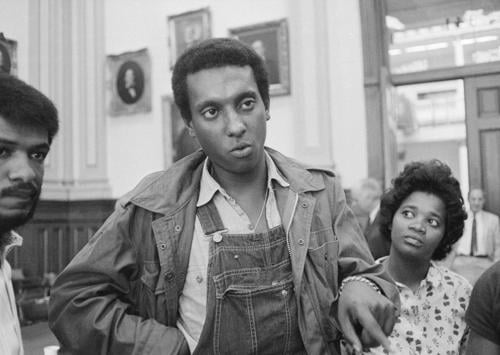
The Student Non-violent Coordinating Committee discusses the civil rights movement, protests, and jail with Studs Terkel
Sep. 1962 Terkel talks with Student Non-violent Coordinating Committee about the civil rights movement, protests, and jail.
-
The cast of "In White America" discuss the play
Feb. 24, 1965 Moses Gunn, Elizabeth Franz, and Novella Nelson, cast members of Martin Duberman's "In White America," discuss the play and its reception. Content Warning: This conversation has the presence of outdated, biased, or offensive language. Rather than remove this content, we present it in the context of twentieth-century social history to acknowledge and learn from its impact and to inspire awareness and discussion.*Please note: some sections have been edited out from the original recording due to copyright considerations
-
-
Terkel comments about the Montgomery impressions
1965 Discussing the Montgomery impressions.
-
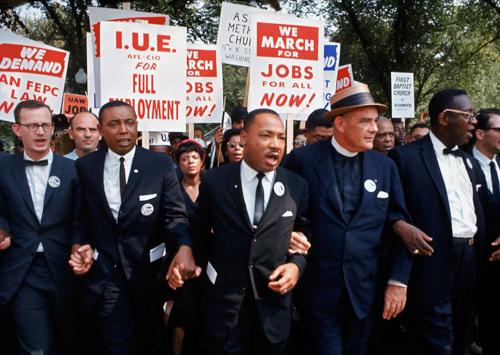
Studs Terkel presents a tribute to Martin Luther King, Jr.
Apr. 5, 1968 Studs Terkel shares a special program honoring the birthday of civil rights leader Martin Luther King, Jr. Includes excerpts from Terkel’s 1965 interview with King about King’s dream for civil rights in the United States, influence of his father, the damaging effects of segregation, and the role of love in bringing about social change. The program also includes excerpts from King’s 1963 “I Have a Dream” speech from the Civil Rights March on Washington, and his 1967 Christmas Eve speech at Bethesda Memorial Church in Atlanta.
-
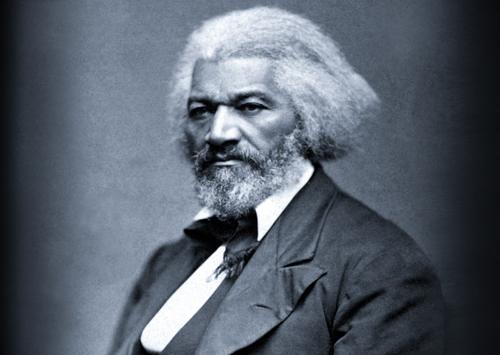
Studs Terkel presents a program in honor of the birthday of abolitionist and African American leader Frederick Douglass
Feb. 15, 1971 Studs Terkel presents a program in honor of the birthday of abolitionist and African American leader Frederick Douglass, including excepts from Terkel's 1964 interview with African-American scholar, author and social historian Lerone Bennett. Terkel reads at length from Douglass' autobiography, "My Bondage and My Freedom," focusing on Douglass' interactions with slave owners Hugh and Sophia Auld.
-
Studs Terkel joins the Evanston Township High Schools' "The spirit of soul" with musical director Avon Gillespie
1970 Studs Terkel listens in on Evanston Township High Schools', soul choral group, "The Spirit of Soul" as they rehearse for an upcoming concert. Musical director, Avon Gillespie, describes how the vocal improvisation of "The Spirit of Soul" singers brings an on the spot sense of joy. This reflection of African Heritage through song closes the gap between Africa and American shores and teaches Black people that their heritage is real, alive, and strong!
-
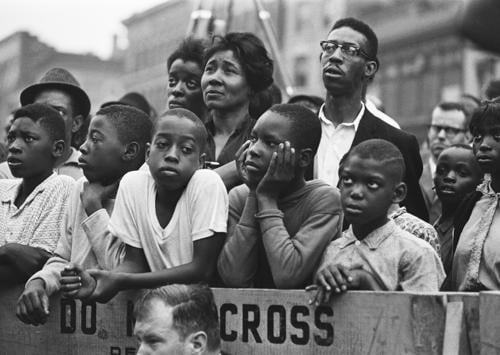
Studs Terkel interviews Professor Charles V. Hamilton on his book written with Stokely Carmichael entitled "Black Power: Politics of Liberation in America" ; part 1
Nov. 21, 1967 Using the backdrop of James Baldwin's "Nobody Knows My Name" and Baldwin's feelings that Blacks were ashamed of where they came from, Terkel interviews Professor and Chairman of the Political Science Department of Roosevelt University on his book coauthored with Stokely Carmichael entitled" Black Power: Politics of Liberation in America". Hamilton states that Blacks were taught to hate themselves and leave school believing that. Institutional racism and the deliberate oppression it creates, holds blacks back. Blacks are left out of crucial decision making processes that concern them.
-
Studs Terkel interviews Professor Charles V. Hamilton on his book written with Stokely Carmichael entitled "Black Power: Politics of Liberation in America" ; part 2
Nov. 21, 1967 Using the backdrop of James Baldwin's "Nobody Knows My Name" and Baldwin's feelings that Blacks were ashamed of where they came from, Terkel interviews Professor and Chairman of the Political Science Department of Roosevelt University on his book coauthored with Stokely Carmichael entitled" Black Power: Politics of Liberation in America". Hamilton states that Blacks were taught to hate themselves and leave school believing that. Institutional racism and the deliberate oppression it creates, holds blacks back. Blacks are left out of crucial decision making processes that concern them.
-
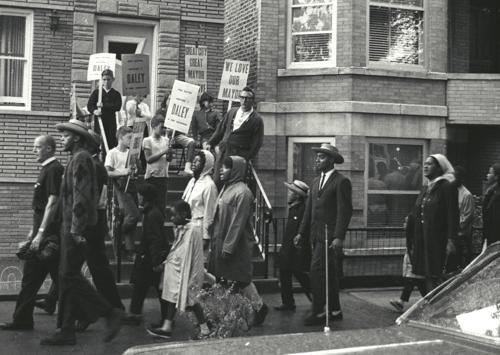
Studs Terkel discusses race relations and economic disparity with four Chicago area women ; part 2
Jan. 27, 1965 Studs discusses race relations and economic disparity with four Chicago area women in a program entitled "Each of us can act". This recording was the last of a 6-part series, "Rearing the Child of Good Will", broadcast under the auspices of the National Conference of Christians and Jews.
-
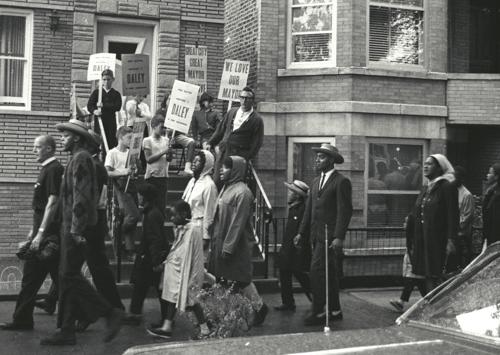
Studs Terkel discusses race relations and economic disparity with four Chicago area women ; part 1
Jan. 27, 1965 Studs discusses race relations and economic disparity with four Chicago area women in a program entitled "Each of us can act". This recording was the last of a 6-part series, "Rearing the Child of Good Will", broadcast under the auspices of the National Conference of Christians and Jews. The series focused on prejudice, race, religion, and community. Interviewees are: Madeline Bonsigniore of Chicago's south suburbs, Naomi Brodky of the Marynook neighborhood of Chicago, Lynn Williams of Winnetka, and Harriet White of the NCCJ.
-
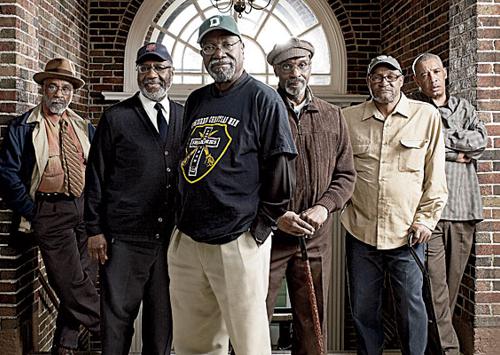
Studs Terkel discusses gang life with Allan Evans and Henry Jordan
1969 Studs Terkel discusses gang life with Allan Evans and Henry Jordan, members of the Vice Lords, an urban street gang based in Chicago. Evans and Jordan were both born and grew up in Chicago.