

-
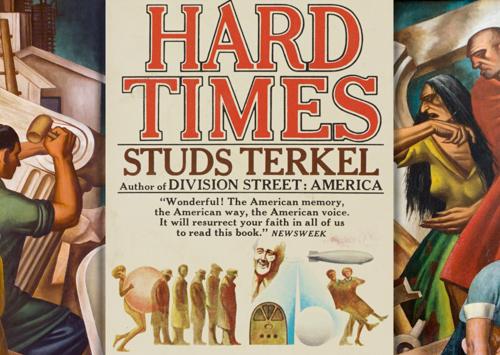
Terkel comments and presents "Hard Times: an Oral History of the Great Depression"; Chapter 3
1971 Presenting "Hard Times: An Oral History of the Great Depression" Chapter 3: Big Business & A Portrait of Two Women. William Benton credits Pepsodent's survival of the Great Depression to Amos 'n Andy. Arthur Robertson talks about the initial aftermath of the 1929 crash as a Wall Street businessman. Sidney Weinberg discusses the confusion on Wall Street after the crash and praises FDR's programs. Jimmy McPartland talks about the importance of working and the success of WPA to boost morale.
-
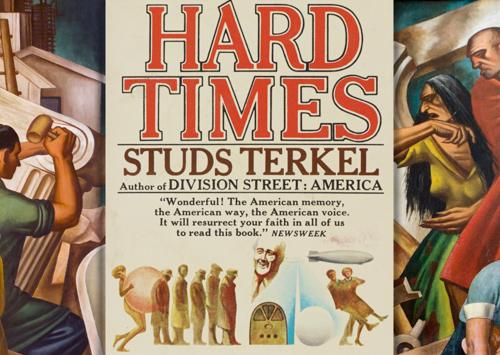
Terkel comments and presents "Hard Times: an Oral History of the Great Depression", Chapter 9
1971 Presenting "Hard Times: an Oral History of the Great Depression", Chapter 9: Concerning The New Deal. Ed Paulsen talks about conflicting feelings regarding the New Deal and how the government seemed more present in daily life. Hank Oettinger remembers how his town celebrated after the first round of relief checks were received. Gardner C. Means explains how the New Deal was created to help save the country.
-
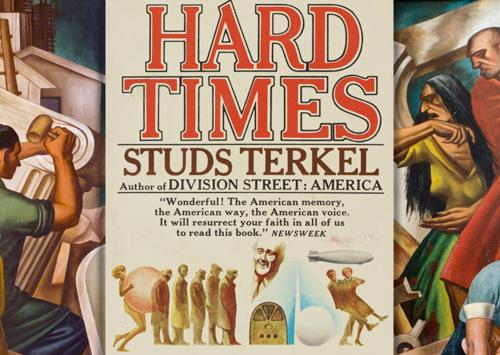
Terkel comments and presents "Hard Times: an Oral History of the Great Depression", Chapter 9
1971 Presenting "Hard Times: an Oral History of the Great Depression", Chapter 9: Concerning The New Deal. Ed Paulsen talks about conflicting feelings regarding the New Deal and how the government seemed more present in daily life. Hank Oettinger remembers how his town celebrated after the first round of relief checks were received. Gardner C. Means explains how the New Deal was created to help save the country.
-
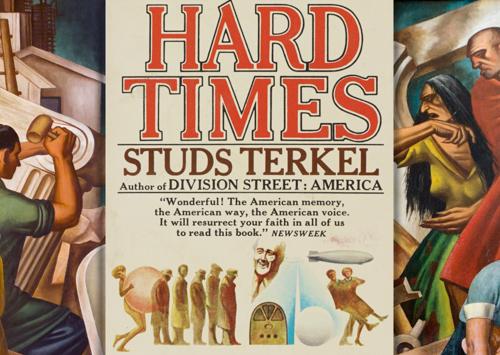
Terkel comments and presents "Hard Times: an oral history of the great depression" ; Program 5 ; part 1
1971 Presenting "Hard Times: An oral history of the great depression": "Bonnie laboring boy" with Joe Morrison, Evelyn Finn and Jose Yglesias (program V).
-
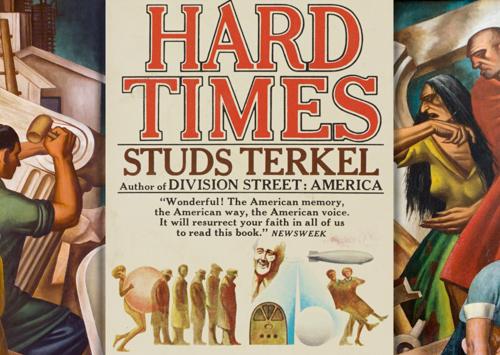
Terkel comments and presents "Hard Times: an oral history of the great depression" ; Program 15; part 1
1971 Presenting "Hard Times: an oral history of the great depression": "A gathering of survivors" with Joe Morrison, Evelyn Finn, Jose Iglesias, Bob Stinson, Oscar Heline, Eml & Ruth Loriks, Buddy Blankenship, Mary Owsley, Sally Rand, Jerome Zerbe, John Beeche (promgram XIII)
-
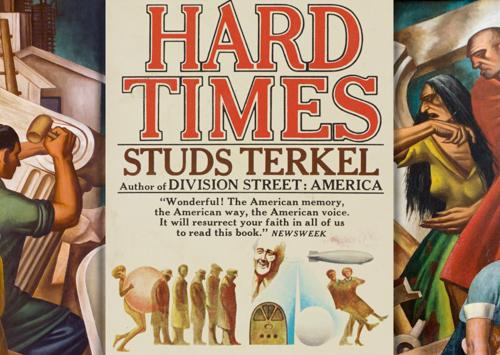
Terkel comments and presents "Hard Times: an Oral History of the Great Depression" ; Chapter 7
1971 Presenting "Hard Times: an Oral History of the Great Depression" High Life, Sixteen Ton: Chapter 7. Sally Rand talks about the creation of her signature fan dance and predictions for future depressions. Doc Graham discusses his upbringing, Chicago mobs, and Count Victor Lustig. Tony Soma talks about prohibition before and after the 1929 crash. Jerome Zerbe talks about inventing paparazzi photography, spending 2 weeks working in a coal mine, and the New Deal. Buddy Blankenship recalls working 16 hour days in West Virginia coal mines. Mary Owsley remembers life as a coal miner's wife.
-
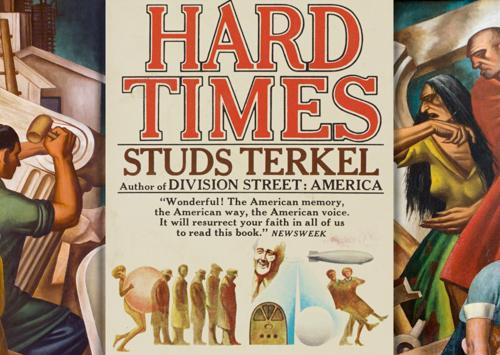
Terkel comments and presents "Hard Times: an Oral History of the Great Depression" ; Chapter 7
1971 Presenting "Hard Times: an Oral History of the Great Depression" High Life, Sixteen Ton: Chapter 7. Sally Rand talks about the creation of her signature fan dance and predictions for future depressions. Doc Graham discusses his upbringing, Chicago mobs, and Count Victor Lustig. Tony Soma talks about prohibition before and after the 1929 crash. Jerome Zerbe talks about inventing paparazzi photography, spending two weeks working in a coal mine, and the New Deal. Buddy Blankenship recalls working 16 hour days in West Virginia coal mines. Mary Owsley remembers life as a coal miner's wife.
-
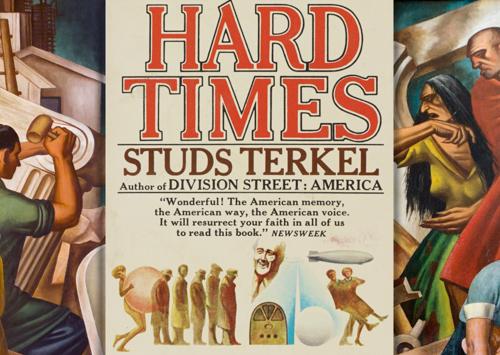
Terkel comments and presents "Hard Times: an Oral History of the Great Depression" ; Chapter 1
1971 Presenting "Hard Times: An Oral History of the Great Depression" Chapter 1: A Fairy Tale. Montage of young voices that talk about their parents' stories of surviving the Depression. The March: Jimmy Sheridan explains the origins of the Bonus March and what life was like on the rails. The Song: Edgar Yipsel (Yip) Harburg talks about writing "Brother, Can You Spare a Dime" while a version by the Weavers plays. Born Losers: Ed Paulsen discusses traveling the country to find work, march riots in San Francisco, and the relief felt as WPA projects and money began to lift burdens.
-
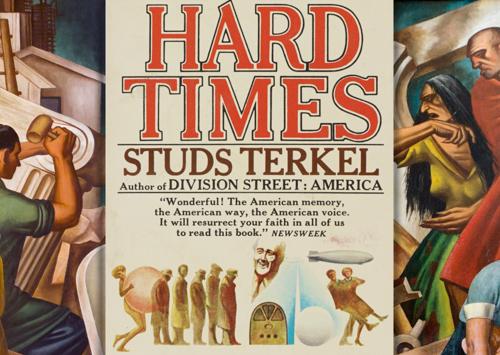
Terkel comments and presents "Hard Times: an oral history of the great depression" ; Program 5 ; part 2
1971 Presenting "Hard Times: An oral history of the great depression": "Bonnie laboring boy" with Joe Morrison, Evelyn Finn and Jose Yglesias (program V).
-

Studs Terkel is interviewed by Mitch Kraus and Edward Teller and Albert Szent-Gyorgy discuss science and politics
Dec. 29, 1970 Part 1 of this recording is Mitch Kraus interviewing Studs Terkel on his thoughts of self-indulgence, stereotypes, generational challenges, and historical events.
-
Studs Terkel discusses and comments the musical "The Cradle Will Rock"
Jan. 28, 1992 Studs Terkel presents The Cradle Will Rock, a 1937 musical play. Includes interview with Marc Blitzstein and Hiram Sherman talking about the challenges of presenting for the first time.
-
Studs presents program reflecting on President Roosevelt's death
Apr. 11, 1975 Terkel presents program reflecting on individuals' recollection of the day that FDR died and the former President's legacy among younger Americans.
-
Russell Baker reads from and discusses his book "The Good Times"
Sep. 21, 1990 Back in his day, there was no journalism school, explained Russell Baker. He spent time with the police and that's how he often got his stories about the underclass or the superfluous. Baker pointed out when a paper didn't want to print one of his stories, Baker was told the subject matter was in poor taste.
-
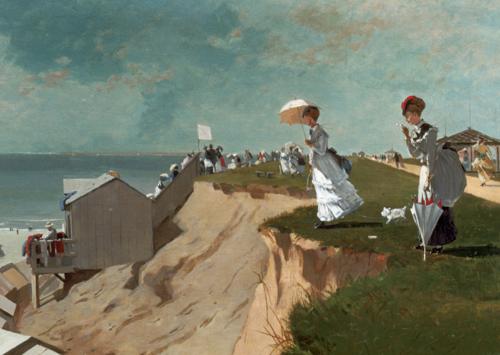
Richard McLanathan discusses his book "The American Tradition in the Arts"
1969 Richard McLanathan discusses his book "The American Tradition in the Arts" and takes Studs on a sprawling journey through artistic breakthroughs in architecture, painting, literature, and more while touching on dozens of artists and their works.
-
Presenting "Hard Times: an oral history of the great depression": "Honor and humiliation"
Jun. 24, 1971 Presenting "Hard Times: an oral history of the great depression": "Honor and humiliation" with Judge Sam Heller, Herman Shumlin, Anna Ramsay, Elsa Ponselle, Howard Worthington, Ben Isaacs, Ward James, Mick (Milton) Shufro, Eileen Barth (a pseudonym for Id) (program XI)