

-

Priscilla McDougall and Teri Teper discuss names and the Center for Woman's Own Name.
Feb. 17, 1975 Reasons why a woman would want to change her last name are discussed with Priscilla McDougall and Teri Teper. Establising a professional identity and establishing one's own line of credit are among some reasons. The ladies also explain that a woman is not rejecting a name but rather choosing her own identity.*Please note: some sections have been edited out from the original recording due to copyright considerations
-
Presenting a performance by musician, folk singer, songwriter, and political activist John McCutcheon
May. 23, 1986 Terkel comments and presents a musical performance by John McCutcheon
-
Presenting a musical performance of Utah Phillips
May. 7, 1986 Terkel comments and presents a musical performance of Utah Phillips
-
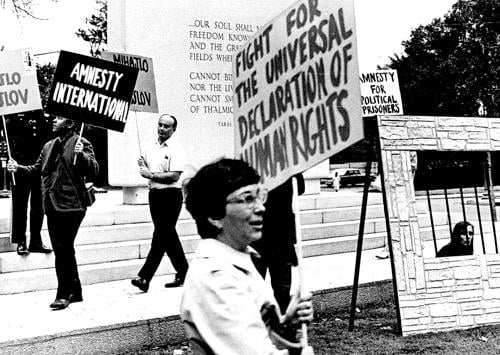
Poet and activist Rose Styron reads works by exiled writers
Nov. 8, 1977 Rose Styron and Studs read works by exiled writers and performers and discuss Amnesty International.
-
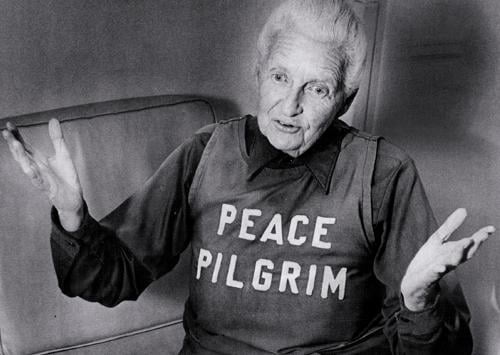
Peace Pilgrim talks with Studs Terkel about her prilgrimage as a peace activist
Jul. 12, 1976 Peace Pilgrim talks about her pilgrimage journey as a peace activist. Starting on January 1, 1953, in Pasadena, California, she adopted the name "Peace Pilgrim" and walked across the United States for 28 years.
-
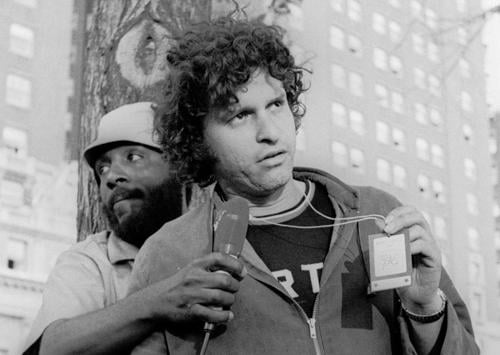
Paul Krassner discusses his book "Confessions of a Raving, Unconfined Nut: Misadventures in the Counter-Culture"
Oct. 19, 1993 Author, comedian and satirist Paul Krassner joins Studs Terkel in a “mosaic” of an interview, as Krassner calls it, to discuss his book, “Confessions of a Raving, Unconfined Nut: Misadventures in the Counter-Culture.” The conversation begins with two clips from Abbie Hoffman and Lenny Bruce, friends of Krassner’s and fellow key figures in the counterculture movement of the 1960s. Krassner speaks on his friends’ legacies, and then begins telling his story, reading a passage from his book about when he first started questioning society.
-
P. David Finks discusses his book "The Radical Vision of Saul Alinsky"
Sep. 7, 1984 Before he became an author, P. David Finks was a priest and he met Saul Alinsky in Rochester in 1964. Finks' book, "The Radical Vision of Saul Alinsky," covers Alinsky's plans of reorganizing community groups and being an outsider agitator. Alinsky, explained Finks, knew the importance of getting people involved. Two excerpts of interviews with Saul Alinsky are included.
-
-
Orletta Ryan, Mary Frances Greene, Karen and Lucille discuss difficulties they face as teachers and students; part 1
1966 Educators Orletta Ryan and Mary Frances Greene, and school children Karen and Lucille talk about their approaches to teaching, fighting in school, and expectations for learning.
-
Orletta Ryan, Mary Frances Greene, Karen and Lucille discuss a variety of experiences in a New York City school; part 2
1966 Educators Orletta Ryan and Mary Frances Greene, along with school children Karen and Lucille speak to the different experiences they have in their roles at school; part 2.
-
Nicola Geiger discusses her background and her time spent in the far east
Oct. 21, 1974 Born in Hamburg, Nicola Geiger, recalls her upbringing and her life under Nazi Germany. She lost two children in World War II. Later in life, she worked in both Japan and Korea. Geiger knew that she alone could not change the world but that she worked tirelessly to get other people to work on peace, too.
-
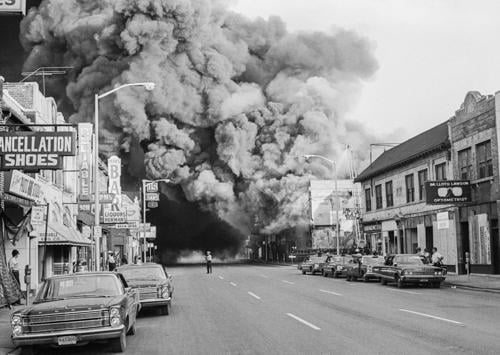
Nancy Milio reads from and discusses her book "9226 Kercheval"
Jun. 13, 1970 Nancy Milio's book, "9226 Kercheval: The Storefront That Did Not Burn," is about community health services offered in a ghetto on the south side of Detroit, Michigan. As a nurse, Milio knew how important it was to offer quality health services to poor and uneducated individuals. With their real names changed, Milio talks about her experiences with Mrs. Watkins, Johhnie West and others at the center.
-

Mothers discuss the hardships of living on welfare
1968 Five mothers from Chicago discuss the hardships of living in poverty and how little welfare actually helps with Studs Terkel.
-
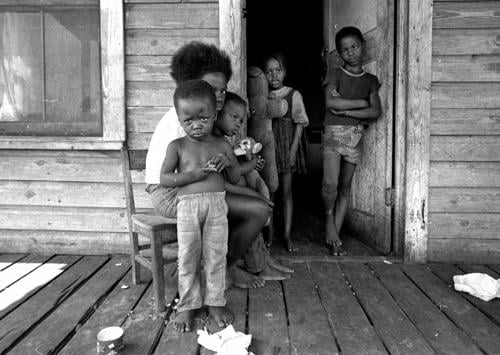
Mitchell Ginsberg, Edward Schwartz and Daniel Thurz discuss poverty in America and War on Poverty legislation
Dec. 8, 1964 Mitchell Ginsberg, Edward Schwartz and Daniel Thurz discuss poverty in America and War on Poverty legislation. Ginsberg is the associate dean of the School of Social Work at Columbia University, Schwartz is the George Herbert Jones professor of social work in the School of Social Service Administration at the University of Chicago, and Thurz is an associate professor of social work at the University of Maryland.
-
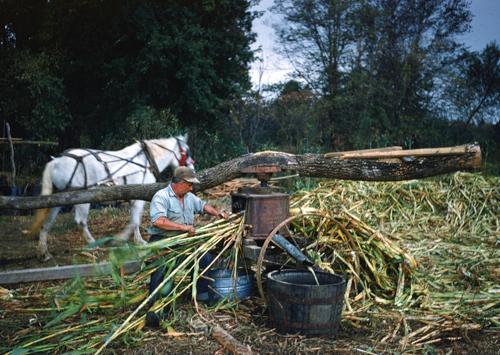
Miles Horton and Elliot Wigginton discuss the Foxfire Project
Jun. 1, 1977 Discussing the Foxfire books and interviewing Miles Horton and Elliot Wigginton. Wigginton is one of the editors/compilers of several of the books in the series about traditional handicrafts and practical methods used in rural life.