

-

Henry Steele Commager discusses America, American history, and American relations; part 1
May. 1, 1967 Henry Steele Commager discusses America, American history, and American relations. He also discusses television, historical figures, and wars. (Recorded at the Orrington Hotel in Evanston, Ill.).
-
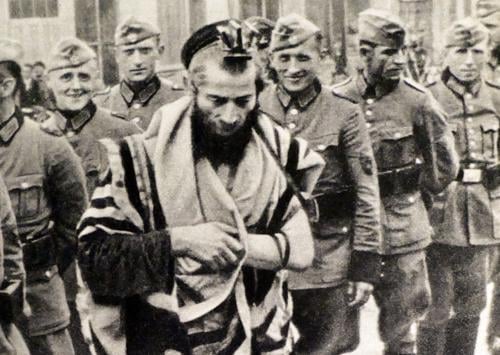
Heinrich Gruber and Howard Schomer discuss Nazi Germany and resistance
1968 German theologian Heinrich Gruber and pastor Howard Schomer discuss Nazi Germany and resistance
-
Harrison Salisbury discusses his book "The 900 Days: The Siege Of Leningrad" and Isabella Zorina discusses a trip to mass graves
Jul. 1, 1982 Harrison Salisbury discusses his book “The 900 Days: The Siege Of Leningrad” and the lasting impact of the siege on the Soviet Union and life in Leningrad during the siege. Salisbury reads a poem by Olga Bergholz.Isabella Zorina discusses a trip to mass graves, including the many young people who were also visiting, some as part of wedding ceremonies, and the music played at the graves. Terkel plays Beethoven's Symphony No. 3, conducted by Leonard Bernstein, at the end of the program.
-
Harrison Evans Salisbury discusses his book "A Time of Change"
Mar. 18, 1988 His experiences as a journalist are what's covered in Harrison Evans Salisbury's book, "A Time of Change: A Reporter's Tale of Our Time". Salisbury believed as a reporter, one truly needed to be at the event, in order to obtain the true story. Once Salisbury questioned if he was living in America because he was asked to switch rooms at a hotel in Birmingham, only to find out later that there were special, bugged rooms for reporters.
-
Harrison E. Salisbury discusses his book "The 900 Days"
Apr. 10, 1969 Discussing the book "The 900 days" about the siege of Leningrad during World War II.
-
Handasyde Buchanan and Miss Dillon discuss life in London, England and Scotland, bookshops, and book selling; part 1
1962 Interviewing booksellers Handasyde Buchanan and Miss Dillon while Studs was in England. They discuss life in London, England and Scotland, their bookshops, and book selling.
-
Hamilton Fish III discusses American history
Colonel Hamilton Fish III discusses American history. Major topics include The Great Depression, Franklin D. Roosevelt, World War II, and Communism. Fish also reads a personal letter sent to him from Martin Dies, Jr. Content Warning: This conversation has the presence of outdated, biased, offensive language. Rather than remove this content, we present it in the context of twentieth-century social history to acknowledge and learn from its impact and to inspire awareness and discussion.
-
Gordon Zahn discusses his book "In Solitary Witness" ; part 1
Jan. 15, 1965 One's conscience, morals and religion are all apart of Gordon Zahn's book, "In Solitary Witness: The Life and Death of Franz Jagerstatter". Zahn talks about who Jagerstatter was and what made him decide to say "No" to Hitler's army. Jagerstatter chose to lay with the community of saints rather than kill Jewish people.
-
Gordon Zahn discusses his book "In Solitary Witness" ; part 2
Jan. 15, 1965 Gordon Zahn continues to talk about his book, "In Solitary Witness: The Life and Death of Franz Jagerstatter". When doing his research for the book, it puzzled Zahn to find out that very few young people in Jaggerstatt's home village knew who Franz Jaggerstatt was. Zahn explained Jaggerstatt knew he was doing the right thing by objecting to Hitler's army because a Catholic priest had done the same thing.
-
Gitta Sereny discusses her book "Into That Darkness"
Feb. 7, 1983 While in a Dusseldorf prison, Gitta Sereny spent 70 hours interviewing Franz Stangl, the commandant of the Treblinka extermination camp. Her book, "Into That Darkness: An Examination of Conscience," questions how could an ordinary man with a wife and children become such an evil monster. Stangl rationalized his job by saying he never hurt anyone, that he never murdered anyone. Sereny said in the end, the only guilt Stangl harbored was that of still being alive.*Please note: some sections have been edited out from the original recording due to copyright considerations
-
-
Gary DeWalt discusses the film “Genbaku-Shi: Killed by the Atomic Bomb”
Aug. 8, 1985 Independent film director, writer, and producer Gary W. DeWalt discusses the film “Genbaku-Shi: Killed by the Atomic Bomb” and the U.S. citizens who died along with the Japanese in Hiroshima. Corky Siegel performs "Southwest Coast Blues (1980)" in the studio.
-
Gar Alperovitz discusses his book “Atomic Diplomacy: Hiroshima and Potsdam”
Gar Alperovitz, historian, writer, and political economist, discusses the bombing of Hiroshima, the Potsdam Conference, and the American confrontation with Soviet power.
-
Fred Freed discusses the atom bomb
Author Fred Freed discusses the history of the atom bomb, its impact on the world, and the scientists involved in its making. He also touches on Japan during World War II and the bombings of Hiroshima and Nagasaki.
-