

-

Simon Estes, bass baritone opera singer, discusses his life and career in classical opera
Feb. 10, 1982 Simon Estes, bass-baritone opera singer, is in Chicago for four performances of George Fredric Handel's Oratorio "Saul." He talks with Studs about growing up, his education, and his career in classical music and opera. The following songs were removed due to copyright restrictions. "Symphony No.
-
Sarah Caldwell discusses conducting operas
Aug. 2, 1976 Sarah Caldwell expresses how fortunate she's been in her career as a conductor. This recording also contains an excerpt with opera bass-baritone Donald Gramm.*Please note: some sections have been edited out from the original recording due to copyright considerations
-
-
Sam Pilafian and Gerhard Meinl discuss the tuba
Aug. 30, 1991 While in town for the Chicago Jazz Festival, Sam Pilafian and Gerhard Meinl discuss the history of the tuba. With demonstrations on the tuba, they play scales and other short pieces. Gerhard Meinl's family business of making instruments like the tuba has been around since 1810, explained Meinl.
-
Ryland Davies and Margaret Price discuss opera and their performance in Mozart's "Don Giovanni"
1972 Ryland Davies and Margaret Price discuss opera, Welsh art and culture, and their musical upbringings. They discuss various characters and operas they have performed in, including "Don Giovanni" and "Lulu". Music is played throughout the original airing, but has been removed from this recording for copyright reasons.
-
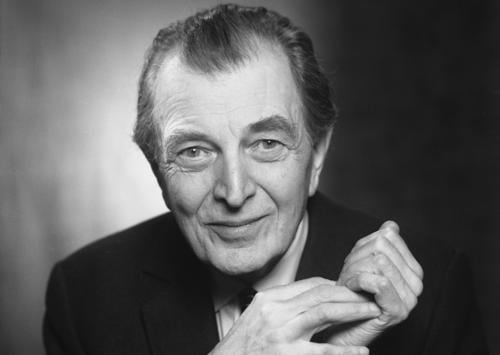
Russian-born composer Alexander Tcherepnin talks with Studs Terkel
Apr. 13, 1965 Studs Terkel and Tcherepnin discuss Tcherepnin's early years in Leningrad, his creative drive and its relation to real-life experiences and the influence of Chicago on his 1953 Op. 87 Suite for Orchestra.
-
Russell Sherman discusses and reads from his book “Piano Pieces”
May. 17, 1996 Author and pianist Russell Sherman discusses his book “Piano Pieces” and the philosophical concepts associated with listening to and playing music. Sherman plays a selection of compositions in the studio.
-
Rudolph Ganz discusses his career
Feb. 23, 1964 When Rudolf Ganz was younger, he first played the cello. After his cello broke into 800 pieces, Rudolph Ganz's father told Ganz he had to play the piano. Ganz became a world-renowned pianist and composer. Ganz's attitude toward music: in order to be progressive, one has to respect the past.
-
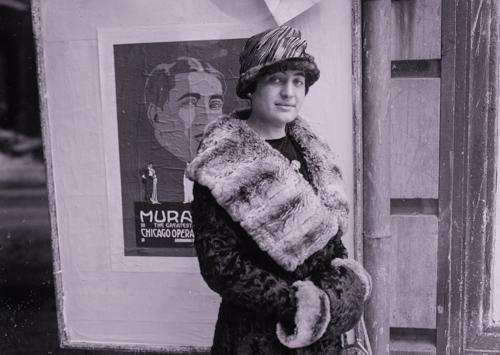
Rosa Raisa, in Chicago for the restoration of the Auditorium Theater, reflects on her career
Dec. 13, 1961 Studs Terkel interviews soprano Rosa Raisa about her career in Opera.
-
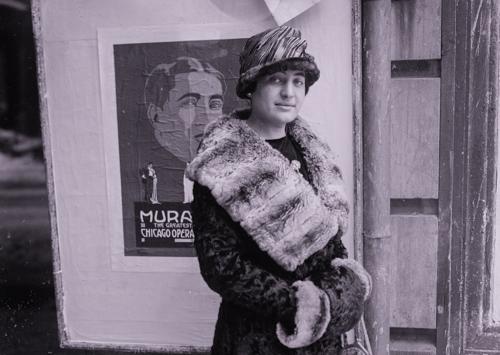
Rosa Raisa reflects on her career and her time in Chicago
Nov. 6, 1959 Renowned soprano, Madame Rosa Raisa discusses her career, early training, Chicago debuts, travels, teaching, and hobbies post opera.
-
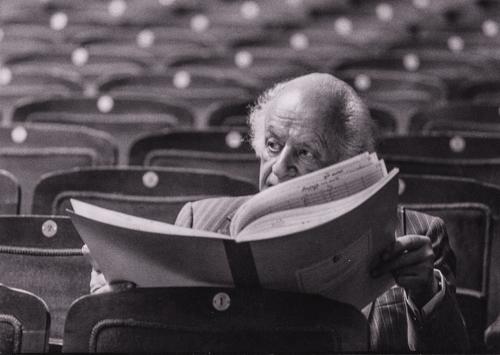
Rolf Liebermann discusses the Hamburg State Opera and describes their operation and performances
1967 Studs interviews Rolf Liebermann, director and composer, at the Hamburische Staatsoper in Hamburg, Germany. Liebermann explains some history of previous directors and performances. Many artists and operas are mentioned, but only a few were focused on in detail. Liebermann explains details about the operation of the opera highlighting the budget and the functions of the opera house. The recording stops short toward the end of the interview.
-
Roger Sessions discusses his career and upcoming performance at Northwestern ; part 2
Jan. 25, 1961 Composer and Pulitzer prize winner for music Roger Sessions discusses his music and its reception by the Russian people. Sessions is known for his admiration for music genres such as modern music and its influence in his compositions.
-
Roger Detmer and Virgil Thomson discuss the influence of technology onto music
1965 While their works and forte is classical music, Roger Detmer and Virgil Thomson talk about tape and electronic music. Detmer points out that in some eastern European countries, tape is considered pasee, and yet it's used often to recreate a sound to be used with their orchestras. Both men talk about electronic music and how it's sometimes used to make hand-made music sound artificial.
-
Robertson Davies discusses his book, "Lyre of Orpheus"
Jan. 26, 1989 Robertson Davies, Canadian writer and professor, discusses his newest book, "Lyre of Orpheus," the third book in the "Cornish Trilogy." The summary of the book and its ties to the King Arthur legend are explained.
-
Robert Kaminskas, Egle Rukstelyte Sundstrom in conversation with Studs Terkel
Apr. 5, 1985 Discussing the Lithuanian Opera Company with conductor Robert Kaminskas and Egle Rukstelyte Sundstrom.