Listen to New Voices on Studs Terkel our partnership with 826CHI-here! Read the Story


Showing 121 - 135 of 427 results
-

Mike Royko discusses his newspaper column
Jun. 17, 1966 Chicago humorist and newspaper columnist for the Chicago Daily News, the Chicago Sun-Times, and the Chicago Tribune, Mike Royko, goes over his past writings. Reflections include Royko's daily column, which covered race relations, politics, the Chicago Cubs, and life in Chicago. Together, Lois Baum and Studs Terkel read one of Royko's articles aloud.
-
Mike Royko discusses his book "I May Be Wrong, but I Doubt It"
1970 Author-journalist Mike Royko's book, "I May Be Wrong, but I Doubt It" includes 65-70 of Royko's past articles. Royko talks about how his columns come to life. Never having been one to sit in an office, he talks about going out into the world to get the story and to report the facts. Royko includes a funny tale about the word, "clout," in his book.*Please note: some sections have been edited out from the original recording due to copyright considerations
-
Mike Royko and Herman Kogan interview Studs Terkel
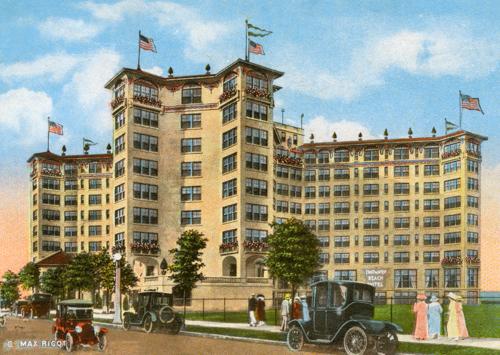
Jan. 16, 1967 In a rare turn of events, Mike Royko and Herman Kogan interview Studs Terkel about his book, "Division Street: America." Kogan is in awe of how Studs was able to get people to talk to him and give in-depth interviews. When asked by Royko, "What would you do if you were God?", Studs answered that he'd let man be man.
-
Mike Royko and Cathy Zmuda discuss "Slats Grobnik and Some Other Friends"
Dec. 11, 1973 Studs, author-journalist Mike Royko and Cathy Zmuda discuss and read from Mike's 1973 collection, "Slats Grobnik and Some Other Friends". First half are Slats Grobnik tales; the second half features a variety of columns by Royko. Musical excerpts include the songs "The Twelve Days of Christmas", "John Jacob Jingleheimer Schmidt", "Ma, He Wants to Marry Me", "Chicago (That Toddlin' Town)", "Sweet and Low", "America The Beautiful". "Go 'Way From My Window" (performers uncredited).
-
Michael O'Sullivan discusses the IRA and civil strife in Northern Ireland
Oct. 20, 1971 Journalist and photographer Michael O’Sullivan discusses the IRA and civil strife in Northern Ireland. O’Sullivan plays several of his tape recordings, including news coverage clips and interviews with IRA organizers and Irish civilians. Studs plays recordings of traditional Irish pub music. *Please note: some sections have been edited out from the original recording due to copyright considerations
-
Michael J. Arlen discusses his book "Thirty Seconds"
May. 28, 1980 Michael J. Arlen discusses his book Thirty Seconds, published in 1980. He goes on to discuss the advertising agencies and the work that goes into a television commercial. Rebroadcast.*Please note: some sections have been edited out from the original recording due to copyright considerations
-
Marya Mannes discusses book "But Will It Sell?" ; part 2
Dec. 1, 1964 Marya Mannes discusses her book But Will It Sell?, published in 1964. Mannes talks about American life and consumerism.
-
Marya Mannes discusses book "But Will It Sell?" ; part 1
Dec. 1, 1964 Marya Mannes talks about her book But Will It Sell?, published in 1964. Mannes talks about American life and consumerism.
-
Martin Lee discussing his book "Unreliable Sources: A Guide to Detecting Bias in News Media"
Dec. 6, 1990 Discussing the book "Unreliable Sources: A Guide to Detecting Bias in News Media" (published by Lyle Stuart) with author and investigative journalist Martin Lee.
-
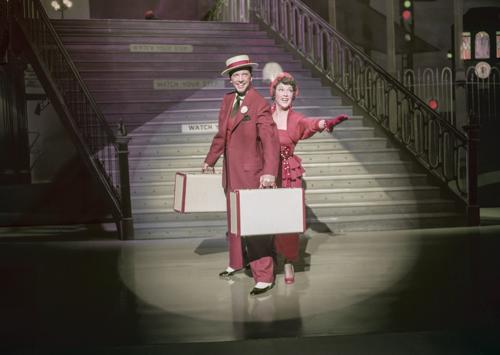
Martin Gottfried discusses his book "Broadway Musicals"
Nov. 15, 1979 Martin Gottfried discusses his book "Broadway Musicals" and the history of the musicals by evaluating the different big name composers, lyricists, and directors of Broadway.
-
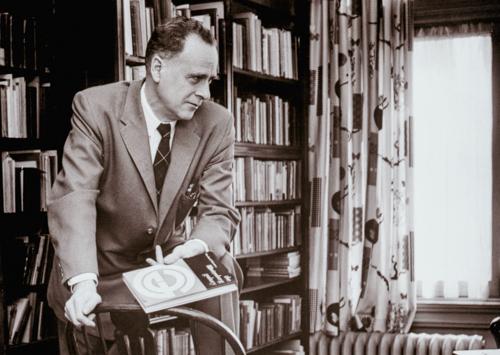
Marshall McLuhan discusses a wide range of philosophical topics
Jul. 1, 1966 Marshall McLuhan discusses a wide range of topics including conformity, changes in entertainment media, cultural change, art and artists, originality in dance, reading and language, human interaction with nature, and technology. Recorded in front of a live audience at Kendall College, McLuhan takes several questions from the audience throughout the program.
-
Mark Singer discusses his book “Funny Money” and the Penn Square Bank failure
Jun. 22, 1985 Author and journalist Mark Singer discusses and reads from his book “Funny Money.” This book, and interview, documents the events of the Penn Square Bank failure. Studs plays "Easy Come, Easy Go" - Johnny Green and His Orchestra (1934) and "Patriotic Diggers" - John Allison (ca. 1800).
-
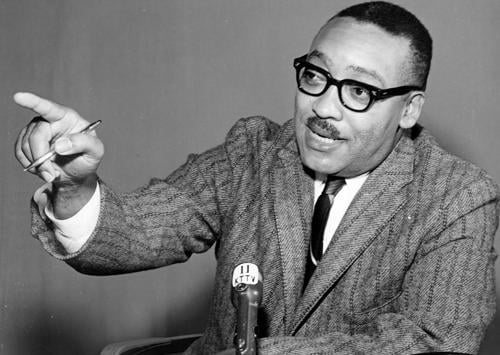
Louis Lomax discusses the book "Thailand: The War That Is, The War That Will Be"
1967 Discussing Thailand and interviewing journalist Louis Lomax. Includes passage from book.
-
Lois Wille discusses the many problems at Crane High School
Dec. 14, 1965 Lois Wille caused an uproar with the story she wrote for the Chicago Daily News, "Inside a Slum High School." According to Wille's investigation, a lack of money, over crowding of students, lights that don't work in the school and no books were among some of the problems that Wille found at Crane High School. Students also had a pessimistic view, explained Wille, as she found students didn't believe the teachers and counselors cared what theyd do after they got out of high school but they just wanted them to get out and leave Crane.
-