Listen to New Voices on Studs Terkel our partnership with 826CHI-here! Read the Story


Showing 136 - 150 of 160 results
-

David Douglas Duncan discusses his career in photojournalism
1970 David Duncan Douglas traveled all over the world. Douglas' goal was to show the honesty of a person when taking his/her photograph. Taking pictures started out as a hobby for Douglas. He had captured some pictures of John Dillinger, but admitted that he didn't know who Dillinger was at the time.
-
Cornell Capa discusses his book "Concerned Photographer"
Feb. 27, 1974 According to Cornell Capa, the best pictures of his book "Concerned Photographer" are the ones that deal with overpopulation. Capa hoped to make people aware of what's going on in the world and he further hoped people would do something about what they saw in the photographs.*Please note: some sections have been edited out from the original recording due to copyright considerations
-
Consuelo Sanz-Pastor discusses the impact of Francisco Goya's art
Aug. 2, 1965 Discussing the impact of Francisco Goya's art with Consuelo Sanz-Pastor, curator of the Madrid Art Gallery.
-
Cleopatre Bourdelle, the wife of artist and sculptor Antoine Bourdelle, speaks of her husbands life and art. ; part 2
Oct. 28, 1962 On location at Musee Bourdelle in Paris, France, Ms Bourdelle discusses the life and art of her late husband Antoine Bourdelle.
-
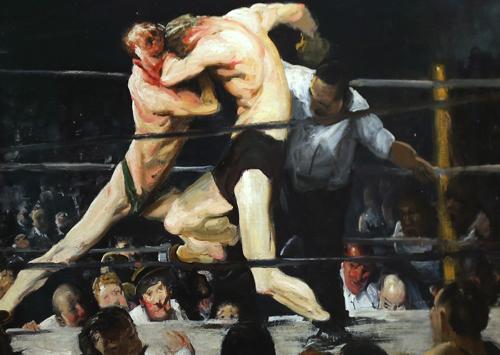
Charles Grant discusses George Bellows, and Captain Herbert Anderson discuss life on a tugboat
Jun. 19, 1962 Charles Grant discusses painter George Bellows; also includes anecdotes about his life, including being the first passenger on an airplane and meeting Buffalo Bill. Captain Herbert Anderson's conversation begins at 34:44.
-
Carol Wald discusses and reads from her book "Myth America"
Dec. 5, 1975 Carol Wald's book, "Myth America: Picturing Women, 1865-1945", came about after she saw some pictures of women and how they were depicted. Wald asked herself if the images of the tacky, frail American women represented her. Various images like sheet music, postcards, and advertisement posters showed women as good girls, nice girls, pious and pure. Wald's point is women are not perfect angels nor are they angelic all the time.
-
Carol Neblett and Richard Stillwell discuss their careers and their roles in the opera "Don Giovanni"
Nov. 18, 1980 Studs Terkel interviews opera singers, Carol Neblett and Richard Stillwell, as members appearing in the Lyric Opera production of "Don Giovanni". They discuss their characters, Elvira and Don. Carol Neblett and Richard Stillwell discuss their careers.
-
Carol Beckwith and Angela Fisher discuss their book “African Ark: People and Ancient Cultures of Ethiopia and the Horn of Africa”
Nov. 9, 1990 Photographers Carol Beckwith and Angela Fisher discuss their book “African Ark: People and Ancient Cultures of Ethiopia and the Horn of Africa.” The two discuss the cultural traditions of the indigenous groups from this region in Africa and the relationships they formed with these communities during this photography project. Studs plays an unnamed traditional Surma warrior song.
-
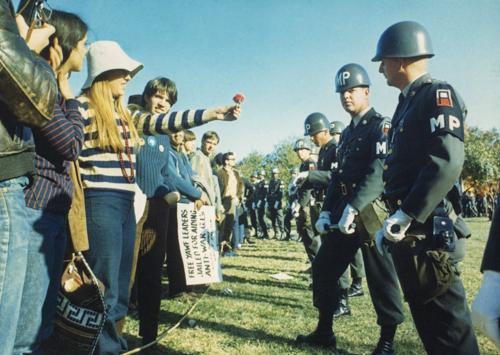
Bob and Joan Ericksen discuss the literary work of Peter Weiss and environmental ecology
1967 Bob and Joan Ericksen, both educators, artists, and environmental ecologists, discuss the literary work of Peter Weiss' "I Come Out of My Hiding Place" and environmental ecology. Excerpt of Peter Weiss reading from "I Come Out of My Hiding Place." The book speaks of why he writes and why he pursues his art (unknown source). The interview ends with a reading by Studs of an excerpt fro, Gustav Meyrink's "The Green Face."
-
Bill Mauldin reads from and discusses his book "The Brass Ring"
1970 As a teenager growing up, Bill Mauldin thought he’d be an airline pilot or a submarine captain. He didn’t have ambitions to be a cartoonist until he realized that drawing was the one thing he was good at. Mauldin’s book, “The Brass Ring: A Sort of Memoir,” covers his background, his influences, and stories from time spent in the Army.*Please note: some sections have been edited out from the original recording due to copyright considerations
-
Art Shay discusses his book, "Nelson Algren's Chicago," and his friendship with Algren
Dec. 20, 1988 Studs interview with Art Shay opens and closes with a slow blues piece. Shay discusses his picture book, "Nelson Algren's Chicago." He and Studs discuss the people and events in a number of pictures from the book. Studs plays a recording of Algren reading from one of his novels. Studs quotes critic, Rick Kogan of the Tribune.
-
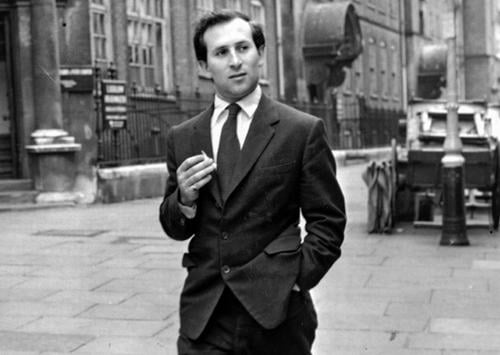
Arnold Wesker, english writer and playwright discusses his life and work.
1962 Arnold Wesker, English playwright and writer in several genres discusses scenes from the play "Roots". Mr Wesker further discusses his plays and the current cast traveling around England performing several of his plays. The interview tape ends and Studs recalls the remainder of the interview alone as a postscript.
-
Archie Lieberman discusses his book "Neighbors"
Dec. 6, 1993 With his book, "Neighbors: A Forty-Year Portrait of an American Farm Community," Archie Lieberman first took the photos of Scales Mound, Illinois. Because he felt something was missing, Lieberman, followed the residents around and then he added stories to his book. More often than not, Lieberman found out that the people of Scales Mound felt it was their duty to take care of the land.
-
Anna Ticho discusses her artistic process and exhibition of prints and drawings at the Art Institute of Chicago
1964 Israeli woman artist Anna Ticho discusses her artistic process and how the landscape of Jerusalem inspires her work, much of it on display at the Art Institute of Chicago. Studs plays "Sadot Shebe'emek (Fields fo the Valley)" - Netania Davrath & Robert DeCormier and His Orchestra.*Please note: some sections have been edited out from the original recording due to copyright considerations
-
Anita Miller and Jeanne Madeline Weimann discuss their book, "The Fair Women"
Jul. 17, 1981 Anita Miller and Jeanne Madeline Weimann discuss their book, The Fair Women, published in 1981, a book that talks about the women's role in the World's Columbian Exposition, especially in the creation of the Women's Building.