

-

Wole Soyinka discusses the play "Death and the King's Horseman"
Oct. 11, 1979 Wole Soyinka discusses the play "Death and the King's Horseman." Includes passages from the play and Nigerian funeral music.
-
-
Talking about Shakespeare, with Helene Rozenberg
Apr. 27, 1979 Power, the misuse of power, and the hollowness of one's heart and soul are the main themes covered by Helene Rozenberg in her adult courses on the plays of William Shakespeare.*Please note: some sections have been edited out from the original recording due to copyright considerations
-
Talking about Shakespeare, with A.L. Rowse
Nov. 17, 1978 The British historian and writer relates Shakespeare to modern day sensibilities, reads sonnets, and discusses Elizabethan cultural norms.*Please note: some sections have been edited out from the original recording due to copyright considerations
-
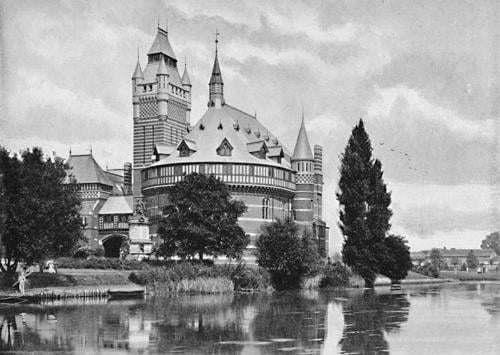
Studs Terkel in Stratford-Upon-Avon. At the National Theatre and at the Falcon Hotel ; part 1
1962 Studs Terkel heads to the British town of Stratford-upon-Avon (the birthplace of William Shakespeare) intending to interview Sir John Gielgud, and getting a few words before Studs realizes that Sir John is not intending to be interviewed. He speaks instead to other members of the company. Then he meets Mr. and Mrs. Lawrence in the Falcon Hotel.
-
Studs Terkel discusses the global status of theater with Croatian director Vlado Habunek
Apr. 25, 1962 Vlado Habunek, the Director of The Croatian National Theater, also a teacher at the University of Zagreb and board member for the Debrovnik Summer Festival discusses how all arts are seeking new revelations with Studs Terkel. Terkel asks Habunek to compare American Actors with Croatian actors because they are subsidized by the state. He sees Croatian actors as too secure and admires the ambition of American actors. The fact that theater reflects life and life is difficult begins a discussion on the status of theater today.
-
Studs Terkel comments and presents musical performance of Shakespeare tapestry
Apr. 23, 1975 Terkel comments and presents musical performance of Shakespeare tapestry
-
Studs Terkel comments and presents musical performance of Shakespeare
Apr. 23, 1975 Terkel comments and presents musical performance of Shakespeare tapestry
-
Sir Cedric Hardwicke discusses today's theatre
Oct. 14, 1960 According to Sir Cedric Hardwicke, plays are only fashionable in New York City even though people all around the country are hungry to see a good play. In England around Christmas time, Hardwicke says children are exposed to plays at an early age, unlike here in the states, where there aren't any plays geared toward children.*Please note: some sections have been edited out from the original recording due to copyright considerations
-
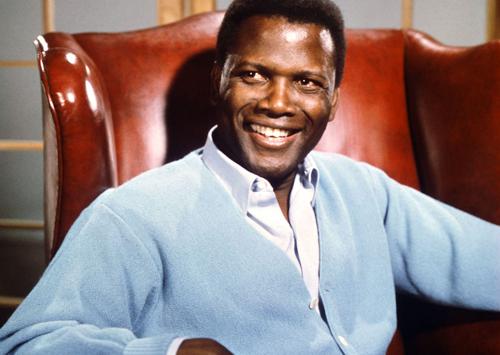
Sidney Poitier talks with Studs Terkel about his most recent film "The Defiant Ones"
Oct. 1, 1959 Bahamian actor Sidney Poitier talks with Studs Terkel about his most recent film "The Defiant Ones" and how racial type-casting for typically white roles works in Hollywood films. Besides being an actor, he is also a film director, author, and diplomat.
-
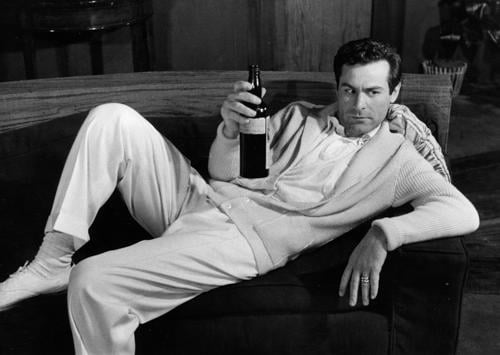
Sam Wanamaker discusses theater ; part 2
Dec. 4, 1964 Sam Wanamaker continues his discussion about the theater, with an emphasis on lights and music. With his production of "Macbeth," Wanamaker didn't want three-dimensional witches. Instead, he used lighting to convey their presence. In addition, similar to the line from Macbeth, Wanamaker was able to show the witches disappearing and melting into the air.
-
Sam Wanamaker discusses the theater ; part 1
Dec. 4, 1964 Sam Wanamaker talks about the curtain of a stage being a barrier between the set and the audience. Wanaker says that with theater today, there are more theaters in the round and more thrusts of ramps built into the audience, so that the audience can feel they are a part of the production of the play.
-
Presenting music and discussing Tito's interpretation of Verdi and his own music with Opera singer Tito Gobbi
Nov. 10, 1971 Studs Terkel interviews Tito Gobbi on his interpretation of Verdi. He also gets an interpretation of Gobbi's own music.
-
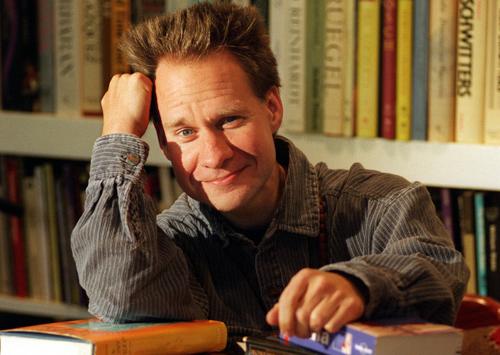
Peter Sellars discusses his production of "The Merchant of Venice"
Sep. 14, 1994 Peter Sellars talks about his production of "The Merchant of Venice." Peter Sellars also compares Los Angeles California to the world of "The Merchant of Venice". Sellars also discusses the history of the Jewish people, immigrants, the ghetto, and race relations.
-
Nikolay Akimov, Theodore Komisarjevsky and Pavel Markov discuss the Soviet theater
Aug. 16, 1959 Nikolay Akimov, Theodore Komisarjevsky and Pavel Markov discuss the Soviet theater. The ending music on this record was edited out