-

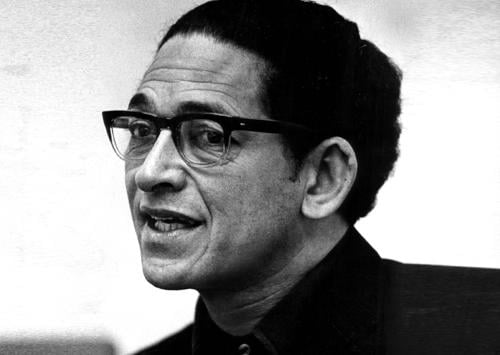
Dick Gregory discusses American politics
Dec. 17, 1964 This interview begins with a clip of one of Dick Gregory’s performances, where he talks about nonviolence and Native Americans. Studs Terkel introduces his guest as an observer, explaining that comedians are the best observers in society. Gregory offers extended analogies to communicate his views on a variety of topics, including the Vietnam War, race relations, segregation, human rights, and urban renewal. [The date is unclear, but it has to be after 1970, since the Kent State Shootings were mentioned]
-
Dick Cavett and Chris Porterfield discuss the book they wrote together, "Cavett"
Sep. 23, 1974 They discuss Mr. Cavett's life and his work as a talk show host. The interview ends with "Reverend Eli Jenkins' Prayer," a poem by Dylan Thomas sung by Osian Ellis, a Welsh singer, and harpist. These have been removed from the broadcast due to copyright.
-
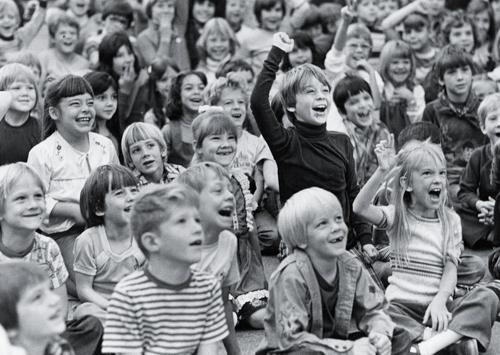
Diane Divorky discusses her book "The Myth of the Hyperactive Child: And Other Means of Child Control"
Oct. 24, 1975 Topics of discussion include privacy in education and access to school records, the use of pseudo-scientific terminology in describing children, the ways that a child's records are shared outside of the school and related race and class issues, the pharmaceutical industry and treatments, and the importance of parents refusing to allow their children to be given psychological tests without their informed consent.
-
Designer and instructor John E. Walley discusses design work
Apr. 22, 1959 Institute of Design instructor John E. Walley discusses teaching techniques and design trends.
-
Derrick Bell discusses his book "Confronting Authority"
Dec. 2, 1994 Civil rights activist, lawyer, and professor Derrick Bell discusses his latest work and protest against Harvard University due to their lack of diverse hiring in academics. Bell is known for his work on the concept of critical race theory and his relentless pursuit of fair treatment for his colleagues.
-
Derrick A. Bell in conversation with Studs Terkel
Oct. 8, 1992 Interviewing lawyer, activist and author Derrick Bell.
-
Derek Walcott discusses poetry and his play "Dream on Monkey Mountain"
Apr. 11, 1972 Colonial West Indies & Caribbean poet Derek Walcott talks about the traditions of poetry not purely being just the written words. Poetry, says Walcott, is also oral poetry that's found in folk songs, folk tales and calypso music. Walcott's play, "Dream on Monkey Mountain" is about Makak, an old hermit who lived on Monkey Mountain his whole life, and was now being kicked off the mountain.
-
Derek Shearer discusses his book "Economic Democracy"
Jun. 13, 1980 Studs Terkel speaks with writer and economist Derek Shearer about the book “Economic Democracy: The Challenge of the 1980s,” which Shearer co-authored with Martin Carnoy. Terkel and Shearer also discuss workers’ rights and equality in economics. Shearer reads a few excerpts from his book as well as a quote from labor leader Sidney Hillman.
-
Derek Freeman discusses the book "Margaret Mead and Samoa"
Mar. 15, 1983 Discussing the book "Margaret Mead and Samoa the making and unmaking of an anthropological myth" with the author Derek Freeman.
-
Derek Bell and Kevin Conneff of the Chieftains musical group discuss Irish folk music
Dec. 8, 1976 Interviewing Derek Bell and Kevin Conneff two members of the Chieftains musical group specializing in Irish folk music.
-
Dennis Kucinich discusses his beliefs and campaign platforms
Jun. 9, 1995 Former Mayor of Cleveland, Ohio, Dennis Kucinich, explained that when he ran for office, he believed it was important to take a stand and to fight for what you believe in. Kucinich believed people had the right to good public education for their children, along with lower costs for their utilities and their health insurance. Kucinich also believed people wanted good jobs and if everyone did the right thing, they would be rewarded..
-
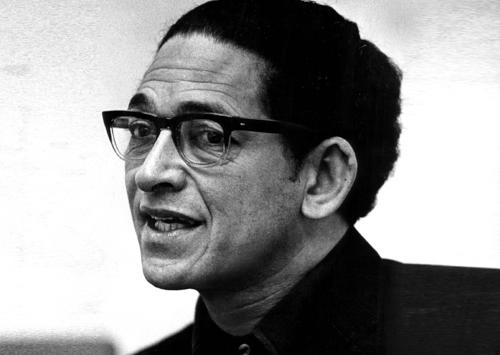
Dennis Brutus, John Fry, and Judith Todd discusses race, South Africa, and Rhodesia
Apr. 28, 1973 Judith Todd, daughter of prime minister of Rhodesia, discusses the book "Right to say no"; Dennis Brutus, poet and involved in protest of Rhodesia taking part in 1972 Olympics, and John Fry pastor First Presbyterian Church and social writer, race, South Africa, and Rhodesia. Excerpt from interview of people in South Africa - a guide, an Afrikaner, and a Chicago policeman regarding race (1895817-6-1 South African Tapes). The three were brought together to have a round table discussion about race relations in South Africa.
-
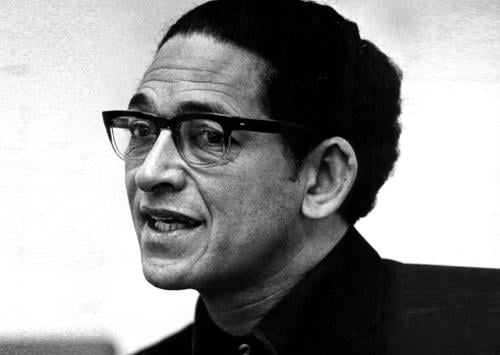
Dennis Brutus talks with Studs Terkel
Jun. 14, 1973 Dennis Brutus discusses and reads his poetry. He discusses life in South Africa. Dennis Brutus reads poems from his books of poetry "Sirens, Knuckles and Boots", "A Simple Lust", and "Letters to Martha and Other Poems from a South African Prison". Includes music in the beginning. Includes a clip of Albert Lutuli speaking.
-
Dennis Brutus discusses the non-violent fight against Aparthied in South Africa and reads his poetry
Sep. 13, 1972 Dennis Brutus reads several of his poems from the book "Letters to Martha and Other Poems From a South African Prison" (Letters number 1, 9, 17 - "In prison"). Dennis Brutus discusses the 1972 Summer Olympics and being imprisoned for being an activist against Apartheid and the unreasonable laws that went along with Apartheid. Interview begins with excerpt of interview with Chief Albert John Luthuli (excerpt from 1895817-6-1).
-