

-

George Anastaplo discusses his denial into the Illinois State Bar Association
Feb. 6, 1986 Before admittance, 17 members of the Illinois Bar Association asked George Anastaplo two questions. Should people in the Communist Party be allowed to practice law, to which Anastaplo answered yes. The members then asked Anastaplo if he was a member of the party. Anastaplo refused to answer that question because he deemed it an improper question for the Bar to ask. Anastaplo himself argued his case in front of the U.S. Supreme Court.
-
George Anastaplo discusses his background and career
Mar. 24, 1976 The American Bar Association asked George Anastaplo if he was a Communist. Anastaplo refused to answer the question because he believed the Bar shouldn't have asked the question and knowing the answer was none of their business.
-
George Anagnastopoulous discusses Greek history through songs
Mar. 24, 1975 Greek songs about history, freedom and the Greek people are covered in this interview with George Anagnastopoulous. Greek songs are played throughout and both George and Studs read the English translations of the songs.
-
Geoffrey Wolff discusses his book about Harry Crosby
Nov. 17, 1976 Terkel interview author Geoffrey Wolff about his latest book. Entitled "Black Sun," it is a biography of Harry Crosby.
-
Geoffrey Bridson BBC broadcaster and Joyce Bridson public relations at BBC talk about their work in radio through the years
Oct. 30, 1970 Geoffrey Bridson and his wife Joyce, discuss his book "Prospero and Ariel: The rise and fall of radio a personal recollection.", as well as his life and career as a producer/broadcaster for BBC radio. The interview is interspersed with several excerpts from recordings: Excerpt of conversation at the home of Bridsons in England 1962. He talks about the play "Aarons field" and the sequel "Aarons Fallout shelter". Excerpt from Joyce Bridson backstage after the play "Oh what a lovely war" in New York.
-
-
General Chaney, Charles Roche and Mary Lou Wolff discuss the Citizens Action Program
Nov. 27, 1973 Interviewing General Chaney, Charles Roche and Mary Lou Wolff of the Citizens Action Program.
-
Gene R. (Gene Robert) La Rocque in conversation with Studs Terkel
Sep. 14, 1987 Interviewing the director of the Center for Defense Information (CDI), retired United States Navy Admiral Gene La Rocque. Founded by La Rocque in 1972 as an independent monitor of the military, the CDI is a private, nongovernmental, research organization.
-
Gay Talese discusses his book "The Kingdom and the Power"
Jul. 14, 1969 Journalistic responsibility is a major theme of Gay Talese's book, "The Kingdom and the Power: Behind the Scenes at The New York Times, The Institution That Influences the World". Should they print what's true and verifiable or some watered down version of the truth? The New York Times has endured, says Talese because the paper plays it safe, it's never too right or too left.
-
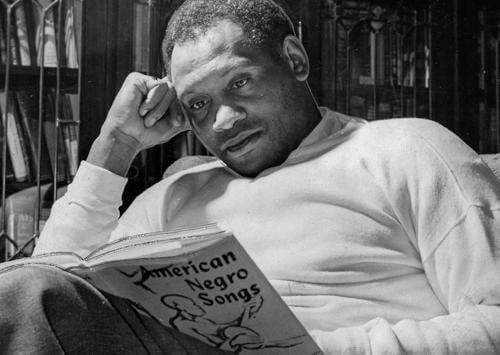
Gathering of friends discussing Paul Robeson
May. 8, 1970 Recorded live on Chicago's South Side. Robeson is ill at the time of recording. Speakers: Earl Dickerson, Etta Moten Barnett, Judge Sidney Jones, J. Mayo "Ink" Williams, Joan Brown (possibly Abena Joan Brown), Charles Hamilton, Margaret Burroughs, [John Gray's sister], [Stevens?]
-
Gary DeWalt discusses the film “Genbaku-Shi: Killed by the Atomic Bomb”
Aug. 8, 1985 Independent film director, writer, and producer Gary W. DeWalt discusses the film “Genbaku-Shi: Killed by the Atomic Bomb” and the U.S. citizens who died along with the Japanese in Hiroshima. Corky Siegel performs "Southwest Coast Blues (1980)" in the studio.
-
-
Garson Kanin discusses his book "Hollywood"
Nov. 8, 1979 Garson Kanin discusses his book "Hollywood: Stars and Starlets, Tycoons, Moviemakers, Frauds, Hopefuls, Great Lovers", published in 1967.
-
Garry Wills discusses his book “Witches and Jesuits”
Dec. 27, 1994 Author, journalist, and historian Garry Wills discusses his book “Witches and Jesuits.” Wills’ book, and this discussion, focuses on recontextualizing Shakespeare’s “Macbeth” in the original setting of 17th century England, informing readers and listeners of how the play would have been received during that time and what exactly makes it a dark tale. Studs plays an English traditional song “Soul Cake” and a clip of a stage performance of William Shakespeare's "Macbeth" by Margaret Leighton.
-
Garry Wills discusses his book "The Kennedy Imprisonment: A Meditation on Power"
Mar. 16, 1982 Discussing the book, "The Kennedy Imprisonment: A Meditation on Power," and interviewing the author Garry Wills.