

-

Noted Norwegian adventurer and ethnographer Thor Heyerdahl discusses his most recent book
Oct. 9, 1981 Noted Norwegian adventurer and ethnographer Thor Heyerdahl discusses his most recent book "The Tigris Expedition: In Search of Our Beginnings" in which Heyerdahl and a crew of 10 men built a reed boat in Iraq and sailed it through the Persian Gulf, around the Horn of Africa, to Pakistan and eventually the Red Sea. Their goal was to prove that the ancient peoples of Mesopotamia and the Indus Valley could have been in contact through marine trade and migration.
-
Norman Wallace discusses his music career
Jun. 8, 1980 Norman Wallace discusses his music career. Norman Wallace discusses his occupations as a pianist and a songwriter.
-
Norman Thomas talks with Studs Terkel
1968 Interviewing Norman Thomas on the occasion of his 80th birthday.
-
Norman Thomas discusses the book "Great Dissenters" ; part 1
Nov. 11, 1961 According to Norman Thomas, things in life are not as great as they used to be and there's nothing wrong with dissenting. Thomas chose 5 dissenters to write about, Socrates, Galileo, Thomas Paine, Wendell Phillips and Gandhi. Of of all of them, Gandhi was the biggest dissenter of our time, said Thomas.
-
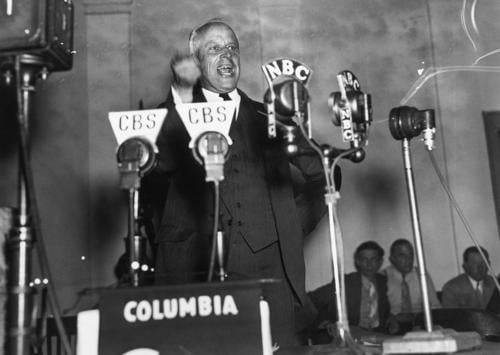
Norman Thomas discusses social progress ; part 2
Dec. 30, 1964 Socialist Party leader and Presbyterian minister Norman Thomas discusses social progress, his political views, and where society is headed with Studs Terkel. This is the final part of his interview.
-
Norman Thomas and Lillian Smith discuss dissenting ; part 2
Nov. 11, 1961 Content Warning: This conversation includes racially and/or culturally derogatory language and/or negative depictions of Black and Indigenous people of color, women, and LGBTQI+ individuals. Rather than remove this content, we present it in the context of twentieth-century social history to acknowledge and learn from its impact and to inspire awareness and discussion. Lillian Smith's father taught her that we're all human beings and that no one was better than another person.
-
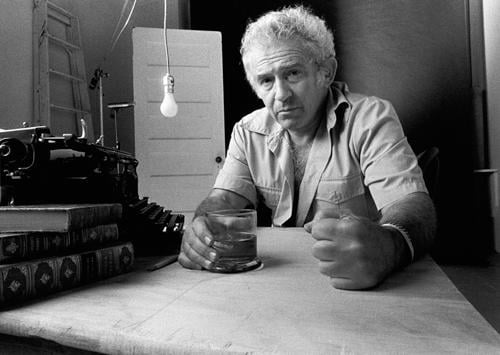
Norman Mailer discusses the meaning and future of space exploration
Jan. 29, 1971 Norman Mailer discusses how recent trips to the moon fit into the American consciousness, technology and machines in modern life, individuality, and the future of space exploration. Studs and Mailer read excerpts from "Fire on the Moon."
-
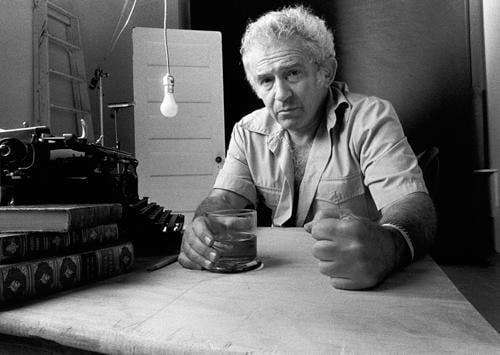
Norman Mailer discusses his writing, literature, and American life
Mar. 17, 1960 Norman Mailer discusses his writing, literary criticism, and American life. Other topics of conversation include Mailer’s thoughts on “affirmative” literary works, apathy and a lack of passion in modern life, beat writers and their reception in the United States, and many of his contemporary writers.
-
Norman Maclean reads from and discusses his book "A River Runs Through It"
Jun. 8, 1976 Fly fishing, relationships and people Norman Maclean has met are all apart of his book, "A River Runs Through It." Maclean's father taught Maclean and his brother the art of fly fishing. Maclean's book is semi-autobiographical with three short stories.
-
-
-
Norma Field reads from and discusses the book "In the Realm of a Dying Emperor"
Jan. 22, 1992 "In the Realm of a Dying Emperor: A Portrait of Japan at Century's End," is Norma Field's story of dissenters against Emperor Hirohito. There's the story of Mr. Chibana, a supermarket owner, who was arrested for burning the flag of the Rising Sun because he learned of the mass suicides by the people of Okinawa. There were also some that believed Emperor bore some responsibility for WWII when being told it was imperative to fight the sacred war.
-
Norbert Blei reads from and discusses his book "Chi-Town"
Oct. 19, 1990 When talking about his book, "Chi-Town," Norbert Blei said all the communities in Chicago offer everyone the groups' separate ethnic cultures. Blei also talks about riding the Douglass Park El and the old man sitting on a bench, who he encounters at Grant Park. Lastly, Blei talks about writers who have influenced him.
-
Nora Sayre discusses her book Running Time: Films of the Cold War
May. 4, 1982 Nora Sayre discusses her book "Running time: Films of the Cold War" and how Russian-American relations affected Hollywood and celebrity blacklists.
-
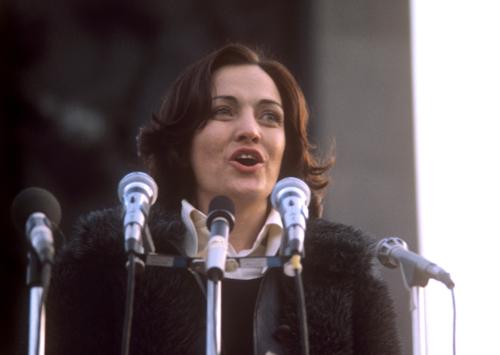
Nobel Peace Prize recipient Mairead Corrigan Maguire discusses the struggle for peace in Northern Ireland, and around the world
Dec. 1, 1993 Nobel Peace Prize recipient Mairead Corrigan Maguire discusses the struggle for peace in Northern Ireland, and around the world. Maguire, an Irish peace activist, founded Community of Peace People.