

-

Terkel comments and presents a musical performance by Arthur Lauer and Pat Ferreri
Aug. 27, 1997 Presenting music with flutist and guitarist Arthur Lauer and guitarist Pat Ferreri
-
Terkel comments and presents a gathering of survivors
Mar. 1, 1958 Presenting "A gathering of survivors" an award winning summary program of "Hard Times" the radio series.
-
Terkel comments and presents "Hard Times: an oral history of the great depression"; Program 9; Part 1
1971 Presenting "Hard Times: an oral history of the great depression": "Concerning The New Deal" with Ed Paulsen, Hank Oettinger, Gardner C. Means, Raymond Moley, Alf Landon, James A. Farley, C. B. Baldwin, Andy Kull, and John Beecher (program IX).
-
Terkel comments and presents "Hard Times: an Oral History of the Great Depression"; Chapter 9
1971 Presenting "Hard Times: An Oral History of the Great Depression" Chapter 9: God Bless the Child. In this section, interviewees are children that grew up during the Great Depression they talk about their experiences. Jane Yoder and her son Tom Yoder discuss the shame that can accompany poverty and the importance of warmth and food over all else. Bob Leary is a cab driver that talks about his father's lack of self-confidence even when able to find work. Daisy Singer remembers the need to keep up appearances.
-
Terkel comments and presents "Hard Times: an Oral History of the Great Depression"; Chapter 8
1971 Presenting "Hard Times: an Oral History of the Great Depression" The Farmer is the Man: Chapter 8. Harry Terrell remembers the Farm Holiday Movement. Oscar Heline explains deficit financing and farmer's actions in response to farm foreclosures. Frank and Rome Hentges recall the threatening of a judge in Le Mars, IA by farmers protesting foreclosures. Orin Kelley was mistakenly arrested in connection with the judge assault and discusses his time in jail. Emil Loriks gives his perspective of the Farmer's Holiday Association. Ruth Loriks talks about grasshopper swarms.
-
Terkel comments and presents "Hard Times: an Oral History of the Great Depression"; chapter 6
1971 Presenting "Hard Times: An Oral History of the Great Depression" Chapter 6: Three Strikes. Dr. Lewis Andreas talks about being at the 1937 Memorial Day massacre and providing medical care during the Depression. Justin McCarthy discusses his job conditions at Ford Assembly Plant prior to the unions implementation. Mike Widman remembers heading up union negotiations and the strike at the Ford Plant in 1940-41. Bob Stinson discusses working at General Motors and how the sit-down strike began. Union songs performed by the Almanac Singers are played throughout the episode.
-
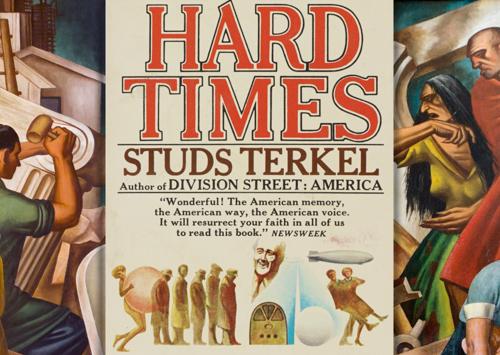
Terkel comments and presents "Hard Times: an Oral History of the Great Depression"; chapter 6
1971 Presenting "Hard Times: An Oral History of the Great Depression" Chapter 6: Three Strikes. Bob Stinson discusses working at General Motors and how the sit-down strike began. Justin McCarthy discusses his job conditions at Ford Assembly Plant prior to the unions implementation. Mike Widman remembers heading up union negotiations and the strike at the Ford Plant in 1940-41. Dr. Lewis Andreas talks about being at the 1937 Memorial Day massacre and providing medical care during the Depression.
-
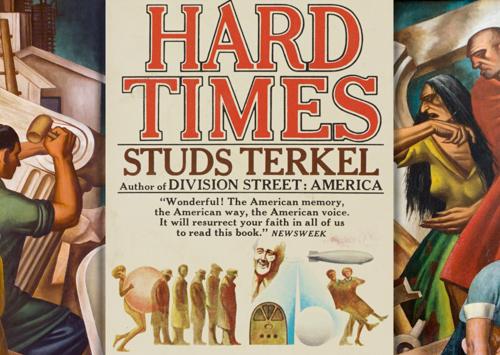
Terkel comments and presents "Hard Times: an Oral History of the Great Depression"; Chapter 3
1971 Presenting "Hard Times: An Oral History of the Great Depression" Chapter 3: Big Business & A Portrait of Two Women. William Benton credits Pepsodent's survival of the Great Depression to Amos 'n Andy. Arthur Robertson talks about the initial aftermath of the 1929 crash as a Wall Street businessman. Sidney Weinberg discusses the confusion on Wall Street after the crash and praises FDR's programs. Jimmy McPartland talks about the importance of working and the success of WPA to boost morale.
-
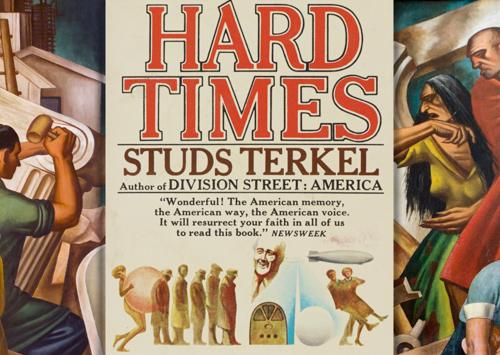
Terkel comments and presents "Hard Times: an Oral History of the Great Depression", Chapter 9
1971 Presenting "Hard Times: an Oral History of the Great Depression", Chapter 9: Concerning The New Deal. Ed Paulsen talks about conflicting feelings regarding the New Deal and how the government seemed more present in daily life. Hank Oettinger remembers how his town celebrated after the first round of relief checks were received. Gardner C. Means explains how the New Deal was created to help save the country.
-
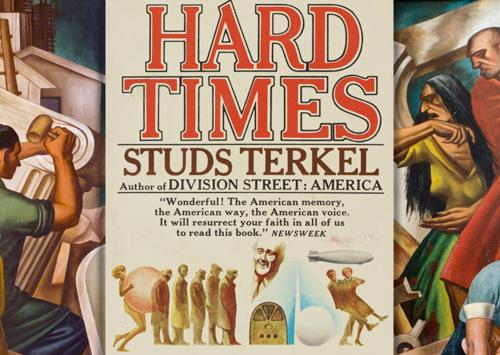
Terkel comments and presents "Hard Times: an Oral History of the Great Depression", Chapter 9
1971 Presenting "Hard Times: an Oral History of the Great Depression", Chapter 9: Concerning The New Deal. Ed Paulsen talks about conflicting feelings regarding the New Deal and how the government seemed more present in daily life. Hank Oettinger remembers how his town celebrated after the first round of relief checks were received. Gardner C. Means explains how the New Deal was created to help save the country.
-
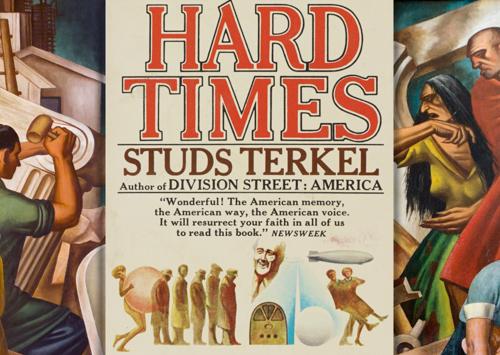
Terkel comments and presents "Hard Times: an oral history of the great depression" ; Program 5 ; part 1
1971 Presenting "Hard Times: An oral history of the great depression": "Bonnie laboring boy" with Joe Morrison, Evelyn Finn and Jose Yglesias (program V).
-
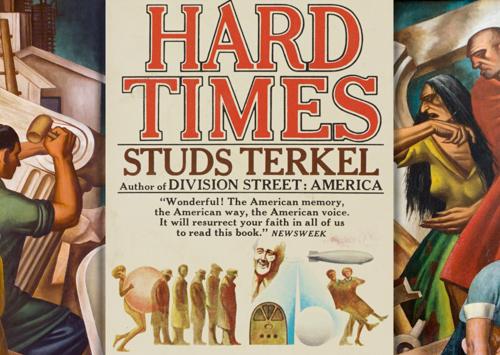
Terkel comments and presents "Hard Times: an oral history of the great depression" ; Program 15; part 1
1971 Presenting "Hard Times: an oral history of the great depression": "A gathering of survivors" with Joe Morrison, Evelyn Finn, Jose Iglesias, Bob Stinson, Oscar Heline, Eml & Ruth Loriks, Buddy Blankenship, Mary Owsley, Sally Rand, Jerome Zerbe, John Beeche (promgram XIII)
-
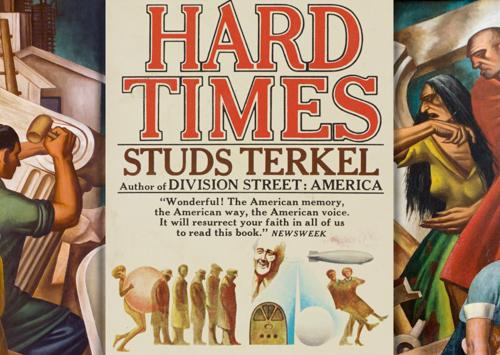
Terkel comments and presents "Hard Times: an Oral History of the Great Depression" ; Chapter 7
1971 Presenting "Hard Times: an Oral History of the Great Depression" High Life, Sixteen Ton: Chapter 7. Sally Rand talks about the creation of her signature fan dance and predictions for future depressions. Doc Graham discusses his upbringing, Chicago mobs, and Count Victor Lustig. Tony Soma talks about prohibition before and after the 1929 crash. Jerome Zerbe talks about inventing paparazzi photography, spending 2 weeks working in a coal mine, and the New Deal. Buddy Blankenship recalls working 16 hour days in West Virginia coal mines. Mary Owsley remembers life as a coal miner's wife.
-
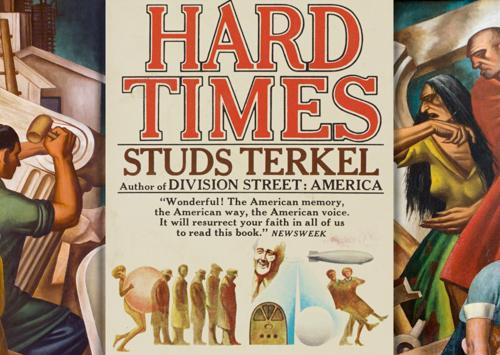
Terkel comments and presents "Hard Times: an Oral History of the Great Depression" ; Chapter 7
1971 Presenting "Hard Times: an Oral History of the Great Depression" High Life, Sixteen Ton: Chapter 7. Sally Rand talks about the creation of her signature fan dance and predictions for future depressions. Doc Graham discusses his upbringing, Chicago mobs, and Count Victor Lustig. Tony Soma talks about prohibition before and after the 1929 crash. Jerome Zerbe talks about inventing paparazzi photography, spending two weeks working in a coal mine, and the New Deal. Buddy Blankenship recalls working 16 hour days in West Virginia coal mines. Mary Owsley remembers life as a coal miner's wife.
-
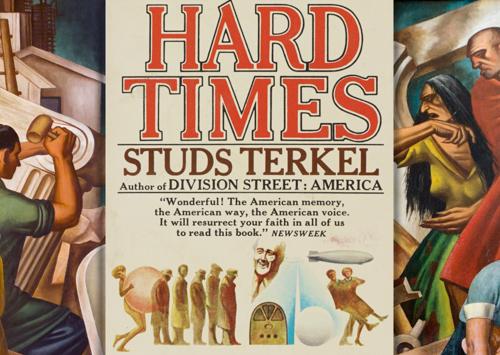
Terkel comments and presents "Hard Times: an Oral History of the Great Depression" ; Chapter 1
1971 Presenting "Hard Times: An Oral History of the Great Depression" Chapter 1: A Fairy Tale. Montage of young voices that talk about their parents' stories of surviving the Depression. The March: Jimmy Sheridan explains the origins of the Bonus March and what life was like on the rails. The Song: Edgar Yipsel (Yip) Harburg talks about writing "Brother, Can You Spare a Dime" while a version by the Weavers plays. Born Losers: Ed Paulsen discusses traveling the country to find work, march riots in San Francisco, and the relief felt as WPA projects and money began to lift burdens.