

-
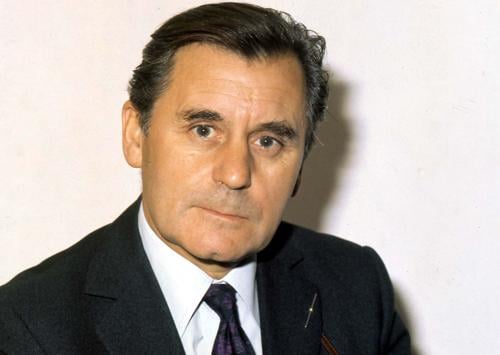
Richard Hoggart discusses culture and media
1968 Content Warning: This conversation includes racially and/or culturally derogatory language and/or negative depictions of Black and Indigenous people of color, women, and LGBTQI+ individuals. Rather than remove this content, we present it in the context of twentieth-century social history to acknowledge and learn from its impact and to inspire awareness and discussion. Richard Hoggart talks about the media and the cultural explosion. Hoggart explains that facts are not knowledge.
-

R.D. Laing discusses his book "The Divided Self: An Existential Study in Sanity and Madness" ; Part 2
1968 Content Warning: This conversation has the presence of outdated, biased, offensive language. Rather than remove this content, we present it in the context of twentieth-century social history to acknowledge and learn from its impact and to inspire awareness and discussion. Scottish psychiatrist and author R.D. Laing covers his latest outlook on the ideology of madness, with a specific focus on schizophrenia.
-
Presenting performers At the center folk song festival while Studs was in England ; part 1
1962 Terkel comments and presents folk song festival
-
Poplar Blackwall and District Rowing Club members discuss rowing
1970 Studs Terkel’s trip to England included a visit to the Poplar Blackwall and District Rowing Club. Its members discuss the Great River Race and the culture of working on the Thames’ docks.
-
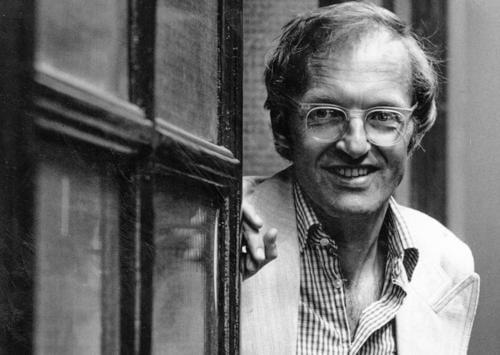
Oliver Howes discusses life in England; part 2
1962 Oliver Howes discusses his thoughts on racism in England, his daily life, and what he wants out of life. Audio is distorted from 15:39 to 35:42; part 2.
-
Michael Frayn discusses satire in the first half and Oliver Howes discusses music in the second half; part 1
1962 Michael Frayn reads from his book "At Bay in Gear Street" and how he approaches writing. Oliver Howes, a livery driver, talks about music, his middle class background, and his work;part 1.
-
London taxi driver discusses changes in London and speaks about present-day youth culture ; part 1
1968 During a visit to London, Studs interviews a 73 year old cab driver in London, who has 50 years on the job. They discuss traffic jams, the elderly and the young, poverty, welfare, and society. Studs also interviews a number of people attending the Tate Gallery's Lichtenstein Exhibition.
-
Joyce Grenfell, Dame Sybil Thorndike and Frances Cucka discuss acting
Dec. 1, 1962 When asked what she thought of Dame Sybil Thorndike, British actress Joyce Grenfell said Dame Sybil has a great sense of discovery. The Grand Dame of the British Theatre, Dame Sybil Thorndike said the greatest thing that ever happened to her was George Bernard Shaw's "Saint Joan". Thorndike also spoke of her politics and of being anti-war. Frances Cucka said working with Dame Sybil Thorndike was an extraordinary experience. Cucka, voted one of the most promising actresses of the west, said she also learned to sing and to dance for future roles.
-
Ivy Compton-Burnett discusses her life and work while Studs is in London, England ; part 1
1962 The tape begins with Studs speaking with Christopher Sykes, a friend and producer, Studs is getting information how to behave and what to expect. Studs meets Ms. Compton-Burnett at a flat in Cornwell Gardens, London, England and they discuss her life and work as a novelist and writer. Ms Compton Burnett discusses London and class structure. End of tape 1
-
Ivy Compton-Burnett discusses her life & work ; part 2 and Peter Hall discusses the theater ; part 1
1962 Ivy Compton-Burnett continues the discussion of class structure in England. Ms. Compton-Burnett states that she has never been a actor but she had always been an observer, to which Studs agrees that her writing reflect her statement accurately. He ends the interview by telling Ms. Compton-Burnett that she is a true original and that he greatly admires her individuality. Interview ends at 13:00. (part 2) Studs then begins an interview with Peter Hall at Aldwych theater office London, England. Mr.
-
Interviewing Scottish psychiatrist and author of "The politics of experience," R. D. Laing ; part 1
1968 Content Warning: This conversation has the presence of outdated, biased, offensive language. Rather than remove this content, we present it in the context of twentieth-century social history to acknowledge and learn from its impact and to inspire awareness and discussion.
-
-
-
-