

-

Jack Newfield discusses his book "Robert Kennedy: A Memoir"
Oct. 31, 1978 According to Jack Newfield's book, "Robert Kennedy: A Memoir," Robert Kennedy spent a good part of his first 38 years of life in service to his brother. Robert was JFK's campaign manager, advisor, and Attorney General. Objectivity and seeking the truth as a journalist is also discussed in the interview.
-
Howard Schomer, Elsie Schomer and Rabbi Jacob Weinstein discuss their experiences in Vietnam
Jul. 26, 1965 Church leaders Howard Schomer, Elsie Schomer and Rabbi Jacob Weinstein talk about their experiences with the Vietnamese people they encountered. The group determined no matter who they came in contact with, two things were true, they were never told that they should leave Vietnam and that all the Vietnamese people longed for peace.
-
Horst Voight discusses his background and his future ; part 2
Horst Voight reflects on the bad job he believes teachers are doing by solely glossing over current history and only saying, "Hitler was a bad man". Voight believed those over 18 know they lost the war and they must pay the price for their fathers' involvement and mistakes of the war. Voight concluded with his love of journalism and how he hopes to be a great reporter, by getting both sides of every story.
-
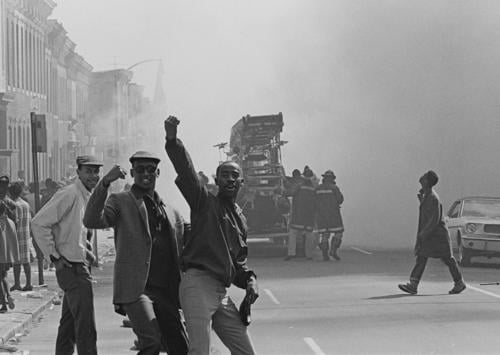
Garrett O'Connor discusses "Reflections in the rubble."
Feb. 1, 1970 Psychiatrist Dr. Garrett O'Connor discusses his article "Reflections in the rubble: some thoughts in the aftermath of civil disorder." Topics of conversation include his experiences working in community clinics with blue collar workers and African Americans; the ways that poverty, racism, and classism are maintained by the American economy; the Martin Luther King, Jr.
-
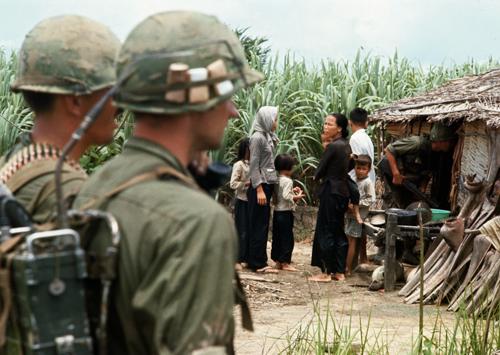
First Lieutenant Louis Font discusses how he became a conscientious objector as a West Point Military Academy graduate; part 1
1970 First Lieutenant Louis Font discusses the events and thought process that led to becoming conscientious objector to the Vietnam War as a recent West Point Military Academy graduate. He also talks about daily life at West Point; part 1.
-
Father John McKenzie and Dr. Howard Schomer discuss personal responsibility, morality and hate, as it pertains to the Vietnam War ; part 2
1965 The interview continues with Father John McKenzie and Dr. Howard Schomer talking about fear and dissent. Schomer says Christians have the duty to dissent when they believe their beliefs are being contradicted by policy. He also talks about not understanding a dampening down of the human mind when it comes to human issues. Father McKenzie adds that society is made up of the best educated ignoramuses that ever existed.
-
Father John McKenzie and Dr. Howard Schomer discuss personal responsibility, morality and hate, as it pertains to the Vietnam War ; part 1
1965 Whether in the United States or Vietnam, Dr. Schomer asks what are our personal responsibilities for the atrocities? Father John McKenzie talks about a lowering of people's moral tone. People have put their morality in their pockets, so as to get cleared of something and not get involved, added Father McKenzie.
-
Edward Keating discusses the magazine Ramparts
Mar. 1, 1967 Discussing the philosophy of "Ramparts" and interviewing Edward Keating.
-
Dr. George Wald discusses the have and the have nots of society
Oct. 12, 1974 Interviewing Dr. George Wald, Professor of Biology at Harvard University, who often spoke on the social aspects of science, human ecology, and the environment.
-
Douglas Dowd discusses his book "Blues For America: A Critique, A Lament, and Some Memories"
May. 5, 1997 Author Douglas Dowd discusses topics from his book "Blues For America: A Critique, A Lament, and Some Memories," including war, religion, and American history.
-
Donald Duncan reads from and discusses his book "The New Legions" ; part 2
Content Warning: This conversation includes racially and/or culturally derogatory language and/or negative depictions of Black and Indigenous people of color, women, and LGBTQI+ individuals. Rather than remove this content, we present it in the context of twentieth-century social history to acknowledge and learn from its impact and to inspire awareness and discussion. While reading a passage from his book, Donald Duncan questions why he and other military personnel are in Vietnam. He finds other men that feel the same way, too,
-
Donald Duncan reads a poem written by a Vietnamese man ; part 3
Donald Duncan shares a letter that was written in response to American aid to the Vietnamese people. In conclusion, Duncan offers his reflections about why he was against the Vietnam War.
-
Donald Duncan discusses his book "The New Legions" ; part 1
"The New Legions," is partly an autobiography of Donald Duncan's time spent in the military, in the special forces in Vietnam. Duncan, a former master sergeant, explains how the military teaches its men how to kill. He further explains how the sole purpose of special forces is to go into a country and organize its people against unpopular governments.
-
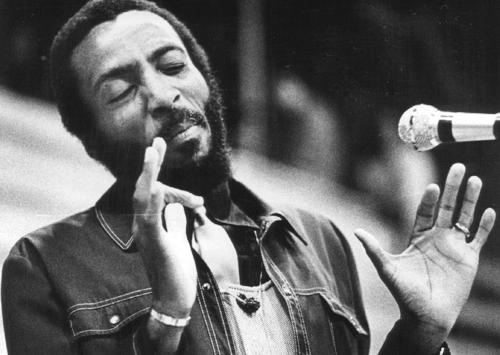
Dick Gregory discusses his book "Dick Gregory's Natural Diet for Folks Who Eat: Cookin' With Mother Nature"
May. 30, 1973 Comedian and activist Dick Gregory joins Studs Terkel to discuss his new book “Dick Gregory's Natural Diet for Folks Who Eat: Cookin' With Mother Nature.” Gregory talks about his experiences fasting for both political and health reasons, and he comments on hunger in America, the power of the navy bean, and changing trends in eating. The two discuss the peace movement and Watergate, and Gregory shares his experience as a black man in the military. Gregory believes that how you treat yourself and your body reflects how you treat others.
-
David T. Dellinger discusses his book "From Yale to Jail"
Apr. 23, 1993 The early influences of his father, his time in prison, and a bomb being sent to his home are among the topics covered in Dellinger’s book, “From Yale to Jail: The Story of a Moral Dissenter”. Dellinger is best known for being one of the Chicago Eight. He recalls a time in Lincoln Park, IL when he was warned to get out of there quickly because the police were told to attack Dellinger and his group.