

-

Chaim Potok discusses the Hasidic movement; part 2
May. 5, 1967 Interviewing Chaim Potok, soon after the publication of his book The Chosen.*Please note: some sections have been edited out from the original recording due to copyright considerations
-
Chaim Potok discusses the Hasidic movement; part 1
May. 5, 1967 Interviewing Chaim Potok, soon after the publication of his book The Chosen.*Please note: some sections have been edited out from the original recording due to copyright considerations
-
Celia Morris Eckhardt reads from and discusses the book "Fanny Wright: Rebel in America"
May. 23, 1984 Discussing the book "Fanny Wright: rebel in America" with the author Celia Morris Eckhardt.
-
Caroline Bird discusses her book, 'Born Female: The High Cost of Keeping Women Down'
Caroline Bird discusses her book, 'Born Female: The High Cost of Keeping Women Down', published in 1968. Studs plays interviews from dissenters of the Women's Liberation Day and Caroline Bird responds. The discussion continues on issues of sexism and the future of the women in the workforce.
-
Carol Wald discusses and reads from her book "Myth America"
Dec. 5, 1975 Carol Wald's book, "Myth America: Picturing Women, 1865-1945", came about after she saw some pictures of women and how they were depicted. Wald asked herself if the images of the tacky, frail American women represented her. Various images like sheet music, postcards, and advertisement posters showed women as good girls, nice girls, pious and pure. Wald's point is women are not perfect angels nor are they angelic all the time.
-
Carlos Fuentes discusses his books "Burnt Water" and "Distant Relations"
Jun. 6, 1982 Discussing the books "Burnt water" and "Distant relations" with the author Carlos Fuentes.
-

Calvin Trillin discusses his book “Third Helpings”
Apr. 22, 1983 Writer Calvin Trillin talks about his book “Third Helpings” and different regional foods and the ethnicities that influence them. Both Studs Terkel and Calvin Trillin read excerpts from Trillin’s book, and a soundbite from the former Commissioner of Immigration, Leonel Castillo, is played.
-

Calvin Trillin discusses his book “Killings”
Feb. 13, 1984 Writer Calvin Trillin discusses his book “Killings” and the murder cases included in the book. Trillin also reads a poem written by one of the victims.
-
C.D.B. Bryan talks with Studs Terkel
Jul. 14, 1976 C.D.B. Bryan discusses his book "Friendly Fire" and the Vietnam War. Bryan discusses the true story of Michael Mullen who was killed by friendly fire in Vietnam and his family.
-

Bob Greene discusses his book "Billion Dollar Baby"
Nov. 20, 1974 Journalist Bob Greene joins Studs Terkel to talk about his book “Billion Dollar Baby” and about his experience on tour with rock and roll band Alice Cooper. Greene talks about the band’s inception and their grotesque performance style, and comments on society’s (particularly the youth’s) acceptance and adoration of this band despite their violent message, and the irony of that adoration. Studs connects the band’s success to the society’s acceptance to the Vietnam War.
-
Bill Mauldin reads from and discusses his book "The Brass Ring"
1970 As a teenager growing up, Bill Mauldin thought he’d be an airline pilot or a submarine captain. He didn’t have ambitions to be a cartoonist until he realized that drawing was the one thing he was good at. Mauldin’s book, “The Brass Ring: A Sort of Memoir,” covers his background, his influences, and stories from time spent in the Army.*Please note: some sections have been edited out from the original recording due to copyright considerations
-
-
Basil Davidson discusses Africa and his book "Lost Cities of Africa," part 2
British historian and writer Basil Davidson discusses Africa and his book "Lost Cities of Africa," part 2. This recording also includes a discussion with Anne Graham Bell and Tony Mott about London's youth (recorded while Studs was in England) beginning at 00:20:14. Mott and Bell portion of the interview cuts off abruptly at the end.
-
Basil Davidson discusses Africa and his book "Lost Cities of Africa," part 1
British historian and writer Basil Davidson discusses Africa and his book "Lost Cities of Africa." Part 1. Part two of this recording also features Anne Graham Bell and Tony Mott discussing London's youth while Studs was in England. They are not included here, in part 1.
-
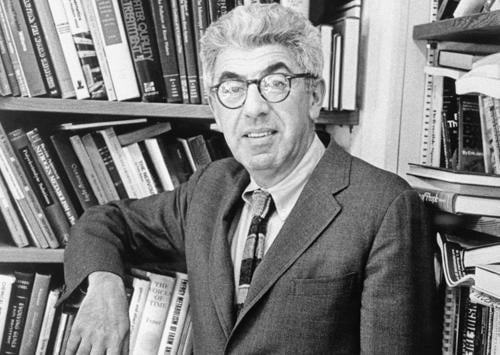
Barry Commoner discusses his book "The Poverty of Power: Energy and the Economic Crisis"
May. 20, 1976 Biologist and author Barry Commoner discusses his book "The Poverty of Power: Energy and the Economic Crisis."