

-

Arnold A. Hutschnecker discusses his book "The Drive For Power"
Jan. 8, 1975 Arnold A. Hutschnecker, a doctor with specialization in psychiatry, talks about his book, "The Drive For Power." He explores mental illness and its negative connotation. He explores how people who look for power tend to need mental help, but that the negative stigma around it tends to make them shy away, which leads to national aggravation and war. He also recalls his meetings with Richard Nixon from before he was president and how continued help may have changed the Vietnam War.
-
Arna Bontemps and Jack Conroy discuss their book "Any Place But Here"
1960 Discussing the book "Any Place But Here" and interviewing the authors Arna Bontemps and Jack Conroy.Content Warning: This conversation has the presence of outdated, biased, or offensive language. Rather than remove this content, we present it in the context of twentieth-century social history to acknowledge and learn from its impact and to inspire awareness and discussion.
-
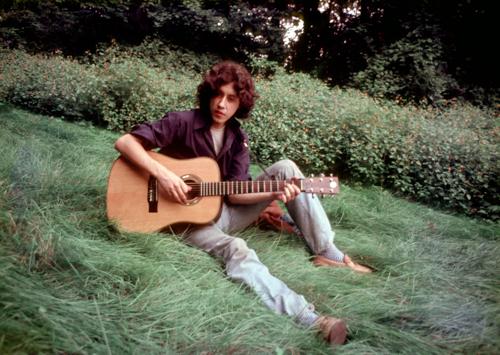
Arlo Guthrie discusses his music and influences
Jan. 23, 1971 In this interview with Terkel, folk singer-songwriter Arlo Guthrie talks about what influences his songwriting and the new definition of folk music. They touch on the shared experience of humanity, the role of the entertainer in society, and the older generation’s contributions to society. Guthrie expresses a desire to create a music “carnival” where performers and audience members both participate together. Guthrie also discusses how he began playing the banjo, and Studs comments on how Arlo has grown as a musician since his father's, Woody Guthrie, death.
-
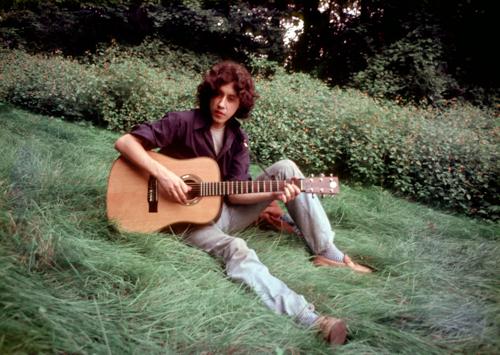
Arlo Guthrie discusses his career
Oct. 31, 1980 Arlo Guthrie discusses his approach to songwriting and how storytelling in song writing has changed. He also talks about what it's like to become known for performing works written by others. Arlo Guthrie's music is played and discussed throughout the interview: "Manzanillo Bay", "Week on the Rag", "Buffalo Skinners", "City of New Orleans", "Darkest Hour", "Massachusetts", and "Last Train to Glory". Music has been removed for copyright reasons.
-
Ariel Dorfman in conversation with Studs Terkel
May. 10, 1989 Interviewing author and poet Ariel Dorfman.
-
Architect and wartime prisoner, Hermann Field, discusses his book "Angry Harvest"
Mar. 12, 1970 Architect and wartime prisoner, Hermann Field, discusses his book "Angry Harvest," coauthored with Stanislaw Mierzenski, and also discusses architecture.
-
Archie Lieberman discusses his book "Neighbors"
Dec. 6, 1993 With his book, "Neighbors: A Forty-Year Portrait of an American Farm Community," Archie Lieberman first took the photos of Scales Mound, Illinois. Because he felt something was missing, Lieberman, followed the residents around and then he added stories to his book. More often than not, Lieberman found out that the people of Scales Mound felt it was their duty to take care of the land.
-
-
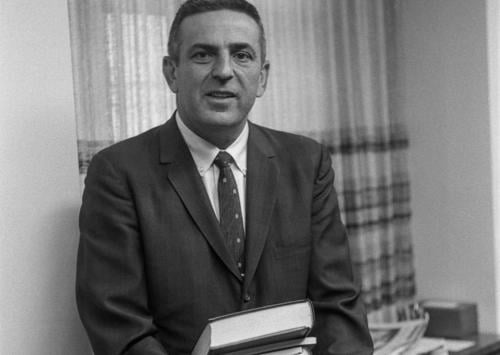
Archibald Carey, Elmer Gertz, Hans W. Mattick, Abner J. Mikva, Donald Page Moore discuss Paul Crump and capital punishment
Jul. 16, 1962 Archibald Carey, Elmer Gertz, Hans W. Mattick, Abner J. Mikva, Donald Page Moore discuss the scheduled execution of Paul Crump and their opposition to capital punishment
-
-
Antonia Brico discusses her life as a conductor
Nov. 5, 1975 Antonia Brico discusses her life as a conductor, her education as a pianist, and her studies to become a conductor. Studs plays an excerpt of the 1974 documentary on Antonia Brico entitled “Antonia: A Portrait of the Woman.”*Please note: some sections have been edited out from the original recording due to copyright considerations
-

Anton Dolin in conversation with Studs Terkel
Nov. 10, 1982 Interviewing dancer Anton Dolin. This is an excerpt from a previously recorded and aired program.
-
Anton Dolin in conversation with Studs Terkel
Nov. 10, 1982 Discussing the book "Dolin, Friends and Memories" (published by Routledge & Kegan Paul) with the author, dancer Anton Dolin.
-
Anthropologist and linguist Lorenzo Turner discusses the Gullah dialect
Sep. 27, 1953 In 1953, one of the very first broadcasts on WFMT was with Lorenzo Turner. Topics that Turner cover include the Gullah language, his travels to Nigeria, and music. Turner also explains how using different inflections on a word can change its meaning.
-
Anthony Sampson discusses his book "The Seven Sisters"
Oct. 31, 1975 Discussing the book, The Seven Sisters: the Great Oil Companies and the World they Made, and interviewing author Anthony Sampson.*Please note: some sections have been edited out from the original recording due to copyright considerations