

-

Donald Luce discusses the problems in Vietnam
Donald Luce had been living & helping the people of South Vietnam through the International Voluntary Service. Luce believed it was important to come back to the states to talk about the problems in Vietnam. Luce said the Vietnamese government could not provide its people waste disposal, electricity and running water. Luce went to Congress to voice his concerns. It was at the State Department who didn't seem to care all to much.
-
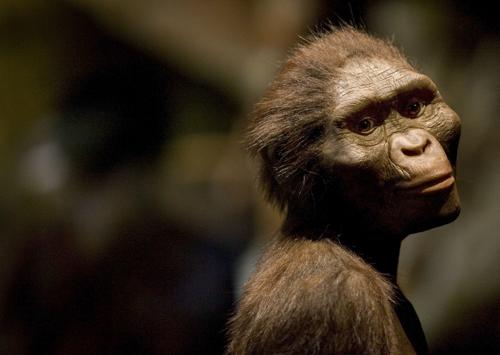
Donald Johanson discusses his book "Lucy: The Beginnings of Humankind"
Mar. 16, 1981 Studs talks with Donald Johanson about his book "Lucy: The Beginnings of Humankind," in which the famed paleoanthropologist describes his discovery of the female hominin fossil in Ethiopia. The conversation includes talk of Charles Darwin, Eugène Dubois' Java Man discovery, what makes a hominid, holes in the fossil record, fossil dating, his disagreements with Louis and Richard Leakey, site discovery, and his belief that the Hadar Formation in the Afar Triangle of Ethiopia holds the keys to the evolutionary puzzle. Includes snippets of the Beatles' "Lucy in the Sky with Diamonds."
-
Donald Gramm discusses his career
Oct. 1, 1973 Donald Gramm discusses working with composers and comparing contemporary and classical opera. He also talks about his approaches to different performances and his experiences singing in multiple languages. Music is played throughout the interview and performances include his role as Creon from Stravinsky's "Oedipus Rex"and selections from Ned Rorem's "War Scenes": "As Adam", "O You Whom", "To You", "Look Down, Fair Moon", and "A Night Battle". Next, a performance as Leporello singing "Madamina, il catalogo è questo" from "Don Giovanni" and "Zwei Gesänge, Op. 1: I.
-
Donald Duncan reads from and discusses his book "The New Legions" ; part 2
Content Warning: This conversation includes racially and/or culturally derogatory language and/or negative depictions of Black and Indigenous people of color, women, and LGBTQI+ individuals. Rather than remove this content, we present it in the context of twentieth-century social history to acknowledge and learn from its impact and to inspire awareness and discussion. While reading a passage from his book, Donald Duncan questions why he and other military personnel are in Vietnam. He finds other men that feel the same way, too,
-
Donald Duncan reads a poem written by a Vietnamese man ; part 3
Donald Duncan shares a letter that was written in response to American aid to the Vietnamese people. In conclusion, Duncan offers his reflections about why he was against the Vietnam War.
-
Donald Duncan discusses his book "The New Legions" ; part 1
"The New Legions," is partly an autobiography of Donald Duncan's time spent in the military, in the special forces in Vietnam. Duncan, a former master sergeant, explains how the military teaches its men how to kill. He further explains how the sole purpose of special forces is to go into a country and organize its people against unpopular governments.
-
Donald Bogle discusses his book "Toms, Coons, Mulattoes, Mammies and Bucks"
Aug. 6, 1973 "Toms, Coons, Mulattoes, Mammies and Bucks: An Interpretive History of Blacks in American Films is Donald Bogle's study of Black actors and the roles they played in movies. Bogle believed it was important for Black people to see Black heroes in movies. Bogle concluded there were too few roles available for Black actors and too many roles were of stereotypes.
-
Donald and Wendy Woods discuss the anti-apartheid movement in South Africa
Oct. 23, 1987 South African exiles Donald and Wendy Woods discuss the anti-apartheid movement in South Africa and their exile. The two describe their ignorance to the privilege they experienced as white people in South Africa during Apartheid, an ignorance they maintained until meeting and forming a relationship with the founder of the Black Consciousness movement, Steve Biko. Studs plays "Kwela Blues" - Lemmy Special Mabaso.
-
Don McLean discusses his career as a singer-songwriter
1979 American singer-songwriter Don McLean discusses his career and events in the 1960s and 1970s that have influenced his music.
-
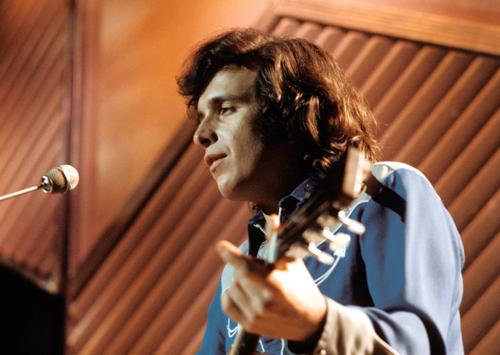
Don McLean discusses his career and his music
1980 Don McLean discusses his career and his music. Don McLean discusses his influences, life experiences, and his songwriting.
-
Don Luce talks with Studs Terkel
Feb. 1, 1973 Terkel comments and presents Don Luce reading poetry
-
-
Don Gold discusses his book "Bellevue"
Aug. 15, 1975 Don Gold, writer and editor, discusses his book "Bellevue: A Documentary of a Large Metropolitan Hospital." He recounts his time spent following doctors and nurses in Bellevue in New York City and discusses how healthcare has become depersonalized. The conversation involves patients who are dealing with mental illnesses, abortions, attempted suicide and the terminally ill. The interview includes reading of passages from his book.
-
Dolores Huerta discusses workers' rights
Apr. 16, 1975 Activist Dolores Huerta of United Farm Workers discusses farm laborers and immigrant rights; includes excerpt of Cesar Chavez, excerpt from Viva La Causa, and interview with Roberto Acuna.
-