

-

Garry Wills discusses his book "John Wayne's America: The Politics of Celebrity"
Mar. 10, 1997 Garry Wills, writer and historian, discusses his book "John Wayne's America: The Politics of Celebrity." He explores the popularity of John Wayne that took him from an actor and made him into an American symbol. He explores how the symbol of John Wayne is used by white male politicians to influence their decisions and how that affected the Vietnam War. Wills gives a biography of John Wayne, including the many influential people in his life such as his working partner, John Ford.
-
Garry Wills discusses his book "Inventing America: Jefferson's Declaration of Independence"
Jul. 2, 1981 Discussing the book, "Inventing America: Jefferson's Declaration of Independence," and interviewing the author Garry Wills.
-
Garry Davis discusses renouncing his American citizenship ; part 1
May. 23, 1973 May 25, 1973, is the 25th anniversary of when Garry Davis renounced his American citizenship. Davis explained it is a grave injustice to be governed by laws that were set up by people who are now dead. The problem says Davis, is the laws have to catch up to the 20th century. Davis goes on to talk about the World Service Authority.
-
Garry Davis discusses his book "Ready or Not: World Government"
Jun. 18, 1985 Garry Davis, an international peace activist and founder of the World Government Authority, discusses his philosophy on world peace and his stance on being a world citizen.
-
-
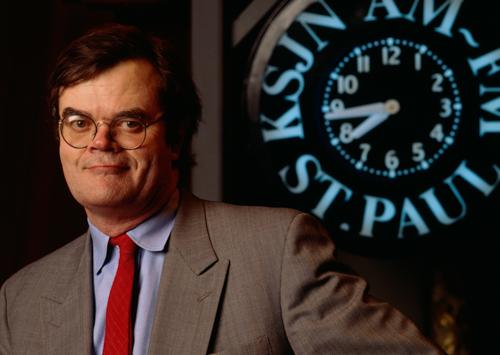
Garrison Keillor talks with Studs Terkel
Nov. 6, 1997 Discussing the book "Wobegon Boy" (published by Viking) with the author and host of "Prairie Home Companion," Garrison Keillor.
-
Garrison Keillor in conversation with Studs Terkel
Nov. 21, 1991 Discussing the book "WLT, A Radio Romance," (published by Viking) with the author and radio host Garrison Keillor. Program also includes excerpts of a 1985 interview.
-
Garrison Keillor discusses his career as a writer and in radio programming
Apr. 28, 1982 Studs interview with Garrison Keillor who discusses his books, "Happy To Be Here" and "True Story Of A Young Person" and his New Yorker story, "My North Dakota Railroad Days." The interviews starts with "The Ballad of Casey Jones" and ends with the hymn, "Will The Circle Be Unbroken." Studs and Keillor read from the "Sam Spade" novel. They also discuss Keillor home of Minneapolis and how his childhood led him to his career.
-
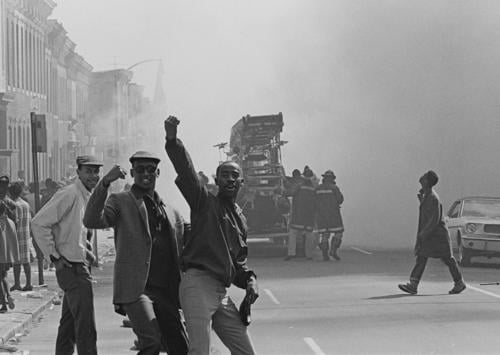
Garrett O'Connor discusses "Reflections in the rubble."
Feb. 1, 1970 Psychiatrist Dr. Garrett O'Connor discusses his article "Reflections in the rubble: some thoughts in the aftermath of civil disorder." Topics of conversation include his experiences working in community clinics with blue collar workers and African Americans; the ways that poverty, racism, and classism are maintained by the American economy; the Martin Luther King, Jr.
-
Gar Alperovitz discusses his book “Atomic Diplomacy: Hiroshima and Potsdam”
Gar Alperovitz, historian, writer, and political economist, discusses the bombing of Hiroshima, the Potsdam Conference, and the American confrontation with Soviet power.
-
Gana M'Bow discusses Senegalese folk music
Oct. 1, 1965 In addition to talking about Senegalese music, Gana M'Bow goes over the history of the "talking drum." M'Bow also plays various songs from Senegal and West Africa. Through the State Department, M'Bow was touring various cities across the US.
-
Galway Kinnell in conversation with Studs Terkel
Oct. 12, 1989 Interviewing Pulitzer Prize-winning poet Galway Kinnell.
-

Gale Cincotta discusses community organizing for fair housing and loan practices
Jul. 7, 1977 Interviewing Gale Cincotta, a co-author of the book "Urban Disinvestment: New Implications for Community Organization, Research, and Public Policy." Cincotta is an expert on discrimination in mortgage loans and its effects in Chicago and other cities.
-
Gale Cincotta discusses community organizing
Jul. 6, 1982 The song "America the Beautiful" always reminded Gale Cincotta about how great it was to live in America, the land with great schools and great jobs. It wasn't until Cincotta became a community organizer that she realized all schools and all jobs are not great for everyone. Cincotta's hope was to give people the power to make their lives better, not solely by pointing out problems but by doing something about them.*Please note: some sections have been edited out from the original recording due to copyright considerations
-
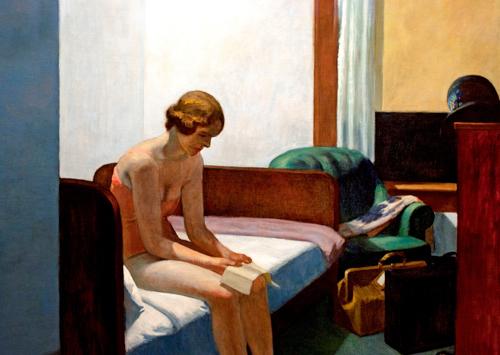
Gail Levin discusses the work of Edward Hopper and the Art Institute of Chicago's Hopper's exhibition
Oct. 2, 1981 Discussing the book "Edward Hopper: The Art and the Artist." Includes recordings of Robert Frost reading "The Road Not Taken," Carl Sandburg reading "Gone," and Tom Waits' song "Nighthawks."