Listen to New Voices on Studs Terkel our partnership with 826CHI-here! Read the Story


-

Maggie Kuhn discusses ageism and old people power
Jun. 28, 1974 Interviewing Maggie Kuhn of the Gray Panthers about the roles of senior citizens and the welfare of the aged in the United States. Kuhn talks about how society thinks once a person has retired, he or she is set aside or put to pasture. To the contrary, older people have a lot to offer with their wisdom, their knowledge and their experiences, says Kuhn.
-
Madeleine L'Engle discusses her novel "A Severed Wasp"
Jan. 30, 1983 Author Madeleine L'Engle discusses her novel "A Severed Wasp," about a retired concert pianist (Katherine Forrester, who appeared in L'Engle's first novel, "The Small Rain") who puts on a benefit concert at the Cathedral of St. John the Divine at the request of her old friend, Felix Bodeway. Like Katherine, L'Engle is a pianist and the interview is interspersed with Bach fugues throughout. In addition to discussing the plot, Terkel and L'Engle discuss several of the book's characters and their histories and motivations.
-
Madeleine L'Engle discusses her book "A Wrinkle in Time"
Jun. 8, 1990 Author Madeleine L’Engle discusses her book “A Wrinkle in Time”, a young adult novel that wrestles with spirituality, science fiction, and fantasy. L’Engle discusses how difficult it was for publishers to see her writing as young-adult, as she was often told adolescence would not be able to handle these challenging topics. This program includes an excerpt of a 1961 interview with Madeleine L’Engle in which she discusses the difference between fact and fiction, or lack thereof, in children’s literature.
-
Madame Lotte Lehmann discusses teaching
Nov. 6, 1964 Now retired from singing opera, when Madame Lotte Lehmann is not traveling around Europe, she teaches, what she says, are the best students she has encountered, at Northwestern University. Lehmann explains her hope is to not only teach but to inspire singers to be larger than life and to bring out their own personalities in a song.
-

Madalyn Murray discusses her family history, feminism, and theology
Dec. 13, 1966 Madalyn Murray discusses her family history, feminism, and theology and how her experiences with those subjects have shaped her worldview.
-
Lynn Caine discusses her book "Widow"
Jun. 28, 1974 Lynn Caine discusses her book "Widow" and talks about the death of her husband caused by cancer. She talks about the adjustment to losing your best friend, lover and partner. She describes how grief is buried socially and ignored, and how hard it is to raise children after the death of a spouse.
-
Lyle Kessler in conversation with Studs Terkel
Feb. 7, 1985 Discussing his play "Orphans" and the Imagination Workshop with playwright, director and Imagination founder Lyle Kessler. The Imagination Workshop is a non-profit theater group that brings together professional artists and "at risk" children, the mentall
-
Lute Jerstad discusses "Everest Diary"
1968 Lute Jerstad discusses "Everest Diary." Includes passages from Lute Jerstad.
-
Lukas Foss discusses his career as a composer of classical music and conductor of the Milwaukee Symphony Orchestra
Mar. 14, 1983 Studs interviews Lukas Foss about his career as a classical composer and conductor. Foss talks about his work with the Milwaukee Symphony Orchestra. He reflects on how teachers influenced his career and how he learns from each orchestra that he works with. He shares his love for poetry and explains how he makes music from poems and uses "Thirteen Ways of Looking at a Blackbird," a poem by Wallace Stevens, to illustrate. They discuss how Foss composes and how it is very similar to the way Jazz is composed with improvisation.
-
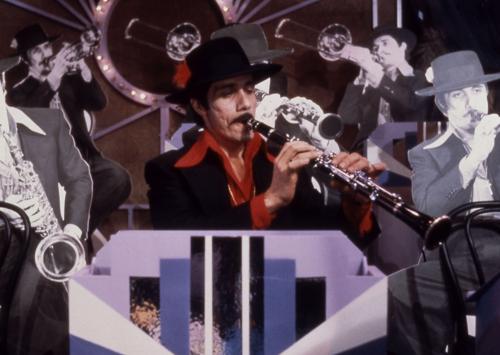
Luis Valdez discusses his career
Jun. 4, 1982 Luis Valdez, author of the play, "Zoot Suit," and editor of "Aztlan: An Anthology of Mexican American Literature," discusses the Chicano experience; music by Mexican-American artists is played and discussed throughout the program.
-
Luis Francia discusses his book "Brown River, White Ocean"
Mar. 1, 1994 Discussing the book "Brown River, White Ocean: An Anthology of Twentieth-Century Philippine Literature in English" (published by University of Rutgers Press) with editor and poet Luis Francia.
-
Lucien Stryk discusses Zen poetry and Zen philosophy
Jan. 1, 1966 Poet Lucien Stryk discusses Zen poetry and Zen philosophy. Styrk focuses this conversation on “Satori," a Buddhist term for “the awakening”, and its influence on Zen philosophy. Styrk also discusses and reads from a book edited by him and Takashi Ikemoto entitled "Zen: Poems, Prayers, Sermons, Anecdotes, Interviews." Stryk reads a poem from “Triumph of the Sparrow” by Shinkichi Takahashi. Studs plays "His Eye is on the Sparrow" - Mahalia Jackson (1958).
-
Lucien Bodard discusses his book "Green Hell: Massacre of the Brazilian Indians" ; part 2
1972 French author Lucien Bodard discusses the genocide of indigenous tribes in Brazil, which dates back to the 16th century.
-
Lucien Bodard discusses his book "Green Hell: Massacre of the Brazilian Indians" ; part 1
1972 French author Lucien Bodard discusses his book which explores the genocide of indigenous tribes in Brazil, dating back to the 16th century. Content Warning: This conversation has the presence of outdated, biased, offensive language. Rather than remove this content, we present it in the context of twentieth-century social history to acknowledge and learn from its impact and to inspire awareness and discussion.
-
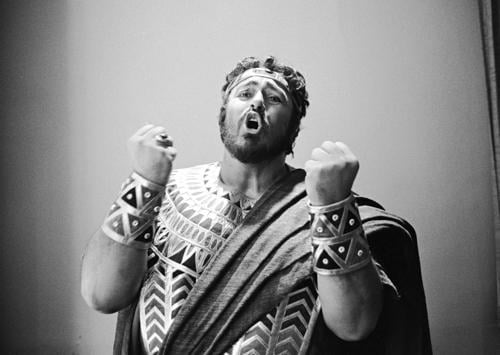
Luciano Pavarotti discusses some of his traits
Dec. 9, 1976 Being a Pisces, Pavarotti says he's always looking for perfection. He admits the biggest critic of his work is himself. Pavarotti said that he loves the charm of the French language and he likes to learn new languages. He talks of recording some music in Russian. Being able to reach those high C notes, Pavarotti says, is the most athletic part of his voice.