-

Jean Shepherd discusses his book "In God We Trust: All Others Pay Cash"
Dec. 1, 1966 Jean Shepherd discusses his book "In God We Trust: All Others Pay Cash." Includes earlier clips of Shepherd speaking and excerpts of him reading from the book.*Please note: some sections have been edited out from the original recording due to copyright considerations
-
Jean Shepherd discusses his book "A Fistful of Fig Newtons"
Mar. 26, 1982 Storyteller, humorist, radio personality, and author Jean Shepherd discusses his book, A Fistful of Fig Newtons. Shepherd considers how his various career paths, particularly that of a radio personality, have affected his writing.*Please note: some sections have been edited out from the original recording due to copyright considerations
-
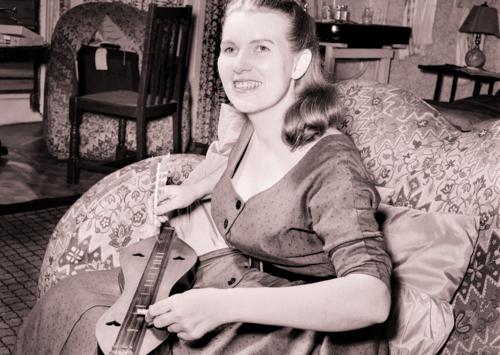
Jean Ritchie discusses her career and music
Apr. 29, 1977 Jean Ritchie discusses her life, music, experiences, and career. She also discusses folk music. Includes songs performed by Jean Ritchie including "Shady Grove", "None But One", "Sweet Sound in the Wind", "Riddle Song" (sung with Oscar Brand), "See That Rainbow Shine", "Black Waters" (sung with Janis Ian), "Now is the Love of the Day", "Little Lonesome Dove", "Barbry Allen", "Brightest and Best", and "Now Is The Cool of the Day".
-
Jean Redpath discusses her music ; part 2
Oct. 1, 1962 *Please note: some sections have been edited out from the original recording due to copyright considerations
-
Jean Redpath discusses her music ; part 1
Oct. 1, 1962 *Please note: some sections have been edited out from the original recording due to copyright considerations
-
Jean Redpath discusses her career
Feb. 3, 1962 The folk singer talks about her career and provides some examples of the folk music traditions of her native Scotland.*Please note: some sections have been edited out from the original recording due to copyright considerations
-
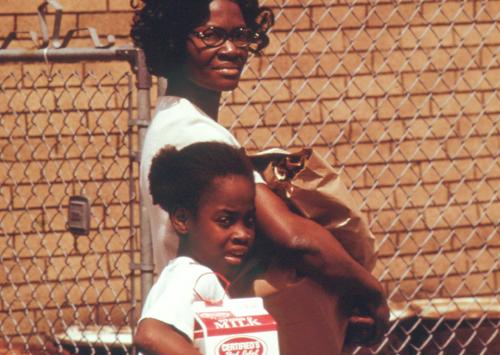
Jean Komaiko and Dr. Quentin Young discuss hunger in Chicago
Feb. 6, 1969 Joan Komaiko saw there were kids who could buy cartons of milk for four cents and the other kids who couldn't afford the milk, sat and watched the ones who drank the milk. Komaiko wrote a letter to the school board pointing out how kids couldn't do well at school because they were sent to school hungry. Dr. Quentin Young explained that the government needs to provide the children with breakfast and lunch at the schools because those two meals were probably the only meals children would receive that day.
-
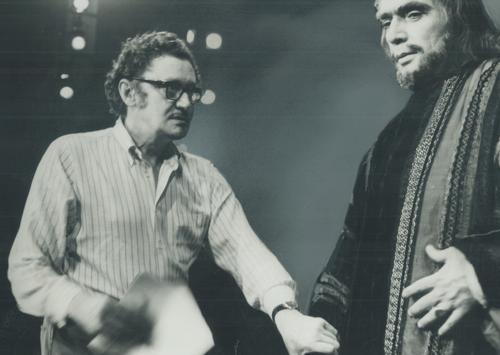
Jean Gascon discusses his production of "The Alchemist"
Jan. 1, 1969 Jean Gascon, the artistic director of the Stratford Theater in Ontario, Canada, speaks with Studs Terkel about his production of “The Alchemist.” His interpretation of playwright Ben Jonson’s work opened in Chicago at the Studebaker Theater, alongside “Hamlet” directed by John Hirsch. Gascon talks a bit on his career in theater and the cultural influences on his directing style. Gascon admires Jonson’s work and social commentary, and feels themes of “The Alchemist” are relevant to current issues in society.
-
Jean Davies discusses life and culture in Australia ; part 2
Aug. 10, 1966 Australia journalist Jean Davies discusses life and culture in Australia, part 2. Davies reads Studs Terkel's palm during the interview.
-
Jean Davies discusses life and culture in Australia ; part 1
Aug. 10, 1966 Australian journalist Jean Davies discusses life and culture in Australia.
-

Jean Cau discusses his book "La pitié de Dieu" ; part 2
Nov. 1, 1962 When asked how he found time to write his book, Jean Cau said he took vacation time from his full time job. Cau was also asked if he wrote his book using a typewriter and Cau explained that he did all his writing with his own penmanship because he hated machinery, like the typewriter. In conclusion, Cau said he was writing a play about the Algerian War and its paratroopers. The play he finished writing was about the life and death of Adolf HiItler.
-

Jean Cau discusses his book "La pitié de Dieu" ; part 1
Nov. 1, 1962 Through an interpreter, Jean Cau discusses his book "La pitié de Dieu", or translated, "The Mercy of God". Cau's book is about four prisoners and their interactions with one another. Cau explained, in one way or another, with a reference to Kafka, we are all condemned and it will be a great surprise to all to learn what we are guilty of.
-
Jean Auel discusses her novel, "The Clan of the Cave Bear"
Sep. 10, 1980 Jean Auel discusses her novel, "The Clan of the Cave Bear," including the anthropological research that informed her writing, feminism in her main character, Ayla, and the book's themes of cooperation, adaptation, tribal memory, and reverence for life. Includes excerpts from the book and recordings of pygmy music made by anthropologist Colin Turnbull.
-
-