

-

Peter Feibleman discusses his book “Lilly: Reminiscences of Lillian Hellman”
Feb. 26, 1990 American author and screenwriter Peter Feibleman discusses his friendship with Lillian Hellman and the memoir he wrote about her life called “Lilly: Reminiscences of Lillian Hellman.” Includes an interview with Lillian Hellman. Includes a 30 second test tone.
-
Peter Carey discusses his book "Oscar and Lucinda"
Dec. 14, 1988 Peter Carey discusses and reads from his book "Oscar and Lucinda." The book is a love story that follows two characters, both gamblers, who make a bet to deliver a glass church to a new settlement. Carey begins the interview by recounting a particular event in his hometown that inspired the writing of this book: Carey witnessing a local church being removed from its location. A fascination with land occupation, church construction, and the human tendency towards obsession were driving factors in the writing of this book.
-
Peter Bogdanovich discusses the "Last Picture Show" ; part 2
Interviewing writer and director Peter Bogdanovich about his film “The Last Picture Show.” The second part of the program, “A panel of producers and directors discusses education in film,” will begin at 44:45.
-
Pete Gent reads from and discusses his book "North Dallas Forty"
Oct. 5, 1974 Drugs, painkillers, football contracts, and survival are all covered in Pete Gent's book, "North Dallas Forty." Gent said the business of football meant players would take painkillers and abuse their bodies with drugs all in order to do whatever was necessary to win a game. An excerpt of an interview with George Allen is included.*Please note: some sections have been edited out from the original recording due to copyright considerations
-
Peggy Nelson, Arnaud d'Usseau, and Olivier Bernier
1962 Studs speaks to actress Peggy Nelson, playwright Arnaud d'Usseau, and student Olivier Bernier while he is in France. [Part 2 includes Yves Montand.]
-
Paul Carroll discusses his book of poetry "The Garden of Earthly Delights"
Jul. 7, 1986 Discussing the book of poetry "The Garden of Earthly Delights" with poet Paul Carroll, winner of the 1985 Chicago Poets Award.
-
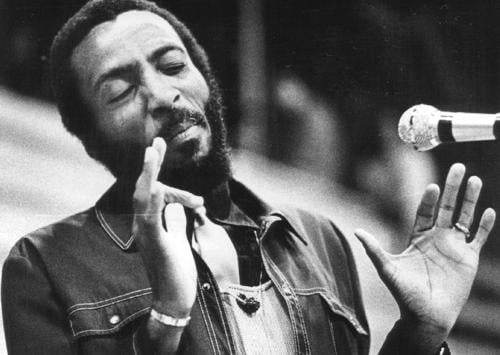
Panel at University of Chicago Law School discuss ending capital punishment, part 1
Feb. 19, 1965 A panel at University of Chicago Law School discuss ending capital punishment (tapes A and B) and with Dick Gregory (tape C). Includes presentations from Hans W. Mattick and Arthur Wineberg. (Part 1 of 3)
-

On location in Melun, France at Maison Central Melun prison ; part 2
1962 Madame B. translates for Studs as he speaks with two inmates. Both inmates work in the prison one as a cook and the other as a librarian. Studs talks to each of the inmates about their early life, their work in the prison and their rehabilitation. Madame B is interviewed after the visit to the prison, and she speaks about her volunteer work at the prison. Following the interview, there is a postscript in which Madame B. records "notes" for Nelson Algren and Herman and Mrs. Kogan. Once he is on his own, Studs explains that Madame B.
-

On location in Melun, France at Maison Central Melun prison ; part 1
1962 Studs tours the prison and speaks with prison director Jean Blayrat and a lady referred to as Madame B translates. They talk about the crimes of the a few of the prisoners and the rehabilitation programs the prison system uses in France.
-
Omar Shapli discusses his career
May. 17, 1982 Reflections on the career of actor, drama teacher, WFMT announcer, and former member of The Compass Players.*Please note: some sections have been edited out from the original recording due to copyright considerations
-
Odetta discusses her music career
Mar. 12, 1970 Folk singer Odetta joins Studs to talk about her life and music, including her songs "Riding in My Car (Car Song)," "Gallows Pole," and "Sometimes I Feel Like a Motherless Child," among others.*Please note: some sections have been edited out from the original recording due to copyright considerations
-
Ntozake Shange discusses her successful play and recent poetry
Oct. 26, 1978 Ntozake Shange discusses her play, "for colored girls who have considered suicide / when the rainbow is enuf." She goes on to discuss her advocacy for more Black authors and poets, especially in experimental artistic endeavors.*Please note: some sections have been edited out from the original recording due to copyright considerations
-
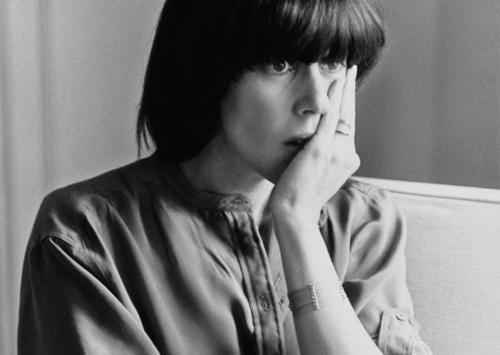
Nora Ephron discusses feminism and her book "Crazy Salad"
Jul. 28, 1975 Nora Ephron discusses the women’s movement and her book, “Crazy Salad: Some Things About Women.” Ephron discusses the influence of writer Dorothy Parker on her work, as well as topics including women’s rights; the exploitation of women in politics, war, and advertising; the many conflicts she faces in her role as a journalist; and traditional and non-traditional gender roles. Includes an excerpt from a previous interview with Dorothy Parker.
-
-
Naomi Lazard joins Studs to talk about her work
1970 The graphic designer turned poet shares some insight into her creative process, especially in the collections, Cry of the Peacocks, The Moonlit Upper Deckerina, and Ordinances.*Please note: some sections have been edited out from the original recording due to copyright considerations