

-

Amitai Neeman discusses his career as an Israeli accordion player ; part 1
May. 2, 1961 *Please note: some sections have been edited out from the original recording due to copyright considerations
-
Amalia Hernandez discusses Mexican ballet dancing
Aug. 25, 1982 Choreographer and dancer Amalia Hernandez discusses her influences, as the ensemble that she founded, Ballet Folklorico de Mexico, prepares for an upcoming performance at the Arie Crown Theater.*Please note: some sections have been edited out from the original recording due to copyright considerations
-
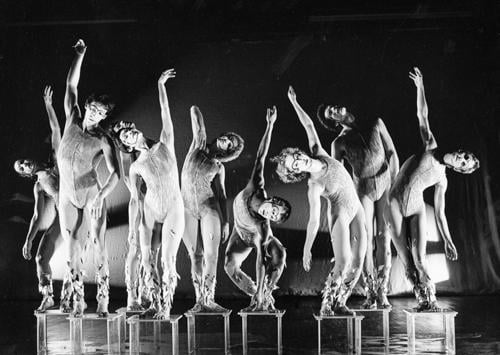
Alwin Nikolais discusses his career and thoughts on the future of modern dance
1968 Alwin Nikolais discusses his origins and the Henry Street Settlement, his thoughts on the future of modern dance, the stigma modern dance receives, and his approach to choreographing new pieces. Music is played from a tape Alwin Nikolais had with him. Some of it is untitled, some from performances "Caligraph for Martyrs" and "Echo". The music has been removed from this program for copyright reasons.
-
Allan Evans and Henry Jordan discuss The Foundation Years ; part 2
1970 Allan Evans and Henry Jordan, two young man who grew up in Chicago and attended Dartmouth, discuss The Foundation Years project. They talk about trying to recruit friends to Dartmouth, their campus experiences, and their coursework. They also talk about their experiences going through the public school system in Chicago, where they point out many of the inequalities for black students.
-
Allan Evans and Henry Jordan discuss "The Foundation Years" ; part 1
1970 Allan Evans and Henry Jordan, two young man who grew up in Chicago and attended Dartmouth, discuss their childhoods and adolescent dealing with crime. The two also talk about their gang, The Vice Lords, and the police brutality they experienced. Next, the group talks about the The Foundation Years, a project from Dartmouth.
-
Allan Berube discusses his book "Coming Out Under Fire"
Apr. 30, 1990 The military's attitude toward gay people is what's covered in Allan Berube's book, "Coming Out Under Fire: The History of Gay Men and Women in World War II." For some people, hiding their true identity was necessary because they would have been discharged by the military.
-

Alexander Tcherepnin discusses his career ; part 2
May. 21, 1962 Russian composer Alexander Tcherepnin discusses his travels to China & Japan and their influence on his music, composing for non-traditional instruments, electronic music, teaching young composers, and his "Concerto No. 2".
-
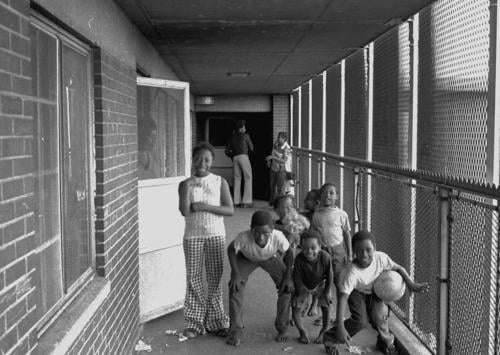
Alex Kotlowitz discusses his book "There Are No Children Here"
Feb. 28, 1991 Discussing the book "There Are No Children Here: The Story of Two Boys Growing up in the Other America" with author Alex Kotlowitz. Includes excerpt from WFMT doumentary, "Born to Live".
-
Aeronwy Thomas and Brian Walters discuss poetry
Dec. 2, 1976 The two Welsh poets, on a tour of America, join Studs to talk about their own work and their appreciation for the work of Aeronwy's father, Dylan Thomas.*Please note: some sections have been edited out from the original recording due to copyright considerations
-
Actress Verna Bloom discusses being arrested in Chicago ; part 2. Also included are conversations with a lady behind a cigar counter and a cab driver
1968 Content Warning: This conversation includes racially and/or culturally derogatory language and/or negative depictions of Black and Indigenous people of color, women, and LGBTQI+ individuals. Rather than remove this content, we present it in the context of twentieth-century social history to acknowledge and learn from its impact and to inspire awareness and discussion. Verna Bloom continues to talk about how scared she was when being arrested. Bloom said she was hand-cuffed for an hour. One of Bloom's friends was able to smooth things over with the police and she was finally released.
-
Actress Verna Bloom discusses being arrested in Chicago ; part 1
1968 The day after being arrested in Chicago, Verna Bloom talks about the outrage and humiliation she felt. In great detail, she describes what led up to her arrest. Bloom contends she was doing nothing other than enjoying the nice weather when a police officer arrested her.
-
Abram Chayes discusses the mining of the Nicaraguan Harbor by U.S. Naval forces
May. 16, 1985 Abram Chayes, Professor of International Law at Harvard University, discusses the United States’ foreign relations with Nicaragua and the International Court of Justice, also known as the World Court.
-
A panel of producers and directors discuss film education ; part 1
A panel of producers and directors, Father Paul Carrico, Mike Whitney, Ron Sutton, Dick Lukenson, and Leo Dratfield discuss film theory and education on film in the classroom.
-
A discussion with William Shirer
Oct. 22, 1976 The journalist and historian joins Studs for a discussion about the first installment of his memoir, Twentieth Century Journey, which weaves his personal history into the great historical events of the world around him. Includes a clip of the lawyer and politician William Jennings Bryan.*Please note: some sections have been edited out from the original recording due to copyright considerations
-
A discussion with William Rushton
Apr. 9, 1979 The author sits down with Studs to discuss the history of the Cajun people, as described further in his book, The Cajuns: From Acadia to Louisiana.*Please note: some sections have been edited out from the original recording due to copyright considerations