

-

Mary Norris Lloyd discusses her book " A Dream of Mansions"
Mar. 8, 1962 Social activist and author Mary Norris Lloyd discusses her work and its reflection on Christian morality and views on the South. Topics covered include segregation, racism, and religion and how it has coincides with the issues of race.
-
Martin Bernal discusses Chinese politics and history
Interviewing Martin Bernal, British scholar of Chinese political history. He discusses various aspects of Chinese history, including the Cultural Revolution, communism, and Chairman Mao.
-
Marlon Brando discusses his views on mankind ; part 3
Apr. 19, 1963 Content Warning: This conversation includes racially and/or culturally derogatory language and/or negative depictions of Black and Indigenous people of color, women, and LGBTQI+ individuals. Rather than remove this content, we present it in the context of twentieth-century social history to acknowledge and learn from its impact and to inspire awareness and discussion. In conclusion, Marlon Brando added that his being a famous actor posed an ugly and difficult burden to his son.
-
Marlon Brando discusses his views on mankind ; part 2
Apr. 19, 1963 Content Warning: This conversation includes racially and/or culturally derogatory language and/or negative depictions of Black and Indigenous people of color, women, and LGBTQI+ individuals. Rather than remove this content, we present it in the context of twentieth-century social history to acknowledge and learn from its impact and to inspire awareness and discussion. In a surprising twist, Marlon Brando asks Studs Terkel why he is so obsessed with asking people so many questions and Terkel’s reply was curiosity.
-
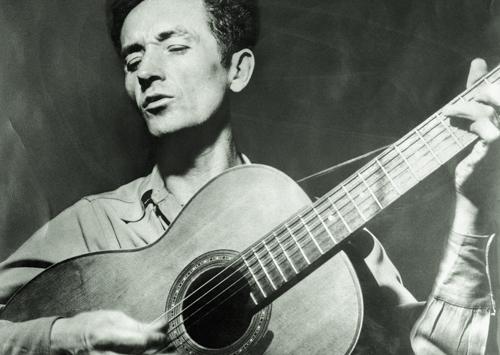
Marjorie Guthrie discusses Huntington's disease and Woody Guthrie
Marjorie Guthie, the widow of folk singer of Woody Guthrie is in town for a fundraiser, raising money for Huntington's disease. Woody Guthrie died of the disease, which was passed down from his mother. Marjorie Guthrie also reflects on her courtship with Woody and she also talks about his music.
-
Marilyn Horne and Henry Lewis discuss their careers and opera music, part 1
Jun. 1, 1966 Marilyn Horne and Henry Lewis discuss their careers, opera music, and their operatic roles. They also discuss cross-gender roles in opera and Marilyn Horne's role as Romeo in the opera "Capuleti e i Montecchi" by Vincenzo Bellini. Includes clips of Marilyn Horne singing an opera song at the beginning, an opera song by Gioachino Rossini, and a song from Charles Gounod's opera "Sapho."*Please note: some sections have been edited out from the original recording due to copyright considerations
-

Madalyn Murray discusses her family history, feminism, and theology
Dec. 13, 1966 Madalyn Murray discusses her family history, feminism, and theology and how her experiences with those subjects have shaped her worldview.
-
Lucien Bodard discusses his book "Green Hell: Massacre of the Brazilian Indians" ; part 2
1972 French author Lucien Bodard discusses the genocide of indigenous tribes in Brazil, which dates back to the 16th century.
-
Lucien Bodard discusses his book "Green Hell: Massacre of the Brazilian Indians" ; part 1
1972 French author Lucien Bodard discusses his book which explores the genocide of indigenous tribes in Brazil, dating back to the 16th century. Content Warning: This conversation has the presence of outdated, biased, offensive language. Rather than remove this content, we present it in the context of twentieth-century social history to acknowledge and learn from its impact and to inspire awareness and discussion.
-
Louis Untermeyer reads from and discusses "The Library of Great American Writing" ; part 3
1960 Lastly, with his book, "The Library of Great American Writing," Louis Untermeyer talks about Mark Twain, Emily Dickinson and personal friends of his, Robert Frost and Carl Sandburg. Twain, said Untermeyer, started out as a humorist but then became more pessimistic with "The Adventures of Huckleberry Finn". Emily Dickenson wrote in secret and she only gave permission for six of her poems to be published.
-
Louis Untermeyer reads from and discusses "The Library of Great American Writing" ; part 2
1960 Interviewing Louis Untermeyer [1 of 3 parts].
-
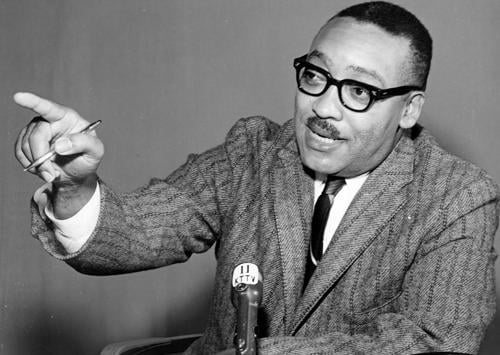
Louis Lomax discusses the book "Thailand: The War That Is, The War That Will Be"
1967 Discussing Thailand and interviewing journalist Louis Lomax. Includes passage from book.
-
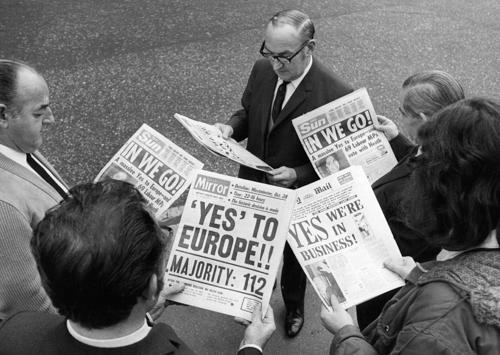
London newspaper vendor, George Curry, discusses politics and art, while Studs Terkel was in London, England
Sep. 1975 While in London, England, Studs Terkel interviews George Curry, a newspaper vendor with a storefront in a hotel. The two discussed Curry’s hometown of Dundee, Scotland and its politics, in addition to London’s current political atmosphere. They also talk about Curry’s political leanings; he is a socialist, and he criticizes England’s immigration policies. Curry comments on his interest in the arts and speaks on stereotypes surrounding the working class. The interview is interrupted intermittently by customers buying their morning paper.
-
Lois Wheeler Snow discusses her book “China on Stage”
Actor and author Lois Wheeler Snow discusses her book “China on Stage,” and shares her experiences in China, primarily involving ballet, opera, and plays.
-

Lily Tomlin discusses the "The Search for Signs of Intelligent Life in the Universe"
Sep. 27, 1988 Tomlin talks in depth about the characters she has created and played (Trudy the Bag Lady, Kate, Agnus Angst, Chrissy, Lynn, Marie, ) in the play "The Search for Signs of Intelligent Life in the Universe" by Jane Wagner. Tomlin talks in detail about each character and inspirations and influences behind each, especially Trudy.