Listen to New Voices on Studs Terkel our partnership with 826CHI-here! Read the Story


-

Lila Kedrova discusses her background
Apr. 1, 1965 Although she came from a family with a musical background, Lila Kedrova went into acting. A friend of her father, Feodor Chaliapin, played a part in influencing Kedrova into performing. Kedrova said she's been acting since she was eight. After her role as Madame Hortense, Kedrova said she wanted to explore other types of roles.*Please note: some sections have been edited out from the original recording due to copyright considerations
-
-
-
Licia Albanese discusses her opera performances
Feb. 27, 1960 Licia Albanese discusses her performance preparations, advice to young new opera singers, the conductor techniques from Fausto Cleva, and the late Arturo Toscanini.
-
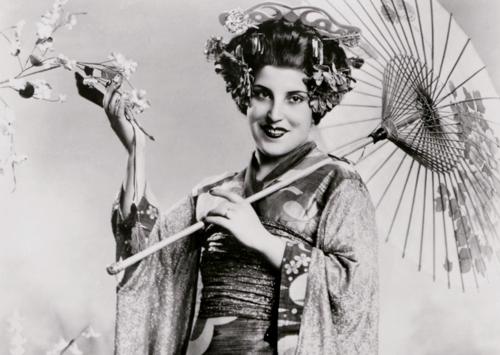
Licia Albanese discusses her opera performances
Feb. 27, 1960 Licia Albanese discusses her performance preparations, advice to young new opera singers, the conductor techniques from Fausto Cleva, and the late Arturo Toscanini.
-

Lewis Regenstein discusses his book, "The Politics of Extinction: The Shocking Story of the World's Endangered Wildlife".
Aug. 12, 1975 Mr Regenstein and Studs discuss the book, "The Politics of Extinction". The book blows the whistle on those who are currently engaged in killing these animals for "sport," fashion, and profit. They talk about various endangered species and what that distinction means and the public officials with the power- and the responsibility - to protect wildlife, but who instead allow the destruction to continue.
-
Lewis H. Lapham in conversation with Studs Terkel
Feb. 22, 1988 Discussing the book "Money and Class in America: Notes and Observations on Our Civil Religion" (published by Weidenfeld & Nicolson) with author and editor and chief of Harper's magazine Lewis Lapham.
-
Lew Kreinberg, German (Herman) Leyte, and Nate Duncan discuss Maxwell Street, Chicago
Dec. 8, 1993 Discussing Maxwell Street with Lew Kreinberg and vendors German (Herman) Leyte, and Nate Duncan.
-
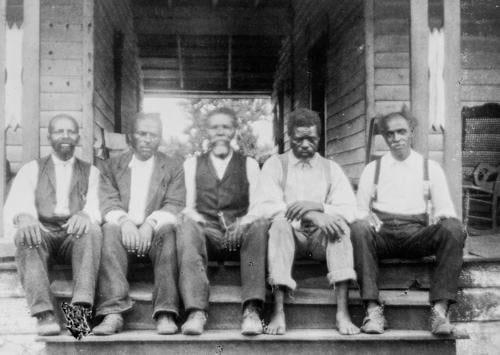
Lerone Bennett, Jr., John Hope Franklin and Hoyt Fuller discuss the book "Distortions of Negro History"
Jun. 3, 1965 Discussing "Distortions of Negro History" and interviewing Lerone Bennett, Jr., John Hope Franklin and Hoyt Fuller.
-
Leonard Sorkin discusses his career as a violinist with the Chicago Symphony Orchestra, the Fine Arts Quartet and as Director of Chamber Music Studies at the University of Wisconsin
Apr. 9, 1982 Studs interviews Leonard Sorkin about his career as a violinist. They discuss his training, which began in early childhood and who he studied under. Sorkin plays a few short tunes to demonstrate his art, and one was his childhood favorite of "Allegro" by Joseph Fiocco. Sorkin names Jascha Heifetz as one who he admired all his life and shares the sounds and names of others who have influenced him. He explains to Studs how the Fine Arts Quartet members change to adapt to new players but the quartet sound remains the same.
-

Leonard Matlovich talks about his experience in the U.S. Air Force
Nov. 14, 1975 Interviewing Len Matlovich, formerly a Sergeant in the U.S. Air Force, about the status of gay men in the armed forces and his expulsion from the Air Force after he publicly stated that he was gay.
-
Leonard Dubi, Denise Ponzetti and Mary Lou Wolff discuss the Citizen's Action Program and community activism in Chicago
1967 Father Leonard Dubi and community advocates Denise Ponzetti and Mary Lou Wolff discuss the Citizen's Action Program and community activism in Chicago.
-
Leonard Boudin discusses various cases he's tried
May. 20, 1986 Dr. Benjamin Spock, Paul Robeson and Jimmy Hoffa are a few of Leonard Boudin's clients. Although some people were outraged Boudin welcomed Hoffa as a client, Boudin's belief had always remained that whether a person be good or bad, that person is, like all people, entitled to civil liberties and good representation. Boudin lastly explained he liked law students and that from what he witnessed, he was hopeful for their/our futures.
-

Leon Golub discusses recent art with Studs Terkel ; part 2
Nov. 25, 1964 Golub discusses his work "Man" and talks about his process as an artist.
-

Leon Golub discusses recent art with Studs Terkel ; part 1
Nov. 25, 1964 Golub discusses his work "Man" and talks about his process as an artist.