

-

Walter Kerr discusses his book "The Silent Clowns"
Dec. 11, 1975 Writer and critic Walter Kerr discusses his book "The Silent Clowns," about the film era's greats including Charlie Chaplin, Buster Keaton, Harold Lloyd, Raymond Griffith, and Harry Langdon. Studs begins by reading an excerpt from James Agee's "Death in the Family" with music in the background followed by Kerr reading from his book. They begin talking about how silent films affected the audience, lesser known stars Lloyd Hamilton and Charley Chase, and then analyze several famous Charlie Chaplin scenes to assess the complex nature of his characters.
-

Walter J. Hickel discusses politics
Oct. 18, 1971 Discussing the book "Who Owns America?" and interviewing the author Walter J. Hickel, who became Governor of Alaska and Secretary of the Interior.
-

Walter Bernstein discusses his book "Inside Out: A Memoir of the Blacklist"
Dec. 10, 1996 American screenwriter, Walter Bernstein, discusses his book "Inside Out: A Memoir of the Blacklist".
-
Walter Bernstein discusses his book "Inside Out: A Memoir of the Blacklist"
Dec. 10, 1996 American screenwriter, Walter Bernstein, discusses his book "Inside Out: A Memoir of the Blacklist", a memoir about his life during and following his blacklisted status due to his alleged communist views. Bernstein uses the case of John Henry Faulk versus Laurence A. Johnson to serve as an example of how the entertainment industry was being diminished during this time.
-
Wallace Terry reads from and discusses his book "Bloods: An Oral History of the Vietnam War by Black Veterans"
Sep. 26, 1984 Content Warning: This conversation includes racially and/or culturally derogatory language and/or negative depictions of Black and Indigenous people of color, women, and LGBTQI+ individuals. Rather than remove this content, we present it in the context of twentieth-century social history to acknowledge and learn from its impact and to inspire awareness and discussion. Wallace Terry felt it was an important mission to tell people about the Black men who fought in Vietnam. There are stories from 20 men.
-
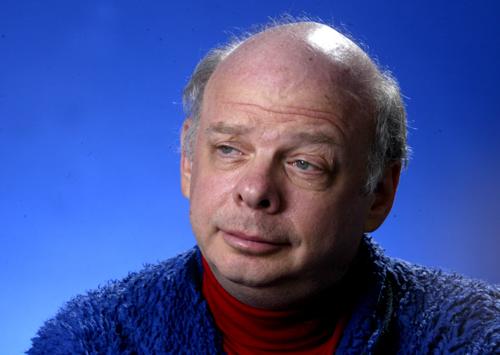
Wallace Shawn discusses his play “The Designated Mourner”
Mar. 21, 1997 Studs Terkel and playwright Wallace Shawn discuss Shawn’s play “The Designated Mourner,” and the play’s deeper themes. Both Shawn and Terkel read monologues from the play.
-
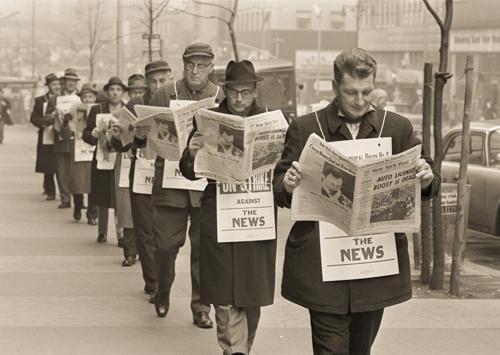
W.H. Ferry discusses his article "Masscomm as guru"
1965 W.H. Ferry discusses his article "Masscomm as guru" regarding mass communication outlets including newspapers, television, and radio, and their ethical responsibility to teach the public about social issues rather than only present them with current news.
-
Von Freeman, Kenny Prince, Bradley Parker-Sparrow, Joanie Pallatto in conversation with Studs Terkel
Dec. 20, 1989 Interviewing jazz musicians Von Freeman (tenor saxophone), Kenny Prince (piano), Bradley Parker-Sparrow(piano and composer), and Joanie Pallatto (vocalist).
-
Von Freeman (tenor saxophone), Franz Jackson (vocals) and composer Kahil El'zabar.
Mar. 31, 1997 Interviewing jazz musicians Von Freeman (tenor saxophone), Franz Jackson (vocals) and composer Kahil El'zabar.
-
Vivian Adams discusses the beliefs of the Mormon Church regarding the Equal Rights Amendment (ERA)
Jun. 15, 1982 Vivian Adams discusses the reasons behind the Mormon Church's stance against the Equal Rights Amendment (ERA). The discussion includes the beliefs of the Church regarding the roles of men and women, as well as the history and music of the Mormon Church.
-

Viveca Lindfors discusses her roles and the roles of women in society
Feb. 2, 1974 Viveca Lindfors discusses her roles and the roles of women in society. Includes Viveca Lindfors reciting lines written by Lillian Hellman.
-
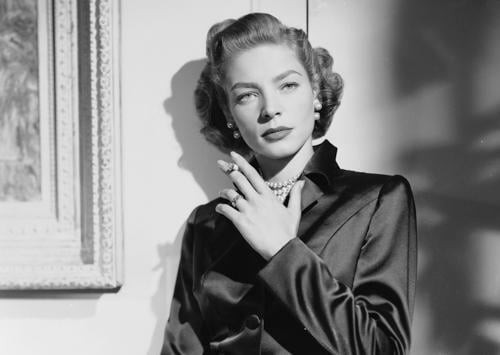
Vito Russo discusses his award-winning book "The Celluloid Closet"
Jul. 17, 1981 Discussing the book "The celluloid closet: homosexuality in the movies" with the author Vito Russo.
-
Virginia Collins discusses her family and social justice issues
1970 Virginia Collins said her grandfather believed if the parish communities could afford to provide a white teacher for white school children, then the parishes of Black communities must do the same for the Black children. Collins also talks about her son Walter's legal case and his being in jail for violating six counts of induction to the army.*Please note: some sections have been edited out from the original recording due to copyright considerations
-
Virgil Thomson discusses his career as a music composer for opera and film
Jul. 24, 1973 Studs interview with Virgil Thomson about his career as a music composer. Thomson shares his work with Gertrude Stein in operas "Mother of Us All" and "Four Saints In Three Acts." He discusses his preference for black artists. Thomson describes his work in documentary films such as "Plow That Broke the Plains." He also shares information about the cajun music "Squeeze Box" in the film "Louisiana Story." This edited version does not include the music pieces.
-
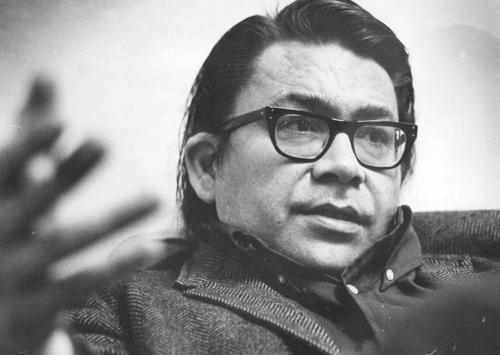
Vine Deloria discusses Native American rights and history
Jan. 20, 1975 Vine Deloria discusses Native American rights and history focusing on treaties formed and broken by the United State government. Original recording 1965063-3-1 includes music by Buffy Sainte-Marie.