

-

Ray Still discusses his career with the Chicago Symphony Orchestra
May. 7, 1990 Interviewing Ray Still, first oboist and director of the Quadrangle Chamber Players, an ensemble of nine musicians from the Chicago Symphony Orchestra.
-

Ray Patlan and Mark Rogovin discuss mural art
Apr. 14, 1975 Ray Patlan and Mark Rogovin discuss mural art and the community engagement surrounding this artform. This program includes an audio clip of passers by commenting on the 1967 unveiling of Pablo Picasso’s Chicago sculpture and what they think it represents and the conversations it is meant to evoke. Studs reads Pete Seeger's introduction from Mark Rogovin, Marie Burton, and Holly Highfill’s book “Mural manual: How to paint murals for the classroom, community center, and street corner.”
-

Ray Gordon and Susanne Nussbaum discuss the play "Disabled Genius" and people with disabilities
Nov. 27, 1979 Ray Gordon, writer and director, and Susanne Nussbaum, cast member of "Disabled Geniuses," discuss the play and the life of people with disabilities. Nussbaum recalls experiences of discrimination she and her friends have faced due to their differences. Both interviewees then talk about the members of the play and some of the characters involved.
-
-
Ravi Shankar discusses playing the sitar
Oct. 26, 1983 A master at playing the sitar, Ravi Shankar, also composed the music for the soundtrack of "Gandi". According to Shankar, there are 72 scales in Indian music and when he plays music, 90% of it is improvisation. Younger people became interested in playing the instrument after Shankar announced he was teaching George Harrison of the Beatles how to play the sitar. There is an excerpt of an interview with Shankar from 22 years ago, to the date of this program.
-
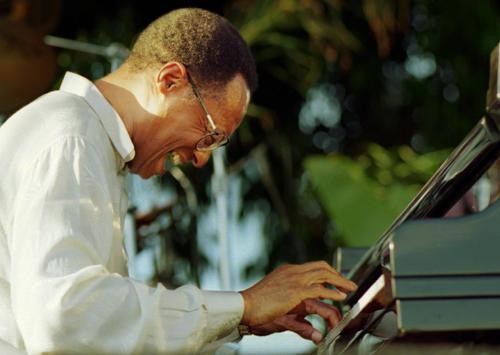
Ramsey Lewis discusses his career
Dec. 22, 1980 Starting at a young age, Ramsey Lewis really loved music and as he got older, he'd practice five or six hours a day. Lewis says he knew nothing about jazz until he met Wallace Burton at the age of 15. Burton hired Lewis on the spot to play in his band. Church music, Spanish music, Duke Ellington and the Beatles, says Lewis, were all great influences to him.
-
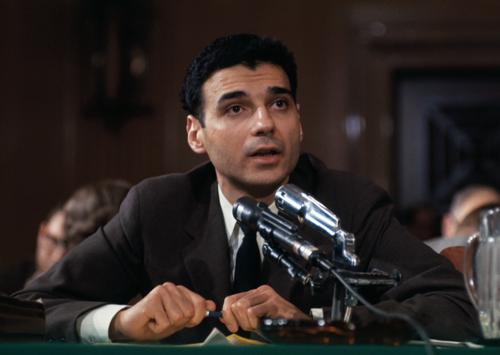
Ralph Nader in conversation with Studs Terkel
Jun. 25, 1986 Discussing the book "The Big Boys: Power and Position in American Business" (published by Pantheon) with the author, lawyer and consumer advocate Ralph Nader.
-
-
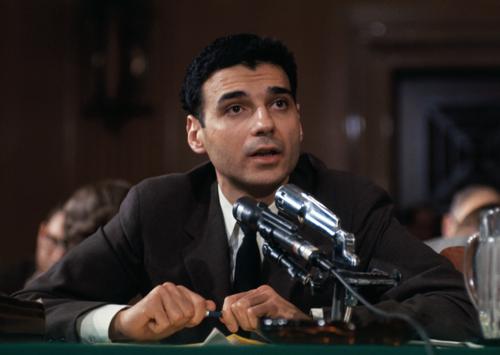
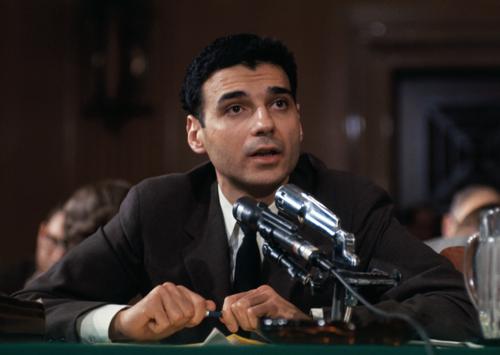
Ralph Nader discusses corporate violence and power
Jun. 23, 1968 Discussing corporate violence and power with lawyer Ralph Nader.
-
Ralph McGehee reads from and discusses his book "Deadly Deceits"
May. 11, 1983 Discussing the book "Deadly deceits: my twenty five years in the C.I.A" with the author Ralph McGehee.
-
Ralph Gleason discusses jazz, jazz artists, and jazz festivals ; part 3
Jul. 31, 1971 Interviewing Ralph Gleason while Studs was in Berkeley, California (3 parts). Bob Dylan and Joan Baez sings "Daddy, You Been on My Mind." Elsa Knight Thompson.
-
Ralph Gleason discusses jazz, jazz artists, and jazz festivals ; part 2
Jul. 31, 1971 In Berkeley, Calif., Ralph Gleason, jazz and pop critic, and founding editor of Rolling Stone, talks with Studs about the history of jazz and jazz artists. They talk in depth about Billie Holiday, white performers who imitated the style of black jazz singers, and jazz festivals. Songs include Holiday's "Them There Eyes" and "God Bless the Child."
-
Ralph Gleason discusses jazz, jazz artists, and jazz festivals ; part 1
Jul. 31, 1971 Studs interviews jazz and pop critic, and founding editor of "Rolling Stone" magazine, Ralph Gleason while in Berkeley, California (3 parts). Topics include the history of jazz, blues, and jazz culture, and how race played in the development and distribution of the music. Songs include Louis Armstrong's "(I'll Be Glad When You're Dead) You Rascal You."
-
Ralph Ellison discusses music
Jun. 18, 1992 The blues and jazz are topics covered by Ralph Ellison. Ellison himself started to play the trumpet at the age of seven. Ellison said for him, when hearing classical music, he then had to go and find classical literature.
-
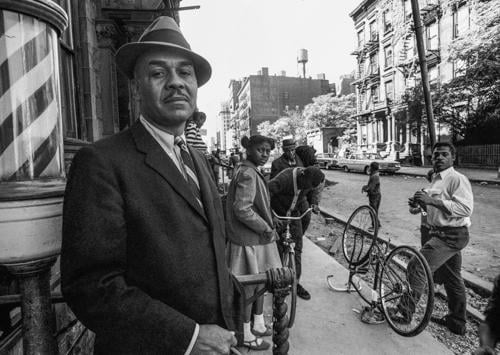
Ralph Ellison American novelist and literary critic discusses his life and writing
1970 Ralph Ellison, winner of the National Book Award for Fiction for his book "Invisible Man," discusses his early life and education and his life as a writer and lifetime scholar. He speaks on being a musician (trumpet), the joy of music and the Church and how they fit into the lives of African Americans.