

-

Willard Maas and John Dubay discuss experimental films and filmmaking, part 2
1966 Experimental filmmaker and poet Willard Maas and his friend John Dubay discuss experimental films and filmmaking, part 2 of 2. John Dubay is featured predominantly in this part of the interview. The second part of the interview focuses less on filmmaking and more on societal ills, wealth inequality, and race relations.
-
Willard Maas and John Dubay discuss experimental films and filmmaking, part 1
1966 Experimental filmmaker and poet Willard Maas and his friend John Dubay discuss experimental films and filmmaking, part 1 of 2. His friend John Dubay speaks briefly in part 1 of the interview, but is more prominently featured in part 2.
-
Will Holt discusses his career and music
Oct. 4, 1962 *Please note: some sections have been edited out from the original recording due to copyright considerations
-
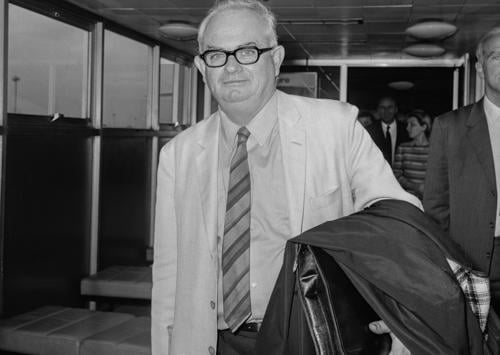
Wilfred Burchett discusses about his career on journalism
Oct. 24, 1977 Wilfred Burchett (an Australian journalist) discusses his journalism career. He was reporting conflicts in Asia (North Korea, Vietnam, China and Japan) and their Communist supporters. He speaks briefly about his experiences in Nazi Germany and concentration camps. Towards the end of the interview he talks about his interest in learning and reporting more about the new euro-communism (prominent in Italy, Spain and France).
-
Wild Bill Davison discusses his upcoming show at the Jazz Showcase
Apr. 24, 1984 American jazz cornet player Wild Bill Davison known for his wild ways, discusses his career in jazz music and life in Chicago. Davison rubbed elbows with all the Chicago bigwigs from Al Capone to jazz legends such as Fats Waller.
-
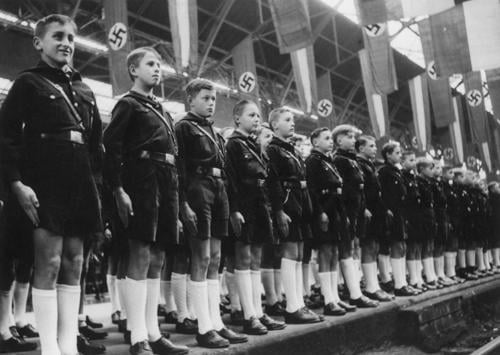
Werner Burkhardt German jazz critic and translator speaks with Studs in Hamburg, Germany.
Mar. 1, 1967 Werner Burkhardt, German music journalist, critic, and translator, discusses his life and work with Studs. Mr Burkhardt speaks about his life during the time of Adolph Hitler, the Hitler Youth, and World War II. They end the interview talking about Jazz in Munich, a recording of "My Man" by Billie Holiday closes the interview.
-
-
Warren Leming discusses and performs songs from the play "The Eight Hours"
Apr. 8, 1987 Terkel comments and presents songs and stories from "The Eight Hours"
-
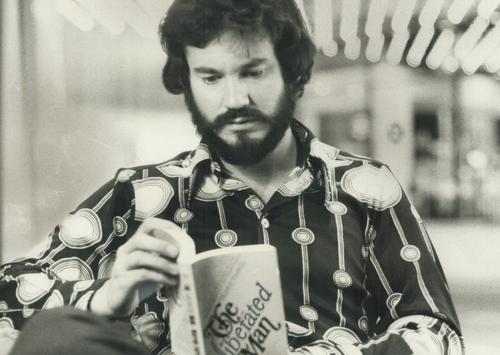
Warren Farrell discusses his book "Beyond Masculinity" and women's liberation
Sep. 9, 1971 Warren Farrell discusses his book "Beyond Masculinity." He discusses women's liberation and men's liberation. Includes clip of Caroline Bird discussing women's liberation.
-
Wanda Wilkomirska discusses her life and music as a violinist
Apr. 14, 1981 Studs Terkel interview with Wanda Wilkomirska about her life as a violinist. They discuss her childhood and her musical family. Wilkomirska talks about the people and music that influenced her, and she describes the differences in audiences between large cities and smaller ones. She expresses her deep love for music and her need to play her music with emotion. Music performances are cut from this particular recording with Wanda Wilkomirska. Studs quotes Ray Erickson, critic from the New York Times and discusses other critiques of her work.
-
Walter Terry discusses his biography of Ruth St. Denis
Jan. 19, 1970 Studs speaks with dance critic Walter Terry about his book, Miss Ruth: The More Living Life of Ruth St. Denis. They also discuss her influence on the world of dance. A few audio clips of Walter Terry interviewing Ruth St. Denis are played.*Please note: some sections have been edited out from the original recording due to copyright considerations
-
-
-
Walter Rosenblum and Daniel Nagrin discuss art, life, photography, and dance
Jun. 2, 1982 Photographer and author Walter Rosenblum, and dancer and choreographer Daniel Nagrin discuss art, life, photography, and dance. The two answer the question “What calls one to a life of art?” and other driving factors for artists such as political, social, and economic interests. Studs opens and closes this program by playing an untitled Armenian dance song.
-
Walter Levin discusses the LaSalle Quartet
Feb. 7, 1984 Terkel comments and presents a musical performance of the LaSalle Quartet, comprised of two violins, a cello, and a viola. Terkel interviews Walter Levin, a senior member of the LaSalle Quartet, they discuss the following: the Second Viennese School; chamber music; transparency of quartets; subjective interpretation of compositions; the awareness of color as a musical element; and how the LaSalle Quartet was founded.