

-

Orletta Ryan, Mary Frances Greene, Karen and Lucille discuss difficulties they face as teachers and students; part 1
1966 Educators Orletta Ryan and Mary Frances Greene, and school children Karen and Lucille talk about their approaches to teaching, fighting in school, and expectations for learning.
-
Orletta Ryan, Mary Frances Greene, Karen and Lucille discuss a variety of experiences in a New York City school; part 2
1966 Educators Orletta Ryan and Mary Frances Greene, along with school children Karen and Lucille speak to the different experiences they have in their roles at school; part 2.
-
-
-
Oriana Fallaci discusses her career and journalism
Jun. 10, 1977 Italian journalist Oriana Fallaci discusses journalism and what she has learned from powerful politicians that she has interviewed over the course of her career. Much of the conversation comes back to her late companion, Alexandros Panagoulēs. She briefly mentions her most recent book "Interview With History." Two songs by Mikis Theodorakis are played at the conclusion of the interview: (00:49:02-00:50:57) "To Palicari Echi Kaimo" (00:51:00-00:52:40) "S'afti Ti Geitonia-In This Neighborhood"
-
Oriana Fallaci discusses her book "Inshallah"
Oct. 20, 1992 Novelist Oriana Fallaci discusses and reads from her book "Inshallah", a fictional book chronicling the experiences of a group of Italian soldiers on a 1983 peace keeping mission in Beirut. The interview focuses on the book, its characters, and the larger themes at play throughout the novel. Studs Terkel briefly discusses Fallaci's previous book, "Interview with History." Studs plays "Hajartak Part 3 Start (Your Love is Heartless Gives You Hell Poem)" - Oum Kalthoum.
-
Oria and Iain Douglas-Hamilton discussing their book "Among the Elephants"
Jul. 7, 1975 Oria and Iain Douglas-Hamilton discuss their lives among the elephants at Lake Manyara National Park in Tanzania. They talk about the elephant life-cycle and the elephant social behavior. The two also discuss conservation and preservation of elephants across Africa.
-
-
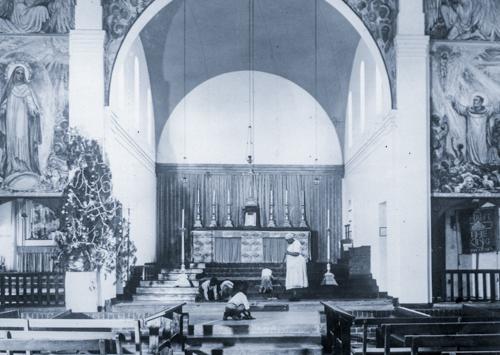
On Location in South Africa, Studs speaks with two university students about race relations. Also speaking with members of African Music and Drama Association about upcoming performances ; part 1
1963 Studs interviews two Natal University students Richard and Nathan they discuss race relations (apartheid)in South Africa. Linda Mhjongo actress and alumni of African Music and Drama Association (AMDA) talks to Studs about returning to Johannesburg from London. Gideon, musical director of (AMDA) talks about and plays the music of their current production "Spinnono". Lancelot, a 14 year old boy plays the piano. A young lady, Rose sings a couple of short songs from "Spinnono". Connie Mombasa director of AMDA production "Men without shadows" John Paul Sartre, talks about the play.
-
Ollie Gilbert and Jimmie Driftwood discuss music ; part 2
May. 25, 1964 Ollie Gilbert, folk musician, and Jimmie Driftwood, folk songwriter and musician, discuss and folk music. They also discuss instruments such as banjos, guitars, and musical bows. The two musicians also talk about how music evolves over time and as it is passed through generations.
-
Ollie Gilbert and Jimmie Driftwood discuss music ; part 1
May. 25, 1964 Ollie Gilbert, folk musician, and Jimmie Driftwood, folk songwriter and musician, discuss music including how Gilbert's family has passed down music through the generations.
-
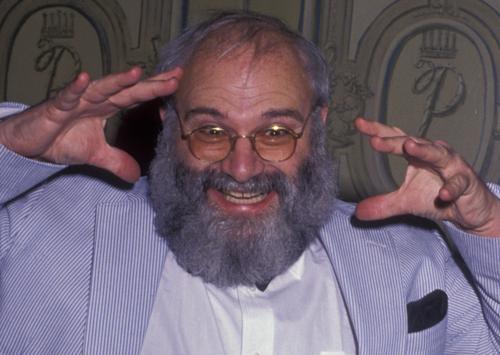
Oliver W. Sacks talks with Studs Terkel
Mar. 15, 1995 Discussing the book "An Anthropologist on Mars: Seven Paradoxical Tales" (published by Knopf) with the author, neurologist Dr. Oliver Sacks.
-
Oliver W. Sacks discusses his book "Awakenings"
1985 In the of first of many appearances on Studs' radio show, Oliver Sacks discusses his book "Awakenings" and recounts several patient profiles from his groundbreaking treatment application of L-DOPA to sufferers of Sleeping sickness and Parkinson's disease. They explore his work in the context of Studs' concept of Feeling Tone and Sacks tells of a remarkable scene with aphasic patients reacting to a speech of then President Ronald Reagan.
-
Oliver W. Sacks discusses deaf experiences as detailed in his book "Seeing Voices"
Oct. 26, 1990 Dr. Oliver W. Sacks discusses people and concepts presented in his book "Seeing Voices"; the interview is for the paperback release.
-
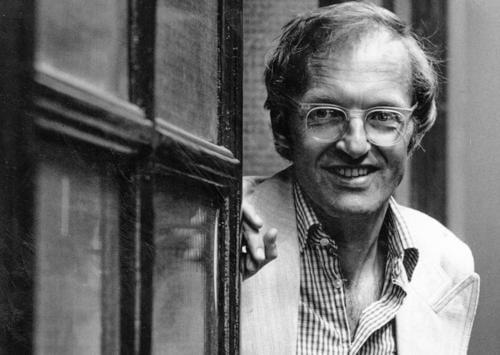
Oliver Howes discusses life in England; part 2
1962 Oliver Howes discusses his thoughts on racism in England, his daily life, and what he wants out of life. Audio is distorted from 15:39 to 35:42; part 2.