

-

Dr. Edward Twitchell Hall discusses urban life
Jan. 23, 1970 High rise buildings being built because of growing populations are detrimental to our environment, explains Dr. Edward Twitchell Hall. Problems include the lack of oxygen and the lack of greenery said Hall. The number of automobiles on the road and the large size of the cars is also problematic,
-
-
Dr. David Stark Murray discusses national healthcare
Sep. 14, 1971 Dr. David Stark Murray discusses national healthcare. Murray discusses how, by prioritizing the business aspect of the medical industry in the United States, this often leads to problems in quality of care. He uses the example of blood donations, volunteer-based versus receiving money for this action, to illustrate this point.*Please note: some sections have been edited out from the original recording due to copyright considerations
-
Dr. Dalma Hunyadi Brunauer sings and discusses Bulgarian folk music ; part 2
Oct. 16, 1962 *Please note: some sections have been edited out from the original recording due to copyright considerations
-
Dr. Dalma Hunyadi Brunauer sings and discusses Bulgarian folk music ; part 1
Oct. 16, 1962 *Please note: some sections have been edited out from the original recording due to copyright considerations
-
Dr. Christopher Riche Evans discusses dreams, the human brain, and computers
1966 Psychologist and computer scientist Dr. Christopher Riche Evans discusses dreams, the human brain, and computers. [Last minute and a half is a different interview. No mention of the subject.]
-
Dr. Charles Clements talks with Studs Terkel
Apr. 13, 1984 Discussing observations and experiences as a medical practioner in Vietnam and then Central America, principally, El Salvador with Charlie Clements M.D.
-
Dr. Charles Clements discusses his book "Witness to War"
Apr. 29, 1985 After having flown 50 missions in Vietnam, Charles Clements went to medical school and became a physician and a human rights activist. Dr. Clements talks about his observations in the poorest sections of Nicaragua. Because medicine for the poor people was considered contraband, Clements had to resort to putting rusty nails into a cup of water and having his patients drink the water for iron supplements. Clements reminds the audience if we don't know our history, we are bound to repeat it.
-
Dr. Carlo Levi discusses Italian literature; Julio & Phillipo sing nursery rhymes, Maria Caniglia discusses opera; part 2
1962 Dr. Carlo Levi talks about the differences in Italian and American literature in the first part. In the second part, children Julio and Phillipo sing Italian nursery rhymes. In the last part, Maria Caniglia and husband Pino Donati discuss opera; part 2.
-
Dr. Carlo Levi discusses his exile and humanity in southern Italy after WW2; part 1
1962 Dr. Carlo Levi talks about his book "Christ Stopped at Eboli", the human condition, and compassion for those suffering during and after World War 2.
-
Dr. C. L. R. James discusses his book "Black Jacobins"
1970 Trinidadian historian Dr. C.L.R. James discusses his book "The Black Jacobins: Toussaint L'Ouverture and the San Domingo Revolution." The book was originally published in 1938. At the end of the interview, the song "Voodoo American: Bya Bulako" by Michel LaRue is played (00:46:26-00:51:
-

Dr. Bertram Carnow, and Joan and Bob Ericksen discuss health hazards in work environments
Jun. 5, 1974 Discussing health hazards in work environments and environmental pollution. Interviewing Dr. Bertram Carnow and Bob and Joan Ericksen.
-

Dr. Bertram Carnow discusses the environment and pollution
Aug. 24, 1973 Interviewing Dr. Bertram Carnow about environmental health, air pollution, and occupational diseases.
-
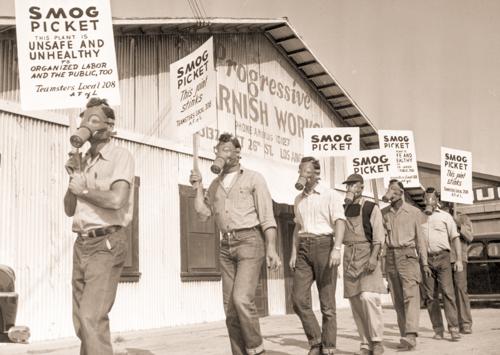
Dr. Bertram Carnow and Bob and Joan Ericksen discuss occupational illnesses and pollution
Nov. 21, 1974 Both Bob and Joan Ericksen ask why is a school being built not only by two highways but right next door to a paint factory. They contend that the paint fumes can't be good for anyone to breath. Instead of asking their patients where they work, Dr. Carnow believes more doctors need to ask, "What do you do?", to determine if they're working with any hazardous materials that may harm their health.
-

Dr. Benjamin Spock and Dr. Michael B. Rothenberg discuss the 40th anniversary of the book “Baby and Child Care”
Mar. 11, 1985 Dr. Benjamin Spock and Dr. Michael B. Rothenberg discuss the 40th anniversary edition of the book “Baby and Child Care.” The two discuss the changes they've made to the book, criticism they’ve faced since releasing the book, and how they’ve rethought gender roles in childcare. Studs plays “Hush Little Baby” - The Weavers (1955).