

-

H. E. F. Donahue discusses his book "The Higher Animals"; part 1
Jan. 25, 1964 H.E.F Donahue discusses his book "The Higher Animals". Donahue goes into depth about the characters in his book and touches on the subjects of evolution, history, literature, and his life. H.E.F. Donahue quotes Charles Darwin.
-

H. E. F. (Shag) Donahue and Nelson Algren discuss "Conversations with Nelson Algren"
Nov. 1, 1964 H. E. F. (Shag) Donahue and Nelson Algren discuss Donahue's book, "Conversations with Nelson Algren," a biographical exploration of Algren's life as a writer. They discuss the creative lives, successes and failures of other authors in relation to Algren's work, including Ernest Hemingway, F. Scott Fitzgerald, J.D. Salinger, Richard Wright, and others. Includes the author reading excerpts from "Conversations with Nelson Algren."
-
H. Bruce (Howard Bruce) Franklin in conversation with Studs Terkel
Mar. 18, 1992 Discussing the book "M.I.A., or, Mythmaking in America" (published by L. Hill Books) with the author Professor H. Bruce Franklin.
-
Gwynee Dyer reads from and discusses his book "War"
Oct. 18, 1985 After having served in three Navies, Gwynee Dyer, wrote his book, "War." Dyer explains people are willing to kill foreigners to protect their own land, possessions, and rights, etc. Dyer also points out that the only reason for war is to obtain power and to determine, by mass destruction, who gets what.
-
Gwendolyn Brooks discusses her poetry
Jan. 3, 1961 Gwendolyn Brooks, Poet Laureate of Illinois, talks about her poetry, her books, and some of her influences.
-
Guy Duckworth discusses teaching the piano and three of his students play ; part 2
1968 Dr. Guy Duckworth and his students sing and play, "America." Duckworth talks about the importance of knowing how to learn to play the piano. The 11-year-old students first play a plain or harmonic version of "America', followed by other versions with more chords that add variety to "America."
-
Guy Duckworth and three students discuss teaching and learning piano ; part 1
1968 Musician, pianist, and educator Guy Duckworth and three of his young students at Northwestern--Darrah Cloud, David Greenberg, and Scott MacMillan--discuss teaching and learning piano. Part 1 of 2.
-
Guy Carawan and Evan Carawan discuss the impact of the Highlander Folk School
Feb. 23, 1995 Interviewing activist and musician Guy Carawan and his son, musician Evan Carawan. They discuss the impact of the Highlander Folk School during the Civil Rights Movement and their relationship with folk music. Includes a test tone that lasts 20 seconds. Content Warning: This conversation has the presence of outdated, biased, offensive language. Rather than remove this content, we present it in the context of twentieth-century social history to acknowledge and learn from its impact and to inspire awareness and discussion.
-
Guests discuss the Turkish invasion of Cyprus
Aug. 17, 1974 Guests discuss the politics of the Turkish invasion of Cyprus in 1974. Discussions include background on Cyrus, the relationship between Greek and Turkish cypriots, and the American role in the conflict.
-
Gretchen Cryer, Michael O' Flaherty in conversation with Studs Terkel
Dec. 12, 1988 Interviewing playwright and performer Gretchen Cryer and conductor Michael O' Flaherty.
-
Greta Keller discusses her life and work
Mar. 22, 1976 Greta Keller, cabaret singer and actress, discusses her life and singing career. Keller also explains technique and thoughts behind her singing. At the end of the interview, Keller describes her work on Cabaret and singing "Heiraten."
-
Gregory Dell Discusses his visit to the American hostages in Iran
Mar. 11, 1980 Reverend Greg Dell talks about the Iran Hostage Crisis and his visit to Iran to meet with the hostages and the student captures. He gives an overview of the students' thoughts about America's involvement in Iran and ideas on how to fix the relations between the two countries.
-
Gregory Corso, Allen Ginsberg, and Peter Orlovsky discuss poetry
1960 Poets Gregory Corso, Allen Ginsberg, and Peter Orlovsky, speak with Studs Terkel about their influences and what made them into the poets they are. Terkel reads a preface, written by William Carlos Williams, to Ginsberg’s poem “Howl.”
-
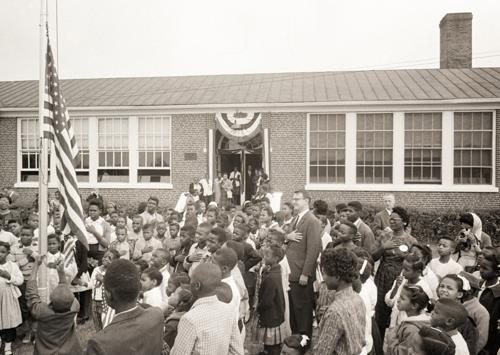
Gregory Coffin and Neil Sullivan discuss civil rights and school integration; part 2
1967 Interviewing school superintendents Gregory Coffin (Evanston) and Neil Sullivan (Berkeley) who discuss school integration and civil rights.
-
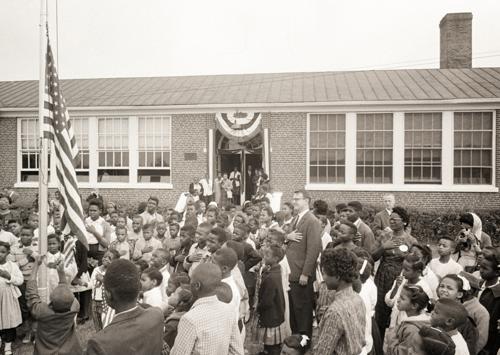
Gregory Coffin and Neil Sullivan discuss civil rights and school integration; part 1
1967 Interviewing school superintendents Gregory Coffin (Evanston) and Neil Sullivan (Berkeley) who discuss school integration and civil rights.