

-

Hema Rajagopalan discusses Indian dancing
Sep. 15, 1992 Dancer Hema Rajagopalan discusses Indian dancing and its ability to, along with the music and lyrics of a song, tell a story.
-
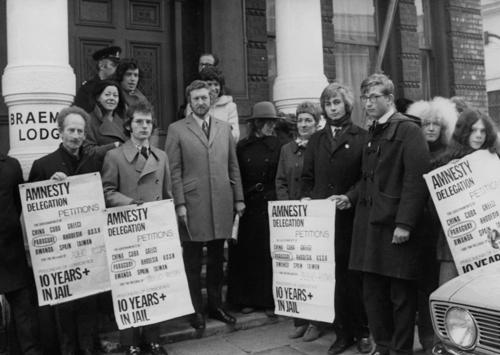
Helmut Frenz discusses Amnesty International
Sep. 22, 1980 Discussing Amnesty International with Helmut Frenz.
-
-
Helga Sandburg reads her poetry
Aug. 1, 1965 Helga Sandburg reads some of her poetry and discusses her life as the daughter of fellow poet Carl Sandburg.
-
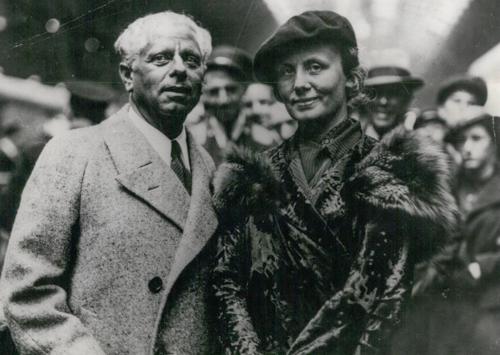
Helene Thimig-Reinhardt discusses her career as an actress and the work of her husband, Max Reinhardt
Mar. 22, 1968 Austrian actress Helene Thimig-Reinhardt discusses her origins and reflects on a long acting career. As the widow of Max Reinhardt, much of the discussion touches on his work as a theater director, film director, and impresario. 00:50:30- 00:52:29 "Ich Muss Wieder Einmal in Grinzing Sein" by Lotte Lehmann
-
Helene Kazantzakis talks with Studs Terkel; Part 2
May. 13, 1969 Helene Kazantzakis talks about “The Great Passion” which was written by her husband, Nikos Kazantzakis. She also talks about the book that she is writing about her husband’s life. Studs Terkel reads aloud from “The Great Passion” and Helene reads aloud some of letters featured in the biography titled “Nikos Kazantzakis.”
-
Helene Kazantzakis talks with Studs Terkel; Part 1
May. 13, 1969 Helene Kazantzakis talks about “The Great Passion” which was written by her husband, Nikos Kazantzakis. She also talks about the book that she is writing about her husband’s life. Studs Terkel reads aloud from “The Great Passion” and Helene reads aloud some of letters featured in the biography titled “Nikos Kazantzakis.” This interview opens with a song written by Nikos Kazantzakis called “The Dance” and closes with the song “Myrtia.”
-
Helen Vlachos discusses her career and her book "House Arrest"
1970 In 1967, because Helen Vlachos spoke freely and called someone in the junta a clown, she was placed under house arrest. Artists took part in a type of silent resistance, as there was no new music, no new paintings, no new poems or writings that were created. Freedom isn't allowed, explained Vlachos, as people aren't allowed to use their own minds.
-
Helen Humes discusses her career
Jun. 29, 1977 Helen Humes discusses her career and touring with Count Basie and his orchestra. John McDonough is present for the interview and contributes. Songs sung by Helen are played throughout the interview: "He May Be Your Man", "Song of the Wanderer", "If I Could Be with You for One Hour Tonight" (2 recordings- one from 1940 and one from 1977), "Unlucky Woman", "They Can't Take That Away From Me", "Today I Sing the Blues", and "They Raided the Joint". Music has been removed for copyright reasons.
-

Heinrich Gruber and Howard Schomer discuss Nazi Germany and resistance
1968 German theologian Heinrich Gruber and pastor Howard Schomer discuss Nazi Germany and resistance
-
-
Harvey Phillips and Dr. Frederick Fennell discuss their holiday ensemble the TubaSantas
Dec. 13, 1994 Presenting music by the TubaSantas with Harvey Phillips and Dr. Frederick Fennell. Program may include a live performance. "Generic Version"-Re-edited on 12/6/1995
-
-
Harry Jackson discusses his bronze cowboy sculptures
Mar. 19, 1981 Harry Jackson discusses his career as a singer, painter, and sculptor and the inspiration he took from fellow contemporaries and Italian sculpture. Between 10:00 and 11:00, Jackson remarks that Mary Wright "from the south fork of the Shoshone River" is in the studio with them.
-
Harry Edwards discusses the sociology of sports
May. 12, 1983 In his class, Edwards points out that the chances of becoming the next Kareem Abdul-Jabbar or Michael Jordan are extremely rare. According to Edwards, collegiate sports players spend 55 to 60 hours a week playing their sport, leaving little or no time for book learning. For many, after training and competing for four years, they're not able to secure good jobs because they didn't have time for studying while at the college.*Please note: some sections have been edited out from the original recording due to copyright considerations