

-
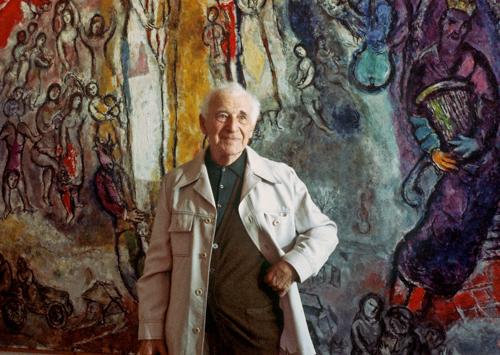
Through an interpreter, Marc Chagall discusses his approach to art and his views on people
1970 Professor John Nef explained that Marc Chagall came from an environment of nothing. From his dreams, Chagall created joy in his pieces of art. Nef lets the audience know that Chagall said he still has a lot of unfinished artwork to complete. The 3rd and last part of this program is a colloquy. Again, through another translator, Chagall’s words are translated. Chagall said his life’s purpose is art. Chagall said any man could be a bad artist but that no man can be an artist unless he is in fact, a good man.
-

Through an interpreter, Marc Chagall discusses his approach to art and his views on people
1970 Professor John Nef explained that Marc Chagall came from an environment of nothing. From his dreams, Chagall created joy in his pieces of art. Nef lets the audience know that Chagall said he still has a lot of unfinished artwork to complete. The 3rd and last part of this program is a colloquy. Again, through another translator, Chagall’s words are translated. Marc and Valentina Chagall speak French.
-
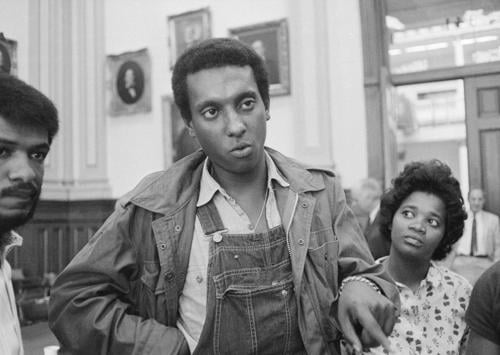
Stokely Carmichael, Charlie Cobb, and Courtland Cox discuss the SNCC ; part 2
Jul. 23, 1965 Stokely Carmichael, Charlie Cobb, and Courtland Cox discuss civil rights and African Americans in politics. Discussing the philosophy of SNCC.
-

Stokely Carmichael, Charlie Cobb, and Courtland Cox discuss the SNCC ; part 1
Jul. 23, 1965 Stokely Carmichael, Charlie Cobb, and Courtland Cox discuss civil rights and African Americans in politics. Discussing the philosophy of SNCC.
-
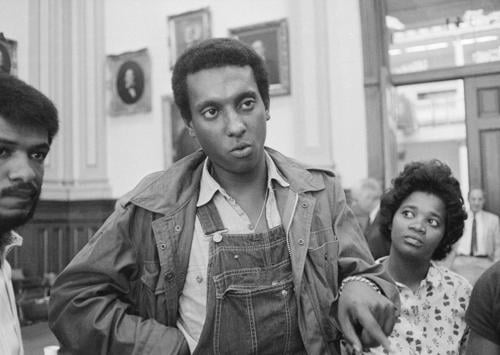
Stokely Carmichael, Charlie Cobb, and Courtland Cox discuss the philosophy of the SNCC ; part 2
1968 Stokely Carmichael, Charlie Cobb, and Courtland Cox discuss civil rights and African Americans in politics. Discussing the philosophy of SNCC. Includes Charlie Cobb reading his poem. Duplicate of 1916310-3-2.
-
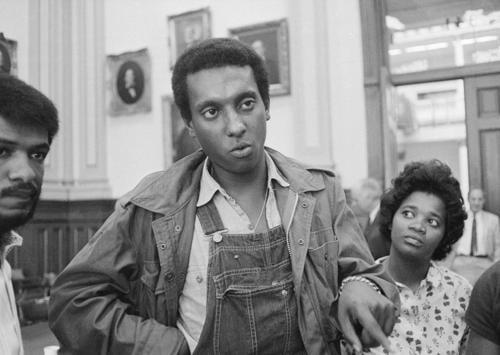
Stokely Carmichael, Charlie Cobb, and Courtland Cox discuss the philosophy of SNCC ; part 3
Jul. 23, 1965 Stokely Carmichael, Charlie Cobb, and Courtland Cox discuss civil rights and African Americans in politics. Discussing the philosophy of SNCC.
-
Robert L. Short discusses his book "Parables of Peanuts"
Feb. 10, 1969 Charles M. Schultz gave high praise to Robert L. Short's book, "Parables of Peanuts". Long explained Schulz's comic strips and his thoughts of cruelty among children. Short further explained that Schulz's comic strips turns the readers back to themselves and gives the readers the opportunities to see their own lives as they really are.
-
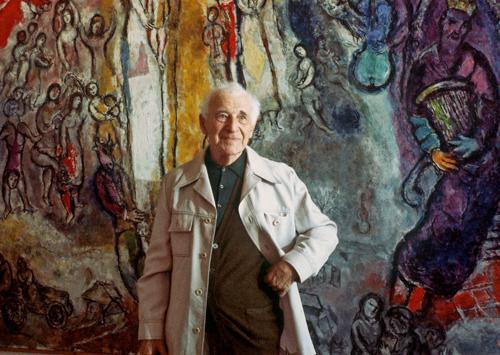
Representatives discuss the Center for Human Understanding ; part 2
May. 5, 1963 Representatives discuss the Center for Human Understanding (part 2 of 2). Center for Human Understanding conference in Washington D.C. Includes interview with [Raghav Heer]. Interviews [Chaumont Hosie]. Note: lengthy interviews in French (translated).
-
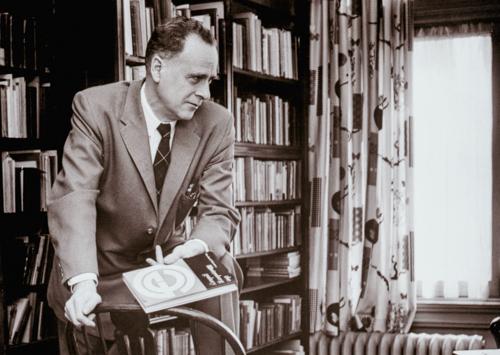
Marshall McLuhan discusses a wide range of philosophical topics
Jul. 1, 1966 Marshall McLuhan discusses a wide range of topics including conformity, changes in entertainment media, cultural change, art and artists, originality in dance, reading and language, human interaction with nature, and technology. Recorded in front of a live audience at Kendall College, McLuhan takes several questions from the audience throughout the program.
-
Lucien Stryk discusses Zen poetry and Zen philosophy
Jan. 1, 1966 Poet Lucien Stryk discusses Zen poetry and Zen philosophy. Styrk focuses this conversation on “Satori," a Buddhist term for “the awakening”, and its influence on Zen philosophy. Styrk also discusses and reads from a book edited by him and Takashi Ikemoto entitled "Zen: Poems, Prayers, Sermons, Anecdotes, Interviews." Stryk reads a poem from “Triumph of the Sparrow” by Shinkichi Takahashi. Studs plays "His Eye is on the Sparrow" - Mahalia Jackson (1958).
-
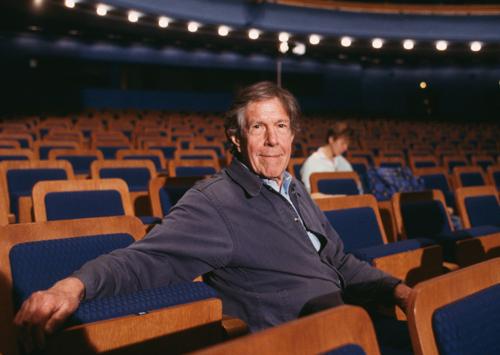
John Cage discusses his music, life, influences, and career
Aug. 13, 1992 John Cage discusses his music, life, influences, and career. Rebroadcast of an interview with John Cage to celebrate his life and what would have been soon his 80th birthday. Includes a clip of John Cage reading/ telling a story in 1969 to Studs Terkel.
-
Jean Vilar and Eugène Ionesco discuss French theater
1968 In the first part of this program Studs Terkel discusses French theater with critic Jean Vilar. In the second part, Studs and Eugène Ionesco discuss Ionesco’s work and the Theater of the Absurd.
-
Interview with Michael Frayn
Sep. 22, 1975 Interviewing British dramatist-novelist Michael Frayn.
-
Discussing Montessori and Steiner Waldorf schooling with Hans A. Schieser and Theo Buergin
Apr. 3, 1981 Discussing education and alternative schools with Theo Buergin and Hans A. Schieser. They discuss educators, philosophers, and psychologists such as Rudolf Steiner, Maria Montessori, and Jean Piaget.
-
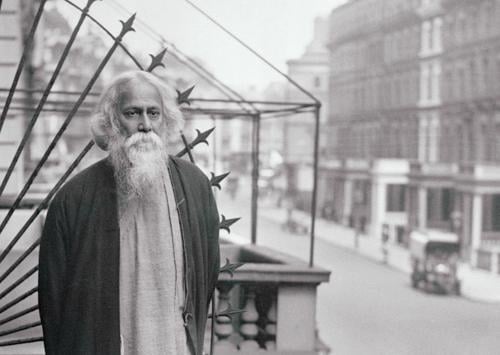
Amiya Chakravarty discusses Rabindranath Tagore
Jun. 11, 1965 Amiya Chakravarty discusses Rabindranath Tagore. Includes song and poem by Rabindranath Tagore.