

-
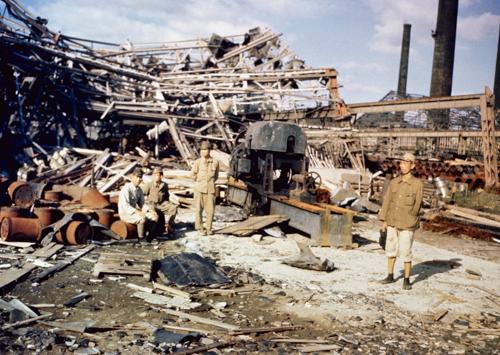
William Craig talks to Studs Terkel
William Craig discusses his book "The Fall of Japan: The Final Weeks of World War II In the Pacific." He speaks mostly on the atomic bombings of Hiroshima and Nagasaki. Includes several excerpts from the book.
-
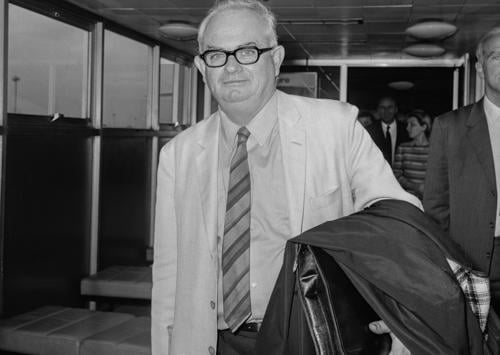
Wilfred Burchett discusses about his career on journalism
Oct. 24, 1977 Wilfred Burchett (an Australian journalist) discusses his journalism career. He was reporting conflicts in Asia (North Korea, Vietnam, China and Japan) and their Communist supporters. He speaks briefly about his experiences in Nazi Germany and concentration camps. Towards the end of the interview he talks about his interest in learning and reporting more about the new euro-communism (prominent in Italy, Spain and France).
-
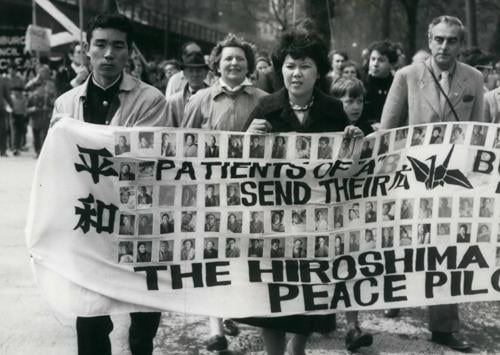
Miyoko Matsubara discusses her experiences as a survivor of the atomic bombing of Hiroshima
Mar. 29, 1962 Miyoko Matsubara, a Japanese survivor of the atomic bomb dropped on Hiroshima, discusses her experiences through translator Joan Takada. Later in life, she went on to work with disadvantaged children and as an advocate for world peace and the prevention of nuclear testing and warfare.
-
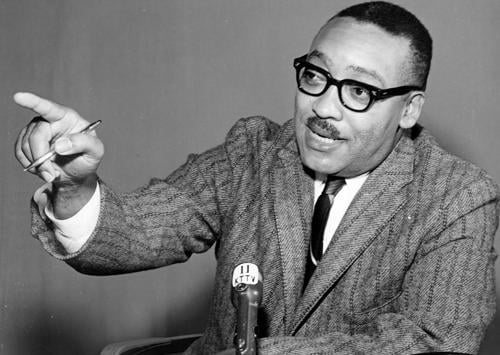
Louis Lomax discusses the book "Thailand: The War That Is, The War That Will Be"
1967 Discussing Thailand and interviewing journalist Louis Lomax. Includes passage from book.
-

Dr. Robert Jay Lifton discusses the psychological impact of the nuclear arms race
1980 Dr. Robert Jay Lifton, psychiatrist and psycho-historian, discusses the acceptance and embrace of nuclear disaster, doctors' opposition to nuclear weapons, difference in Americans' and Europeans' opposition to nuclear weapons, psychological impact of nuclear bombings in Japan, and the mental disconnect experienced by those who build atomic weapons who then see the bombs' effects.
-
Dr. Leo Seren discusses atomic fission and nuclear experiments
Feb. 21, 1978 Nuclear physicist, Dr. Leo Seren, discusses atomic fission and nuclear experiments.
-
David Halberstam discusses his book, "The Fifties"
Jun. 11, 1993 David Halberstam, writer and historian, talks about his book, "The Fifties." The conversation includes Brown v. Board of Education, atomic weapons, the Cold War, the Korean and Vietnam Wars, consumerism, birth control, suburbs, television and the start of the counterculture. Halberstam reads several passages from his book.
-

Carl Sagan and Ann Druyan discuss their book "Shadows of Forgotten Ancestors"
Oct. 5, 1992 Evolution and the future of the human race are among topics in Carl Sagan's and Ann Druyan's book, "Shadows of Forgotten Ancestors: A Search for Who We Are." Included is an excerpt of the astronomer Harlow Shapley speaking at the beginning. Carl Sagan also reads an excerpt from the book at the end.