

-

Sydney Lewis reads from and discusses her book "Hospital"
Jan. 31, 1995 "Hospital: An Oral History of Cook County Hospital" covers what was once the largest public hospital in the United States. With 6,000 employees, Sydney Lewis learned that County Hospital was a small city onto itself. One may have a long wait at the hospital, but Lewis found because of it's good health care, there was a kind of a loyalty toward County. With Chicago and its diversity, it was good for the people to see African American doctors and nurses that were Black and brown, too.
-
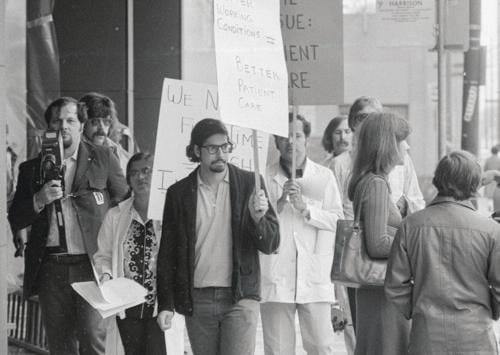
Studs Terkel interviews three Cook County Hospital doctors about their 1975 strike
Nov. 12, 1975 Studs interviews three Cook County Hospital doctors: Dr. Tessa Fischer Dr. Mark Bonnell Dr. David Moore Main topic of conversation is the 18-day residents and interns strike at Cook County Hospital, Chicago, October-November 1975. At the time it was the longest doctors’ strike in U.S. history. Topics include: Patient care, benefits and wages, and working conditions. The distinction is made between a "strike" and what the doctors call a "job action".
-

Laurie Abraham reads from and discusses her book "Mama Might Be Better Off Dead"
Oct. 1, 1993 What started out as a 5-piece article on health care became Laurie Abraham's book, "Mama Might Be Better Off Dead: The Failure of Health Care in Urban America". Through her stories, Abraham points out the many hardships and catch-22 scenarios of some poor families. One woman, after caring for her mother all day, Julie, wanted to work part time in the evenings. However, she soon learned that she'd be making too much money and she'd no longer be eligible for Medicaid for herself and her children.
-
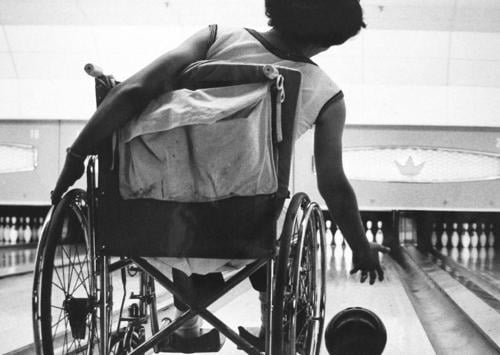
Hollie Brock and Jim Potter both paraplegics, discuss what it is to "be" a paraplegic
1968 Mr. Brock, a recreational therapist, and Mr. Hollie, a nurse, discuss paraplegia. Each of the gentlemen discuss the individual accidents that caused their injuries, their recovery and how they got through it. They talk to Studs about the things they enjoy doing and goals they are trying to reach.
-
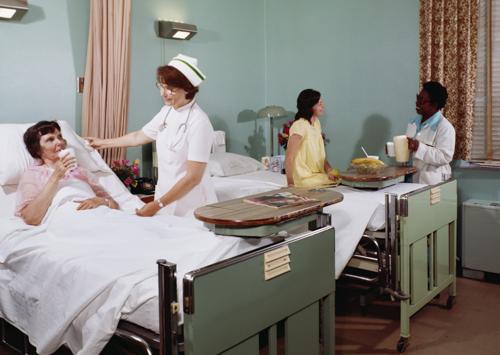
Drs. Quentin Young, Lambert King and Robert Maslansky discuss public hospitals in the United States
Apr. 26, 1976 Drs. Quentin Young, Lambert King and Robert Maslansky discuss public hospitals in the United States. Young is the chairman of the Department of Medicine at Cook County Hospital, King is the medical director of Cermak Memorial Hospital, and Maslansky is the director of medical education at Cook County Memorial Hospital.
-
Dr. Quentin Young discusses his work at Cook County Hospital
Aug. 20, 1974 Dr. Young talks about his policy about addictive medications at Cook County Hospital, and about the financially driven connections between pharmaceutical companies and doctors.