

-
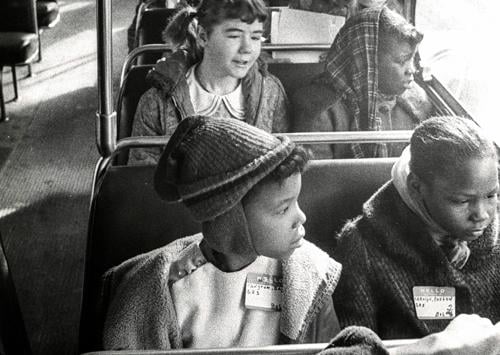
Studs Terkel discusses busing for school integration with psychologist Thomas J. Cottle
Oct. 11, 1976 Studs Terkel discusses the transportation of students for school integration with psychologist Thomas J. Cottle. The main topic of conversation is Cottle's book, "Busing" (1976, Boston, MA, Beacon Press). Terkel and Cottle discuss busing in several cities, focusing on Boston, MA, where Cottle did his research and writing. They each read passages from the book, and discuss the relationship between busing and racism in America.
-

St. Clair Drake and Paul Mundy discuss prejudice ; part 4
1965 Discussing prejudice in communities with Dr. St. Clair Drake and Dr. Paul Mundy. They discuss discrimination, racism, integration, and other similiar topics.
-
St. Clair Drake and Paul Mundy discuss prejudice ; part 3
1965 Discussing prejudice in communities with Dr. St. Clair Drake and Dr. Paul Mundy. They discuss stereotypes, racism, and race relations.
-
St. Clair Drake and Paul Mundy discuss prejudice ; part 2.
1965 Discussing prejudice in communities with Dr. St. Clair Drake and Dr. Paul Mundy. They discuss prejudice towards the races, religions, and ethnicities of people.
-
St. Clair Drake and Paul Mundy discuss prejudice ; part 1
1965 Discussing the community and prejudice with Dr. St. Clair Drake and Dr. Paul Mundy. Includes an interview with a boy named Tony discussing relations with African American people.Content Warning: This conversation includes racially and/or culturally derogatory language and/or negative depictions of Black and Indigenous people of color, women, and LGBTQI+ individuals. Rather than remove this content, we present it in the context of twentieth-century social history to acknowledge and learn from its impact and to inspire awareness and discussion.
-
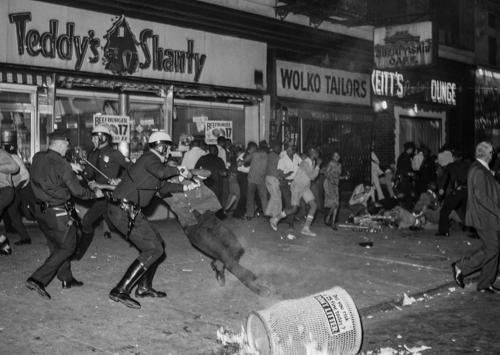
Paul Chevigny discusses his book "Police Power"
According to Paul Chevigny’s book, “Police Power: Police Abuses in New York," disobeying the police is what precipitated violence. Chevigny explained some of the police felt if they had to deal with the undesirables, whether they were criminals or not, anything goes on the street to get these guys and anything goes in court to make a conviction stick.
-
Pat Duncan discusses Apartheid and South Africa ; part 1
1963 South African anti-apartheid activist Pat Duncan discusses Apartheid and South Africa, part 1.
-
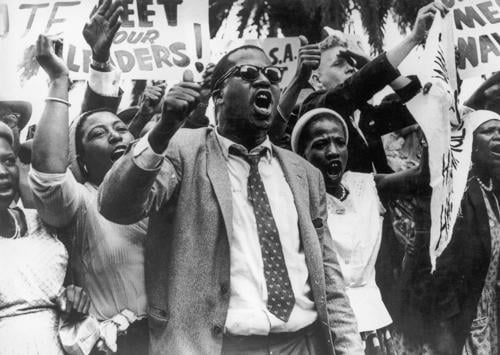
Pat Duncan and Deborah Cowan discusses Apartheid and South Africa ; part 2
1963 Pat Duncan and Deborah Cowan discusses Apartheid and South Africa, part 2. Duncan's portion of the program concludes at 00:14:20, and the rest of the program features Cowan.
-
Ntozake Shange discusses her successful play and recent poetry
Oct. 26, 1978 Ntozake Shange discusses her play, "for colored girls who have considered suicide / when the rainbow is enuf." She goes on to discuss her advocacy for more Black authors and poets, especially in experimental artistic endeavors.*Please note: some sections have been edited out from the original recording due to copyright considerations
-
Maya Angelou and Tom Wicker discuss life and culture in the U.S. South
Jul. 1, 1979 Poet Maya Angelou and journalist Tom Wicker discuss life in the U.S. South and how the region’s history has shaped its culture. Topics of discussion include social dynamics and race in the South, the concept of “home” and what it means to return to one’s roots, and religion in the South. Angelou reads excerpts of her poetry, including “Still I Rise” and “Phenomenal Woman,” and shares spiritual songs from her childhood.
-

Louis Font and Ed Fox discuss their time in the military and the Vietnam War
Jun. 11, 1971 Louis Font and Ed Fox discuss their time in the military, the Vietnam War, military rituals, and West Point military academy. They express their anti-war sentiments and describe atrocities committed in Vietnam.
-
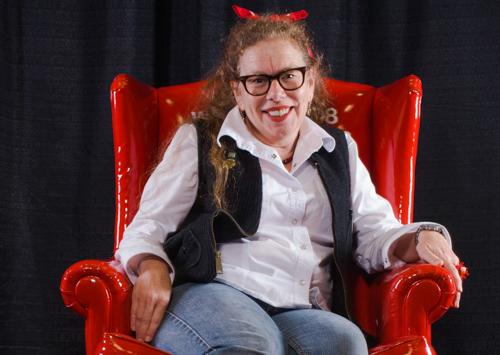
Lorell Wyatt, Glenda Starr-Kelly and Lynda Barry discuss "The Good Times are Killing Me"
Oct. 2, 1989 Best friends, white flight and racism are all apart of Lynda Barry's book, "The Good Times are Killing Me." Lorell Wyatt and Glenda Starr-Kelly reenact scenes from the play, which is playing at the Body Politic Theater. In the end, Barry's book showed power and privilege mattered more than friendship.
-
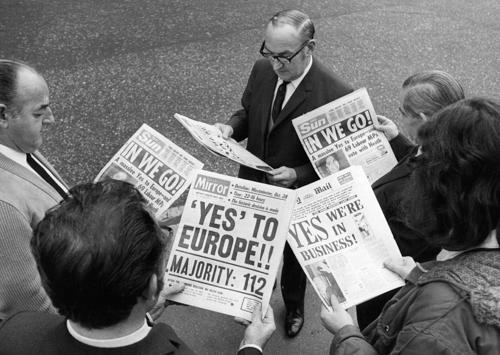
London newspaper vendor, George Curry, discusses politics and art, while Studs Terkel was in London, England
Sep. 1975 While in London, England, Studs Terkel interviews George Curry, a newspaper vendor with a storefront in a hotel. The two discussed Curry’s hometown of Dundee, Scotland and its politics, in addition to London’s current political atmosphere. They also talk about Curry’s political leanings; he is a socialist, and he criticizes England’s immigration policies. Curry comments on his interest in the arts and speaks on stereotypes surrounding the working class. The interview is interrupted intermittently by customers buying their morning paper.
-
Interview with City Lit cast members
Dec. 29, 1982 Discussing the play "A solo song for Doc" by James Allan MacPherson and interviewing cast members of City Lit, Joseph Moore, Chuck Smith and Ernest Perry.
-
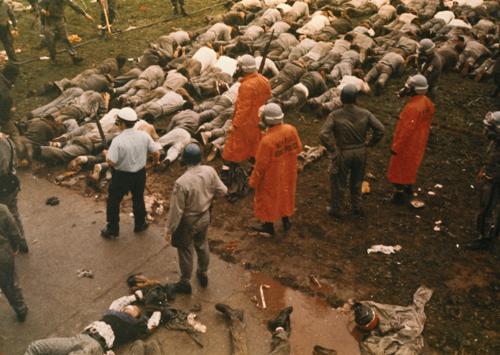
Herman Badillo discusses "A Bill of No Rights: Attica and the American Prison System"
Jun. 26, 1972 Congressman Herman Badillo discusses the prisoner uprising at Attica Correctional Facility in upstate New York, and how race played a role in the unwarranted killing of inmates and the subsequent government and administrative cover up of the incident. Badillo reads excerpts from his book, "A Bill of No Rights: Attica and the American Prison System," and discusses prisoner rights, rehabilitation, and the endemic injustice and racism in the American prison system.