-

Skip Kennon and David Rounds discuss the play "Herringbone"
Oct. 21, 1981 Skip Kennon wrote the music for "Herringbone", a one-man musical where all ten parts are played by the actor David Rounds. Madness, depression and schizophrenia are discussed as possible themes of the play.
-
Sir Cedric Hardwicke discusses today's theatre
Oct. 14, 1960 According to Sir Cedric Hardwicke, plays are only fashionable in New York City even though people all around the country are hungry to see a good play. In England around Christmas time, Hardwicke says children are exposed to plays at an early age, unlike here in the states, where there aren't any plays geared toward children.*Please note: some sections have been edited out from the original recording due to copyright considerations
-
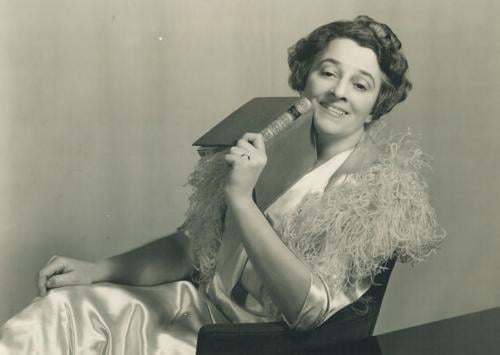
Simone Signoret, Simone de Beauvoir, Francoise Rosay in conversation with Studs Terkel
Jul. 7, 1989 Excerpts of interviews with Simone Signoret (actress and author), Simone de Beauvoir (author), and Francoise Rosay (actress).
-

Sidney Poitier talks with Studs Terkel about his most recent film "The Defiant Ones"
Oct. 1, 1959 Bahamian actor Sidney Poitier talks with Studs Terkel about his most recent film "The Defiant Ones" and how racial type-casting for typically white roles works in Hollywood films. Besides being an actor, he is also a film director, author, and diplomat.
-

Sidney Poitier discusses his book "This Life"
Jun. 13, 1980 Actor and director Sidney Poitier offers his reflections about his autobiographical memoir, "This Life". Poitier explains how he never had ambitions to be an actor and yet he stumbled into acting when looking through the clasisfied ads. There's a story about his agent trying to settle a negotiation on Poitier's behalf. Poitier's agent told the others involved that Poitier was offered a film in Hollywood. Believing it was a cheap ploy, the agent was told to tell Poitier to go onto Hollywood, and the rest is history for Sidney Poitier.
-
Sid Caesar and Imogene Coca talk about comedy and their work together
Sep. 26, 1990 Comedians Sid Caesar and Imogene Coca talk about their work together. They explore the meaning and emotions behind comedy, improv, and pantomime and how the audience is involved with their shows. Sid recalls several of their skits and does a few examples of his dialects.
-
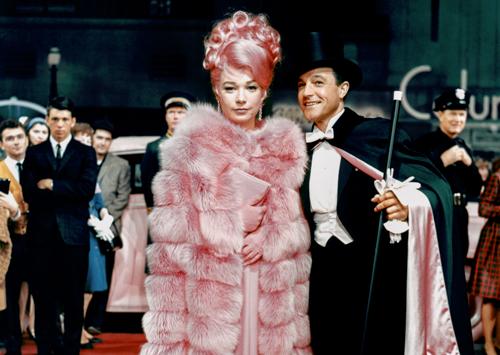
Shirley MacLaine discusses her travels to China
Mar. 28, 1975 Shirley MacLaine discusses her travels to China. Includes passages from her book "You Can Get There From Here." Includes Chinese children chanting. Includes a clip from an interview with Dr. Joshua Horn.
-
Shelley Berman reads from and discusses his role in "The Value of Names"
Apr. 4, 1983 In the play, "The Value of Names," Shelley Berman plays Benny Silverman, a role which he says is him, an actor from the Hollywood black list. Berman said being in Chicago, acting the role and working with the cast has been THE best experience of his life and when the show closes, it will be the saddest day of his life. The director of the play, Sandy Shinner, said she knew of the Hollywood black list but didn't know about all the personal stories. There is an excerpt of Vic Navasky.
-
-
-
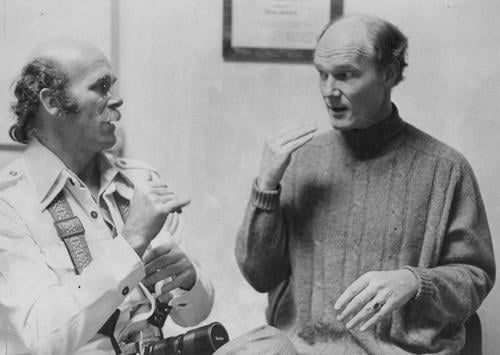
Several members of the cast of The Theater for the Deaf discuss their production ; Couples with a brief interview with John Cage and "Music for Carillon" is played.
Apr. 23, 1968 Rilla Bergman, Lou Fant, and Bill Reese converse with Studs about The National Theater for the Deaf and the production they are presenting. Two of the actors Ms. Bergman and Mr. Reese discuss what it took to learn, as hearing people, the best ways to express themselves with sign language. They all talk about how much more expressive the actors in the Deaf Theater have to be to convey the message of the piece they are presenting.
-
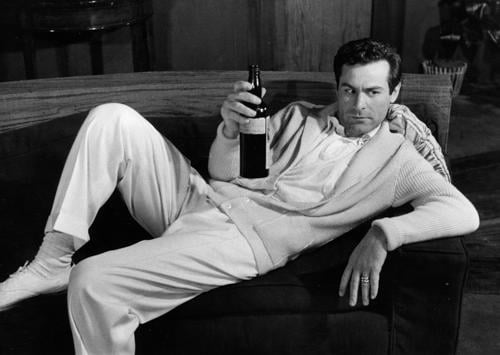
Sam Wanamaker discusses theater ; part 2
Dec. 4, 1964 Sam Wanamaker continues his discussion about the theater, with an emphasis on lights and music. With his production of "Macbeth," Wanamaker didn't want three-dimensional witches. Instead, he used lighting to convey their presence. In addition, similar to the line from Macbeth, Wanamaker was able to show the witches disappearing and melting into the air.
-
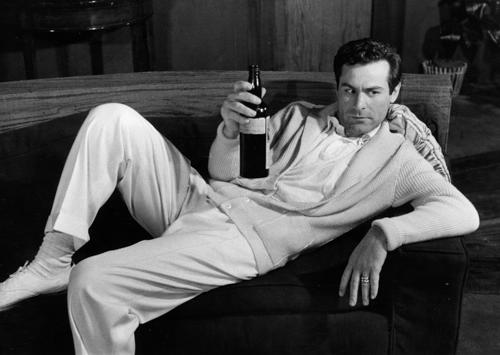
Sam Wanamaker discusses the theater ; part 1
Dec. 4, 1964 Sam Wanamaker talks about the curtain of a stage being a barrier between the set and the audience. Wanaker says that with theater today, there are more theaters in the round and more thrusts of ramps built into the audience, so that the audience can feel they are a part of the production of the play.
-
-