

-
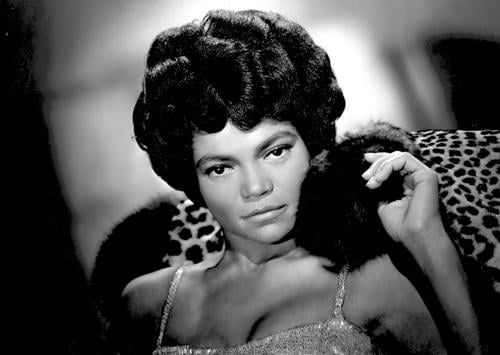
Eartha Kitt discusses her music career ; part 3
Jul. 10, 1962 Studs Terkel continues to interview actress and singer Eartha Kitt. Part 3 of the interview begins with Kitt discussing the following; her career; her international travels; and linguistic abilities.
-
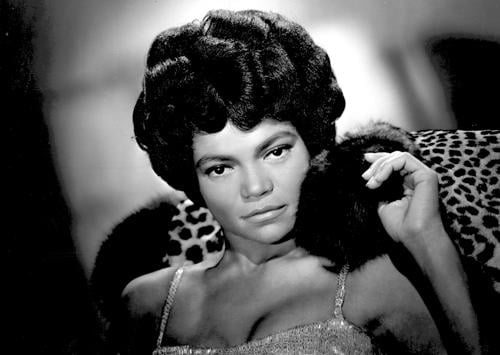
Eartha Kitt discusses her music career ; part 2
Jul. 10, 1962 Studs Terkel continues to interview actress and singer Eartha Kitt. Part 2 of the interview begins with the song "Üsküdara", and ends with "Mountain High, Valley Low", both sung by Kitt. Kitt discusses the following; her career; her desire to entertain; her autobiography, "Thursday's Child"; her mothers death; the art of interacting with the audience; the femme fatale; her time with the Katherine Dunham Dancers; and her portrayl of Helen of Troy.
-
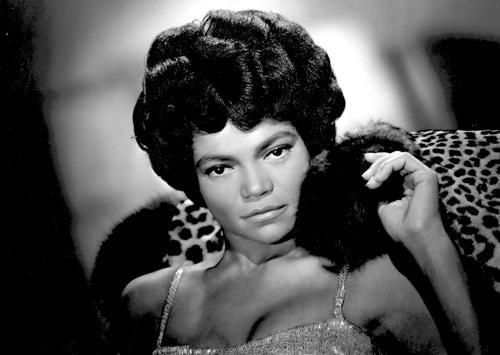
Eartha Kitt discusses her music career ; part 1
Jul. 10, 1962 Studs Terkel interviews actress and singer Eartha Kitt. The program begins with a musical selections sung by Kitt, "C'est Si Bon". Kitt discusses the following; her career; how the songs she sings are interpreted and preferred by people of different nationalities; what led her to be an international star; her childhood; her meeting with Albert Einstein;
-

-
Earl "Fatha" Hines and John McDonough discuss jazz music
Sep. 8, 1976 Earl "Fatha" Hines discusses various musicians he's worked with including Louis Armstrong, Charlie Parker, and Dizzy Gillespie. He remembers that bands became bigger after needing to add members to play bigger venues because people liked to dance. He also talks about how he liked to work to create shows and his approach to jazz composition. Music is played throughout: "Weather Bird" with Louis Armstrong, "My Monday Date", "Cavernism", "Boogie Woogie On St. Louis Blues", "Rosetta", and "Second Balcony Jump". Music has been removed from this file for copyright reasons.
-
E.Y. (Yip) Harburg discusses songwriting and "Rhymes for the Irreverent"; part 2
Jan. 1966 E.Y. (Yip) Harburg explains how songwriting needs to use and elevate street language to be successful, why he likes rainbows, and what creators of art and music owe the world. He also reads from his book "Rhymes for the Irreverent". Music is played from Finian's Rainbow: "When the Idle Poor Become the Idle Rich" and "How Are Things in Glocca Morra?", original Broadway cast recording. Part 2. Music has been removed from this recording for copyright reasons.
-
E.Y. (Yip) Harburg discusses songwriting and "Rhymes for the Irreverent"; part 1
Jan. 1966 E.Y. (Yip) Harburg talks about the challenges in writing songs for characters, specifically Og in "Finian's Rainbow". He also discusses the craftsmanship of lyric writing and reads from his book "Rhymes for the Irreverent". Music is heard throughout: "When I'm Not Near the Girl I Love" performed by David Wayne and "The Eagle and Me", performed by Dooley Wilson. Part 1 Music has been removed from this recording for copyright reasons.
-
E. Y. (Yip) Harburg discuss his book "At This Point in Rhyme"
Feb. 18, 1977 E.Y. (Yip) Harburg and Studs Terkel read from the book "At This Point in Rhyme". E.Y. Harburg also discusses his thoughts on humanity, how to properly write a song, and the importance of light verse and humor as a basis for everything he creates. Excerpts of "Somewhere Over the Rainbow" by Judy Garland, "Brother, Can You Spare a Dime" by the Weavers, and a Broadway recording of "How Are Things in Glocca Morra" are played in the original airing but have been removed from this version for copyright reasons.
-
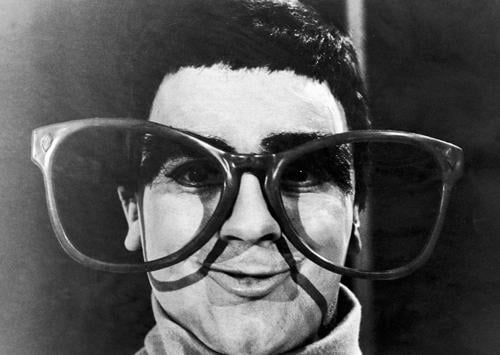
Dudley Moore discusses his background and influences
Jan. 6, 1963 When he was a child, Dudley Moore first wanted to study the violin. He's grateful to his mother for insisting that he first study the piano. Moore said his influences include Bach and Garner. Unlike other musicians, Moore's main focus has always been on the beat, both the cultivation and the presence of the beat of a song and of music.
-
Dr. Samuel Floyd, Jr. discusses Black music, history, and culture
Oct. 11, 1990 Interviewing Dr. Samuel Floyd, author and scholar of Black music. He discusses prominent Black musicians and composers who shaped their perspective genres.
-
Dr. Dalma Hunyadi Brunauer sings and discusses Bulgarian folk music ; part 2
Oct. 16, 1962 *Please note: some sections have been edited out from the original recording due to copyright considerations
-
Dr. Dalma Hunyadi Brunauer sings and discusses Bulgarian folk music ; part 1
Oct. 16, 1962 *Please note: some sections have been edited out from the original recording due to copyright considerations
-
Dr. Carlo Levi discusses Italian literature; Julio & Phillipo sing nursery rhymes, Maria Caniglia discusses opera; part 2
1962 Dr. Carlo Levi talks about the differences in Italian and American literature in the first part. In the second part, children Julio and Phillipo sing Italian nursery rhymes. In the last part, Maria Caniglia and husband Pino Donati discuss opera; part 2.
-
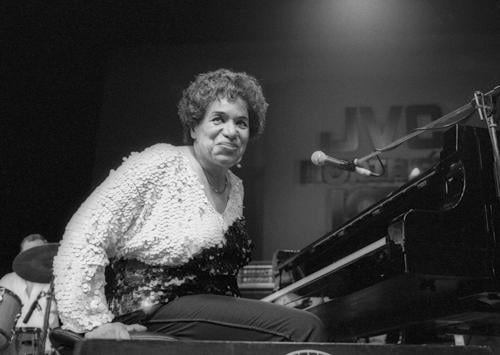
Dorothy Donegan in conversation with Studs Terkel
Dec. 27, 1994 Interviewing jazz pianist and composer Dorothy Donegan.
-
Donald Gramm discusses his career
Oct. 1, 1973 Donald Gramm discusses working with composers and comparing contemporary and classical opera. He also talks about his approaches to different performances and his experiences singing in multiple languages. Music is played throughout the interview and performances include his role as Creon from Stravinsky's "Oedipus Rex"and selections from Ned Rorem's "War Scenes": "As Adam", "O You Whom", "To You", "Look Down, Fair Moon", and "A Night Battle". Next, a performance as Leporello singing "Madamina, il catalogo è questo" from "Don Giovanni" and "Zwei Gesänge, Op. 1: I.