

-

-
Sam Pilafian and Gerhard Meinl discuss the tuba
Aug. 30, 1991 While in town for the Chicago Jazz Festival, Sam Pilafian and Gerhard Meinl discuss the history of the tuba. With demonstrations on the tuba, they play scales and other short pieces. Gerhard Meinl's family business of making instruments like the tuba has been around since 1810, explained Meinl.
-
Sam Gary and Josh White discuss folk music and their careers
1960 Interviewing singer, guitarist, and civil rights activist Josh White and blues singer Sam Gary about their blues and folk music.
-
Ryland Davies and Margaret Price discuss opera and their performance in Mozart's "Don Giovanni"
1972 Ryland Davies and Margaret Price discuss opera, Welsh art and culture, and their musical upbringings. They discuss various characters and operas they have performed in, including "Don Giovanni" and "Lulu". Music is played throughout the original airing, but has been removed from this recording for copyright reasons.
-
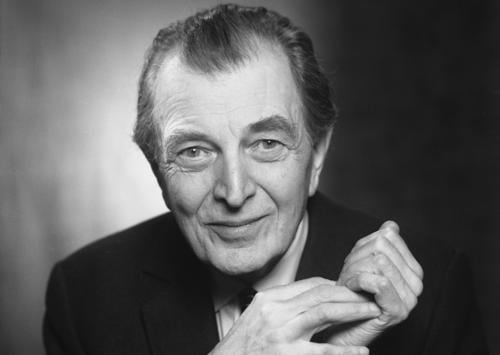
Russian-born composer Alexander Tcherepnin talks with Studs Terkel
Apr. 13, 1965 Studs Terkel and Tcherepnin discuss Tcherepnin's early years in Leningrad, his creative drive and its relation to real-life experiences and the influence of Chicago on his 1953 Op. 87 Suite for Orchestra.
-
Russell Sherman discusses and reads from his book “Piano Pieces”
May. 17, 1996 Author and pianist Russell Sherman discusses his book “Piano Pieces” and the philosophical concepts associated with listening to and playing music. Sherman plays a selection of compositions in the studio.
-
Ross Firestone discusses his book "Swing, Swing, Swing: The Life & Times of Benny Goodman"
Mar. 26, 1993 Benny Goodman was one of 12 children and when he was little, his father took him to a synagogue where he learned to play the clarinet. Ross Firestone's book, "Swing, Swing, Swing: The Life and Times of Benny Goodman" is full of information about the musician. Goodman was a perfectionist, always wanting to better at his craft. According to Firestone, as a band leader, Goodman never thanked any musicians that played for him or with him.
-
Rosalie Sorrels discusses her career
Sep. 10, 1982 Rosalie Sorrels discusses her career, family, and folk music. Includes Rosalie Sorrels reading her mother's writing. The following songs have been removed due to copyright restrictions: "Traveling Lady", "You Can't Go Home Again", "Her Mantle So Green", "If You Love Me", and "The Long Memory". Cal Hans plays the dobro in the background and makes some comments. Includes performance by pianist Daniel Varsano at the end.
-
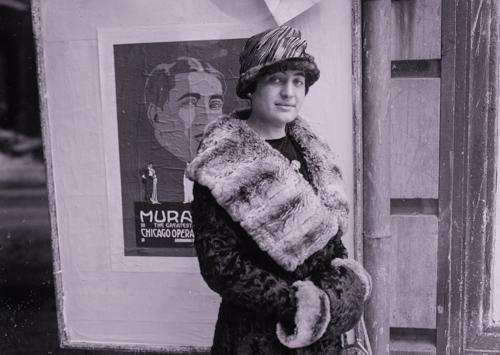
Rosa Raisa, in Chicago for the restoration of the Auditorium Theater, reflects on her career
Dec. 13, 1961 Studs Terkel interviews soprano Rosa Raisa about her career in Opera.
-
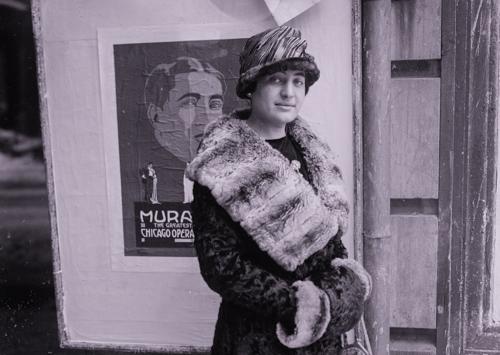
Rosa Raisa reflects on her career and her time in Chicago
Nov. 6, 1959 Renowned soprano, Madame Rosa Raisa discusses her career, early training, Chicago debuts, travels, teaching, and hobbies post opera.
-
Ronnie Gilbert in conversation with Studs Terkel
Apr. 18, 1985 Interviewing folksinger and activist Ronnie Gilbert.
-
Ron Modell discusses the Jazz band at Northwestern University, Chicago
Jul. 3, 1980 Studs interview with Ron Modell, Associate Professor of Trumpet and Director of the Jazz program at Northwestern University, Chicago. Modell talks about his students and their work in the band. He names some of his students and speaks of their individual work. He highlights their performances, awards, and future careers of those in the band. The musical numbers are removed from this edited version of the original recording.
-
Roger Sessions discusses his career and upcoming performance at Northwestern ; part 2
Jan. 25, 1961 Composer and Pulitzer prize winner for music Roger Sessions discusses his music and its reception by the Russian people. Sessions is known for his admiration for music genres such as modern music and its influence in his compositions.
-
Roger Detmer and Virgil Thomson discuss the influence of technology onto music
1965 While their works and forte is classical music, Roger Detmer and Virgil Thomson talk about tape and electronic music. Detmer points out that in some eastern European countries, tape is considered pasee, and yet it's used often to recreate a sound to be used with their orchestras. Both men talk about electronic music and how it's sometimes used to make hand-made music sound artificial.
-
Rita Streich discusses her upcoming recital and Studs plays selections ; part 3
Feb. 17, 1962 Studs Terkel interviews Rita Streich about her recital coming up. He also plays selections from her work for viewers to listen to. She also talks about music during World War II.