

-

Paul Schilpp talks with Studs Terkel
May. 20, 1965 Interviewing philosopher Paul Schilpp.
-
Omar Shapli discusses his career
May. 17, 1982 Reflections on the career of actor, drama teacher, WFMT announcer, and former member of The Compass Players.*Please note: some sections have been edited out from the original recording due to copyright considerations
-
Noted Norwegian adventurer and ethnographer Thor Heyerdahl discusses his most recent book
Oct. 9, 1981 Noted Norwegian adventurer and ethnographer Thor Heyerdahl discusses his most recent book "The Tigris Expedition: In Search of Our Beginnings" in which Heyerdahl and a crew of 10 men built a reed boat in Iraq and sailed it through the Persian Gulf, around the Horn of Africa, to Pakistan and eventually the Red Sea. Their goal was to prove that the ancient peoples of Mesopotamia and the Indus Valley could have been in contact through marine trade and migration.
-
Nicholas Von Hoffman discusses his novel, "Two Three Many More" with Studs Terkel
1970 Nicholas Van Hoffman discusses the characters of his novel, "Two Three Many More" about campus protests against the Vietnam War. Political viewpoints, regulations, and character analysis are discussed. Von Hoffman opens the interview with a reading from the opening of the book that mentions peace, solidarity, and disunity. Terkel and Von Hoffman read excerpts together from the book.
-
Naturalist May Theilgaard Watts and Julie Nadelhoffer discuss "Reading the Landscape of America"
1969 Julie Nadelhoffer and Illinois naturalist May Theilgaard Watts discuss the changing landscape of America and the conflict between nature and development.
-

Nancy Milio reads from and discusses her book "9226 Kercheval"
Jun. 13, 1970 Nancy Milio's book, "9226 Kercheval: The Storefront That Did Not Burn," is about community health services offered in a ghetto on the south side of Detroit, Michigan. As a nurse, Milio knew how important it was to offer quality health services to poor and uneducated individuals. With their real names changed, Milio talks about her experiences with Mrs. Watkins, Johhnie West and others at the center.
-
Musician and composer Howard Levy discusses the sounds of various instruments
Jan. 11, 1990 Howard Levy learned to play the piano at the age of 8. After hearing a John Coltrane album at 17, Levy knew he wanted to play blues on the harmonica. Levy talks about and demonstrates the harmonica, the pan flute, the Marimba and the ocarina. There is also an excerpt of Laurel Masse singing.
-
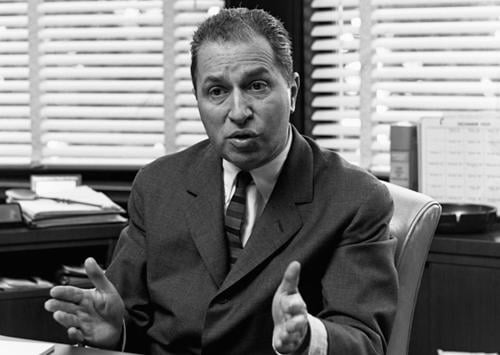
Mortimer J. Adler, American philosopher, educator & author discusses his book "The Difference of Man and the Difference it Makes"
1967 Discussing "The Difference of Man and the Difference it Makes" and the philosophical ideals of Mortimer J. Adler. Mr. Adler speaks of his idea that the difference between human and animal behavior is a radical difference in kind.
-

Mary Lynn Kotz discusses her book "Rauschenberg, Art and Life"
Oct. 29, 1991 In Mary Lynn Kotz's book, "Rauschenberg, Art and Life," Kotz recounts the works and story of 20th century art pioneer Robert Rauschenberg. They survey his career beginning in Port Arthur, TX, discussing his Depression-era upbringing which caused him to reuse and salvage virtually any object and transform it into art, his studies in Paris, made possible by the G.I.
-
-
Martin Bernal discusses Chinese politics and history
Interviewing Martin Bernal, British scholar of Chinese political history. He discusses various aspects of Chinese history, including the Cultural Revolution, communism, and Chairman Mao.
-
-
-

Lewis Regenstein discusses his book, "The Politics of Extinction: The Shocking Story of the World's Endangered Wildlife".
Aug. 12, 1975 Mr Regenstein and Studs discuss the book, "The Politics of Extinction". The book blows the whistle on those who are currently engaged in killing these animals for "sport," fashion, and profit. They talk about various endangered species and what that distinction means and the public officials with the power- and the responsibility - to protect wildlife, but who instead allow the destruction to continue.
-
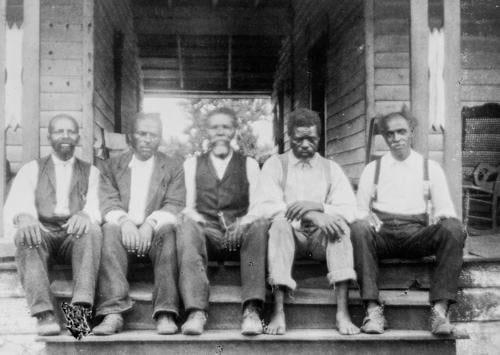
Lerone Bennett, Jr., John Hope Franklin and Hoyt Fuller discuss the book "Distortions of Negro History"
Jun. 3, 1965 Discussing "Distortions of Negro History" and interviewing Lerone Bennett, Jr., John Hope Franklin and Hoyt Fuller.