Listen to New Voices on Studs Terkel our partnership with 826CHI-here! Read the Story


Showing 1486 - 1500 of 1649 results
-

Bruno Bettelheim discusses his book "The Empty Fortress", part 2
May. 1, 1967 Bruno Bettelheim discusses his book "The Empty Fortress: Infantile Autism and the Birth of the Self," and his theories on Autism, the cause of and how to treat the disorder.
-
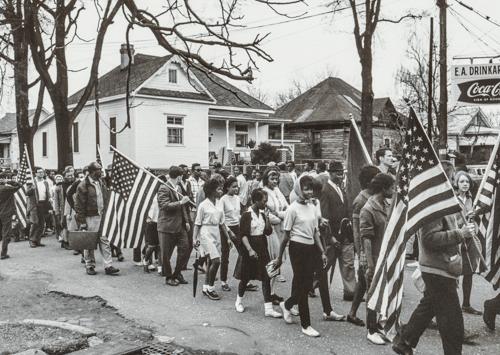
Both Kathy [no last name] and John Beecher discuss their feelings about the South ; part 4
Apr. 1, 1965 Content Warning: This conversation includes racially and/or culturally derogatory language and/or negative depictions of Black and Indigenous people of color, women, and LGBTQI+ individuals. Rather than remove this content, we present it in the context of twentieth-century social history to acknowledge and learn from its impact and to inspire awareness and discussion. After hearing Martin Luther King, Jr.
-
Blanche Wiesen Cook discusses her book, "The Declassified Eisenhower: A Divided Legacy of Peace and Political Warfare"
Aug. 6, 1981 Blanche Wiesen Cook, historian, professor, and author discusses her book, "The Declassified Eisenhower," and explains Eisenhower's peace and war beliefs. She describes his beliefs at the end of World War II and his relationships with fellow generals and leaders.
-
Bill McKibben discusses his book "The End of Nature"
Oct. 13, 1989 Bill McKibben, author and environmentalist discusses his book "The End of Nature." McKibben talks about climate and weather, greenhouse gasses, fossil fuels, chlorofluorocarbons, and carbon dioxide. He also explains how climate change could damage the ecosystems including birds. He ends the interview discussing what can be changed such as solar power.
-
-
Bill Leonard discusses the history of baseball and baseball today
Apr. 1, 1971 The game of baseball today is very different from when Bill Leonard was a young boy. Today, the last names of baseball players are on the backs of their uniforms. When Leonard was a boy, his father would tell him who was up to bat solely by the player's walk or his stance. The selling of players' contracts to other teams is when Leonard believes the business of baseball changed. This recording includes snippets of author Lawrence Ritter's interviews with early 20th century ballplayers Sam Crawford, Goose Goslin, Fred Snodgrass, Rube Marquard, and Chief Meyers.
-
Bill Crow in conversation with Studs Terkel
Jun. 26, 1990 Discussing the book "Jazz Anecdotes" (published by Oxford Press) with the author and jazz musician Bill Crow.
-
-
Bill Ayers reads from and discusses his book "A Kind and Just Parent"
Jun. 25, 1997 Bill Ayers' book, "A Kind and Just Parent: The Children of Juvenile Court" takes a look at kids getting caught up and lost in the system. While observing in the courts, Ayers said all kids just became a thing.
-
Bill Ayers discusses his book "To Teach"
Jun. 23, 1993 According to Bill Ayers, in order to be a good teacher, one must 1st become a student of his/her students' lives. New ideas on how to become a better teacher are offered in Ayers' book, "To Teach: The Journey of a Teacher.'
-
Bill Adelman, Paul Avrich, Carolyn Ashbaugh, and Bill Neebe discuss the Haymarket Square Riot
May. 2, 1986 Commemorating the centennial of the Haymarket Square Riot, or Haymarket Affair, are authors and historians Bill Adelman, Paul Avrich, Carolyn Ashbaugh, and the grandson of Haymarket defendant Oscar Neebe, Bill Neebe. The interveiwees create a timeline of the events leading up to the Haymarket Riot including the German immigrants living situations, unions and strikes, police brutality and corruption. The group also lays out the events from May 1st to May 5th and then the following corrupt trials.
-
-

Bernard Asbell discusses his book "The Plll"
Jun. 14, 1995 Scientists, women, birth control, religion and ethics are among the topics covered in Bernard Asbell's book, "The Pill: A Biography of the Drug that Changed the World"
-
Basil Davidson discusses African history, culture and his book, "Lost Cities of Africa" with Studs Terkel ; part 1
1968 Studs interview with Basil Davidson, Africanologist, about his book, "Lost Cities of Africa." The interview takes place in Barnes, London. They touch on African culture, history, and civilization.
-
Basil Davidson discusses Africa and his book "Lost Cities of Africa," part 2
British historian and writer Basil Davidson discusses Africa and his book "Lost Cities of Africa," part 2. This recording also includes a discussion with Anne Graham Bell and Tony Mott about London's youth (recorded while Studs was in England) beginning at 00:20:14. Mott and Bell portion of the interview cuts off abruptly at the end.