Listen to New Voices on Studs Terkel our partnership with 826CHI-here! Read the Story


Showing 106 - 120 of 1649 results
-

Talking about Henry James and Alice James, with Leon Edel and Jean Strouse
Oct. 8, 1982 When Leon Edel set out to write a biography of Henry James, he thought it would take him three years. It ended up taking him twenty years. Jean Strouse chose to focus on the life of the diarist Alice James, Henry's lesser-known younger sister. Both books are considered to be definitive biographies.*Please note: some sections have been edited out from the original recording due to copyright considerations
-
Talking about Groucho Marx, with Charlotte Chandler
Jul. 20, 1978 The biographer discusses the early life of comedian Groucho Marx, his stage career, his brothers, and their mother/manager, all further described in the book, Hello, I Must be Going: Groucho & His Friends.*Please note: some sections have been edited out from the original recording due to copyright considerations
-
Talking about Gilbert and Sullivan, with Jane W. Stedman
May. 29, 1985 The theater scholar and biographer talks about some of the Gilbert and Sullivan operas staged at the D'Oyly Carte Opera Company in the United Kingdom and elsewhere.*Please note: some sections have been edited out from the original recording due to copyright considerations
-
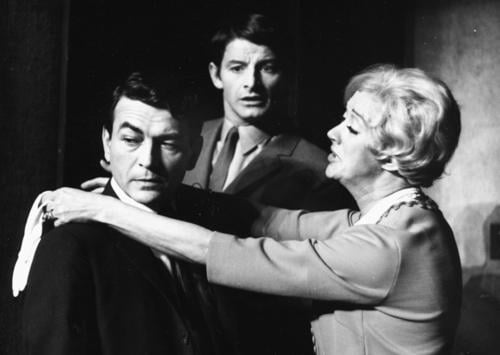
Talking about George Bernard Shaw, with Donal Donnelly
Jun. 19, 1978 The Irish theater actor discusses his performance as George Bernard Shaw in the one-man show, My Astonishing Life, at the St. Nicholas theater. This program also includes two excerpts from a 1937 BBC recording of Shaw.
-
Talking about Ethel Waters, with Jackie Taylor
Apr. 4, 1990 The playwright, director, actress, and founder of the Black Ensemble Theater talks with Studs about her portrayal of singer and actress Ethel Waters in Sweet Mama Stringbean.*Please note: some sections have been edited out from the original recording due to copyright considerations
-
Talking about Edgar Allan Poe, with Conrad Pomerleau
Nov. 2, 1979 Studs asks the actor how he researched and prepared for his portrayal of Edgar Allan Poe at Chicago's Theatre Building.*Please note: some sections have been edited out from the original recording due to copyright considerations
-
Talking about dogs and dog training with Barbara Woodhouse
1980 While on her book tour, author Barbara Woodhouse discusses canine training and the book, No Bad Dogs: The Woodhouse Way. Ms. Woodhouse talks about using the three T's with dogs - Touch, Tone, and Telepathy. Her fundamental belief is that all animals and humans are good, and if a dog exhibits bad behavior, it's a learned behavior from humans.*Please note: some sections have been edited out from the original recording due to copyright considerations
-
Talking about Diane Arbus, with Patricia Bosworth
Aug. 28, 1984 The journalist, memoirist, and actor discusses her biography of the photographer Diane Arbus (the first American to have photographs displayed at the Venice Biennale).*Please note: some sections have been edited out from the original recording due to copyright considerations
-
Talking about China, with Ross Terrill
Jul. 15, 1992 The political scientist and China specialist joins Studs to discuss his book, China In Our Time: The Epic Saga of the People's Republic, from the Communist Victory to Tiananmen Square and Beyond.*Please note: some sections have been edited out from the original recording due to copyright considerations
-
Talking about Children of War, with Roger Rosenblatt
Sep. 22, 1983 After having traveled the world speaking to children in war-torn countries, the American editor and essayist published Children of War. He and Studs discuss the thoughts and lives of these children, from Northern Ireland, Israel, Lebanon, Cambodia, and Vietnam.*Please note: some sections have been edited out from the original recording due to copyright considerations
-
Talking about Charles Dickens, with David Edgar
Jan. 19, 1983 The British playwright discusses his nine-hour adaptation of the Charles Dickens novel Nicholas Nickleby, at Chicago's Blackstone Theatre.*Please note: some sections have been edited out from the original recording due to copyright considerations
-
Talking about A Streetcar Named Desire, with Jackie Taylor
Mar. 23, 1987 The playwright, director, actress, and founder of the Black Ensemble Theater joins Studs to discuss her role as Blanche DuBois in the Tennessee Williams play, A Streetcar Named Desire.*Please note: some sections have been edited out from the original recording due to copyright considerations
-
Sylvia Kronstadt in conversation with Studs Terkel
Dec. 9, 1975 Interviewing writer and editor Sylvia Kronstadt.
-
Sydney Lewis reads from and discusses her book "Hospital"
Jan. 31, 1995 "Hospital: An Oral History of Cook County Hospital" covers what was once the largest public hospital in the United States. With 6,000 employees, Sydney Lewis learned that County Hospital was a small city onto itself. One may have a long wait at the hospital, but Lewis found because of it's good health care, there was a kind of a loyalty toward County. With Chicago and its diversity, it was good for the people to see African American doctors and nurses that were Black and brown, too.
-
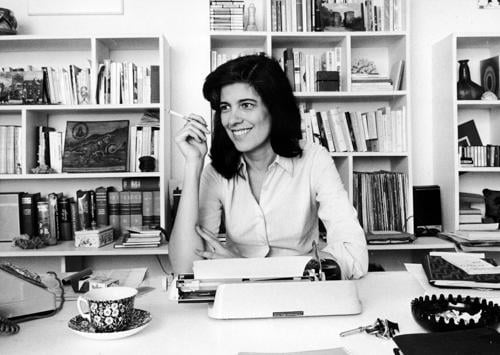
Susan Sontag discusses Tuberculosis
Jun. 30, 1978 Sontag reads from "Illness as Metaphor" and discusses differences between diseases, particularly tuberculosis and cancer, regarding historic understanding and cultural representation.